


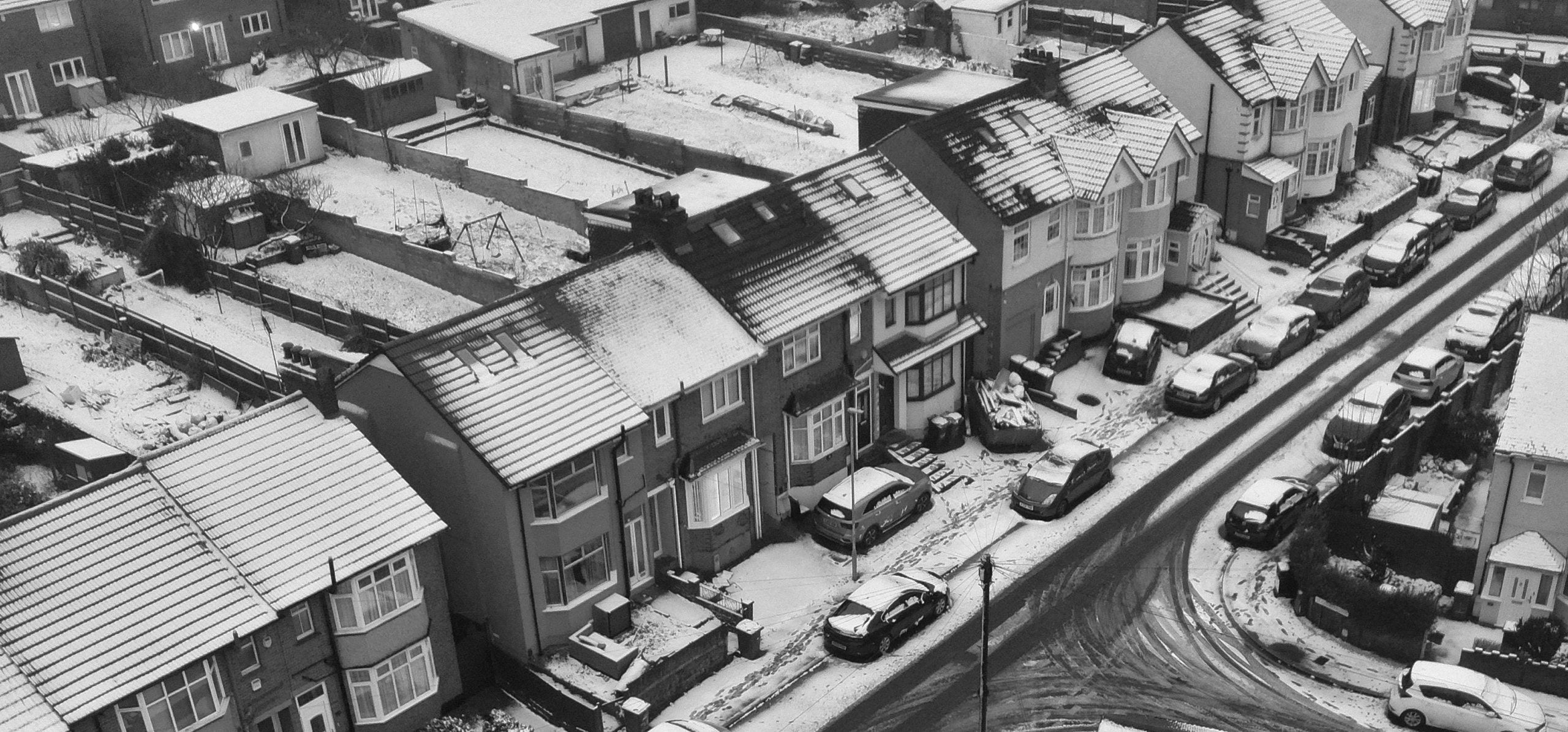
Building in autumn and winter offers surprising benefits
If you’re planning a garden room, decking, shed, or commercial project over winter, you need a foundation that can handle the mud, damp, ice, snow, and freezing temperatures without delays or complications.
Some options struggle more than others, and understanding what works (and what doesn’t) can save you weeks of waiting and plenty in additional costs.
Here, we’ll assess the main foundation options for cold and icy conditions. We’ll examine what happens when you try to install them in winter weather and how to keep your project moving forward.
Standard Concrete Foundations in Cold Weather
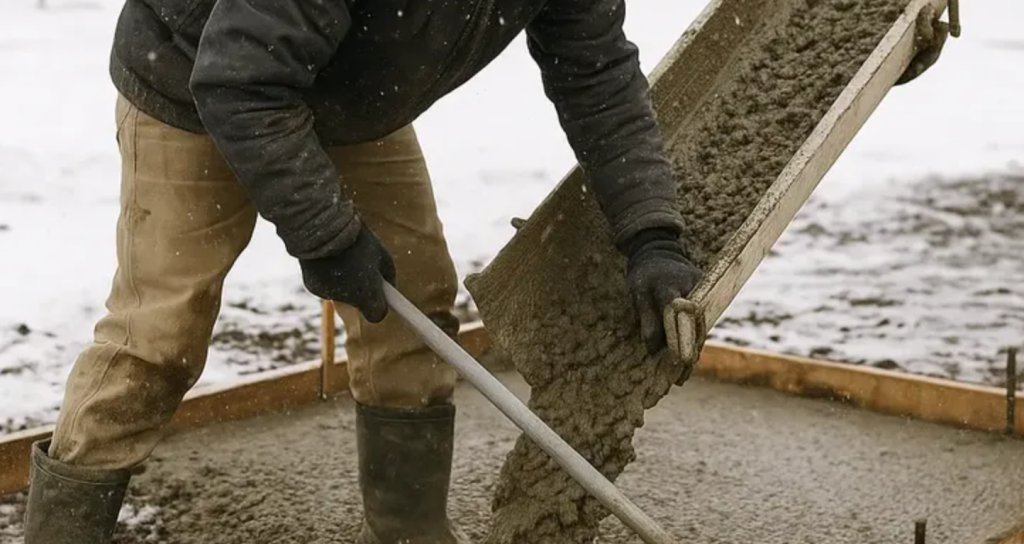
Traditional concrete foundations rely on a chemical reaction to gain strength. Mix cement with water, and it hardens over time through a process called hydration.
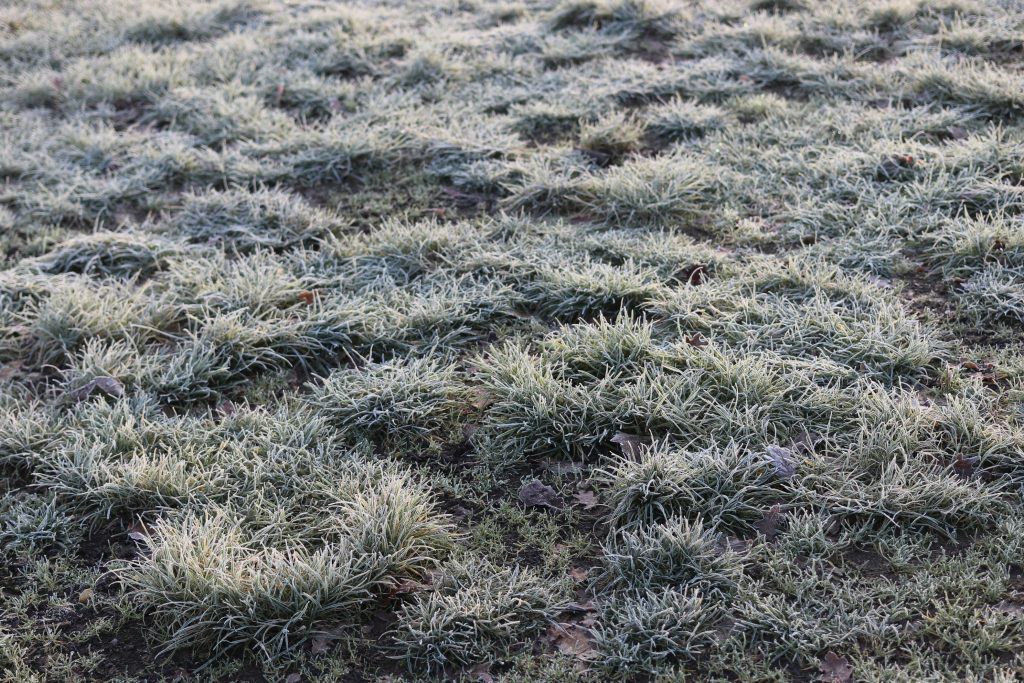
The process of pouring concrete in winter is temperature-sensitive; while it depends on the cement’s composition, it tends to slow dramatically when temperatures drop below 5°C. Additionally, if temperatures drop below freezing, the water in the mix can freeze and expand. This damages the concrete from the inside, potentially making it unfit for use.
Expansion creates cracks and voids throughout the concrete, reducing its strength by up to 50%. Even a single night of unexpected frost can ruin an entire pour.
The ground itself presents problems too. You can’t pour concrete onto frozen ground – it needs to be thawed first.
Rapid-Set Concrete: Still Weather-Dependent
Rapid-set and specialised all-weather concrete contains additives that accelerate hardening, setting in about an hour instead of the usual 48 hours. The faster setting generates more heat during curing, which should help in cold conditions.
The main problem here is that you have very little working time once the concrete is mixed – often just 20-30 minutes to place and finish it. Key limitations include:
- Still needs to stay above freezing during setting
- Frozen ground still requires thawing
- Costs 60-70% more than standard concrete
- Working time of just 20-30 minutes after mixing
- Not recommended by many suppliers for load-bearing structures
Pier Foundations in Winter
A quick note on the concrete piers typically used for decking, small buildings, or structures on slopes. These involve digging holes, inserting cardboard or plastic tubes, and filling them with concrete.
Each pier must cure properly in cold weather, which requires protection and monitoring. If you’re installing multiple piers for a larger structure, you’re multiplying these challenges across every foundation point.
Whilst piers might seem simpler than full strip foundations, challenges remain. You’re still dependent on concrete curing properly, still vulnerable to frost damage, and still facing extended timelines in cold weather.
Ground Screws: Built for All-Weather Installation
Ground screws are concrete-free foundations that operate on a fundamentally different principle. Installation is purely mechanical, so there’s no chemical reaction to interfere with your build.
On the whole, the type of ground and its condition matter little to properly installed ground screws. They’re driven far below the topsoil and frost line, so the wet, muddy, or frozen top layers of ground are not particularly relevant to their integrity.
The key advantages of ground screws in cold weather include:
- No temperature dependency – works in any conditions
- No curing time required
- Instant load-bearing capacity
- Frozen ground often provides firmer, cleaner working conditions
- No concrete mixing, thermal protection, or monitoring needed
- No skips required for soil removal
The Screw Foundations UK team has installed ground screws in some seriously challenging locations and conditions, from beside rivers to sloping sites and tricky urban spaces – and in any conditions. Read more in our case studies.
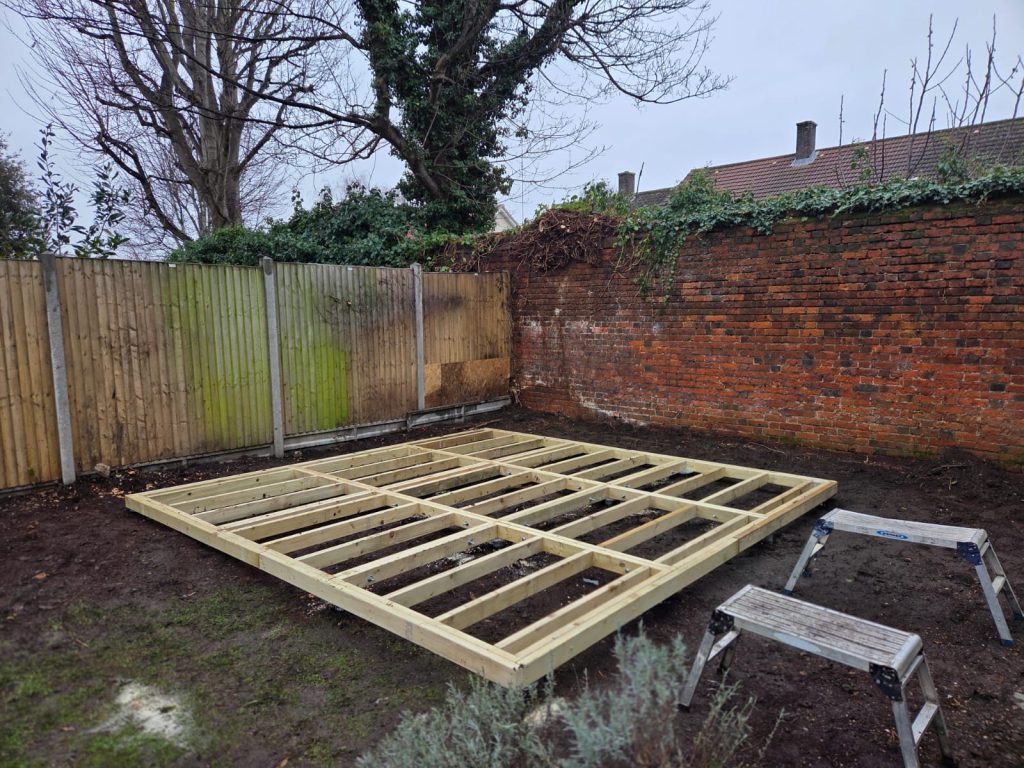
Ground Screw Installation in Winter Conditions
Ground screw installation does carry some nuances depending on the build, ground type, general conditions, etc, but it’s pretty consistent across all projects:
- Mark out screw positions according to your building plan
- Create pilot holes through frozen surface if needed
- Drive screws to required depth using hydraulic equipment
- Fit mounting brackets and level them
- Start building immediately
As you can see, there’s practically no waiting period, and no reason to be concerned about whether concrete will freeze tonight.
We should point out that the price remains consistent regardless of weather too, with no premium for heated concrete, no additional thermal protection costs, no extended site visits, and no weather-related delays pushing up labour costs.
In fact, a big plus of winter construction is low demand and competition, meaning quicker lead times and faster builds. Contractor pricing may also be discounted versus peak spring and summer.
As for the projects you can build with ground screws in winter, it’s no narrower than those you can build other times of the year:
- Garden rooms and home offices: Foundations installed in December and January, with buildings completed before spring arrives.
- Decking projects: Installed even when surface ice is present, with foundations ready immediately for deck construction.
- Fencing and gates: Anchored securely in frozen ground with instant stability.
- Commercial buildings: Maintain schedules through winter months, avoiding weather-related delays that would halt concrete work.
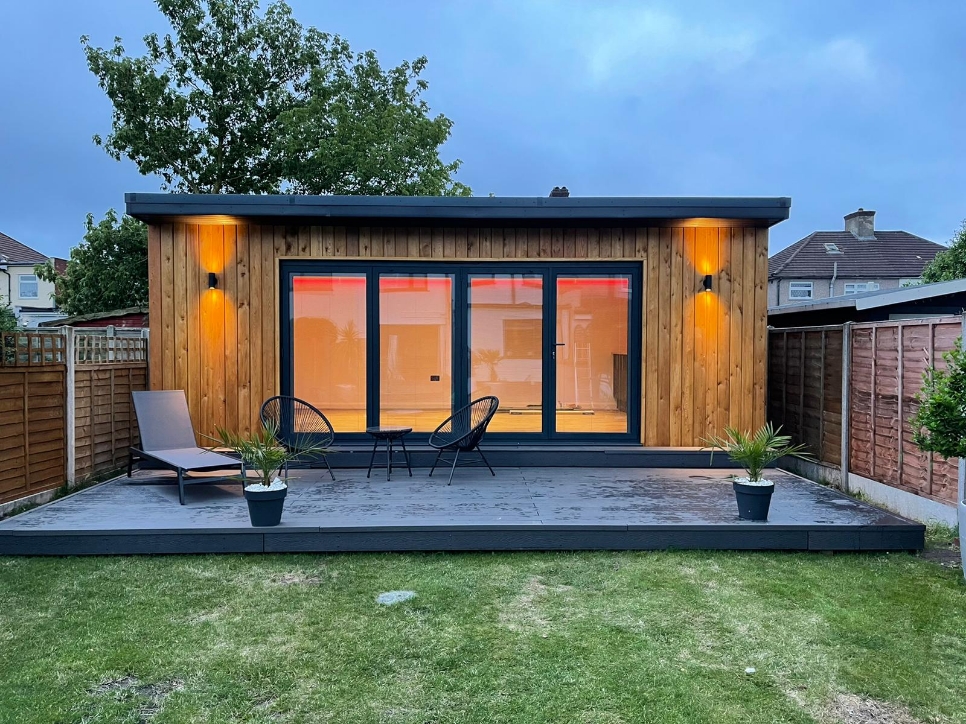
The key point is, winter does not limit construction projects when you work with ground screws.
Best Practices for Cold-Weather Ground Screw Installation
Whilst ground screws work brilliantly in cold conditions, a few simple best practices ensure smooth installation when temperatures drop.
Winter brings different challenges depending on the day – frozen ground, waterlogged soil, or just cold, damp conditions. The good news is that ground screws handle all of these, so conditions are irrelevant. Here are a few installation pointers:
Site Preparation in Winter
Different conditions need slightly different prep, but the fundamentals remain the same:
- Clear snow and ice from screw positions if frozen, or mark out areas if muddy
- Remove surface ice where equipment will be positioned
- In muddy conditions, lay boards or sheets for equipment stability
- Use grit or sand on icy patches for safe footing
- Mark out positions clearly – spray paint or wooden pegs work in any conditions
- For DIY installations in frozen ground, consider working in early afternoon when it may be slightly softer
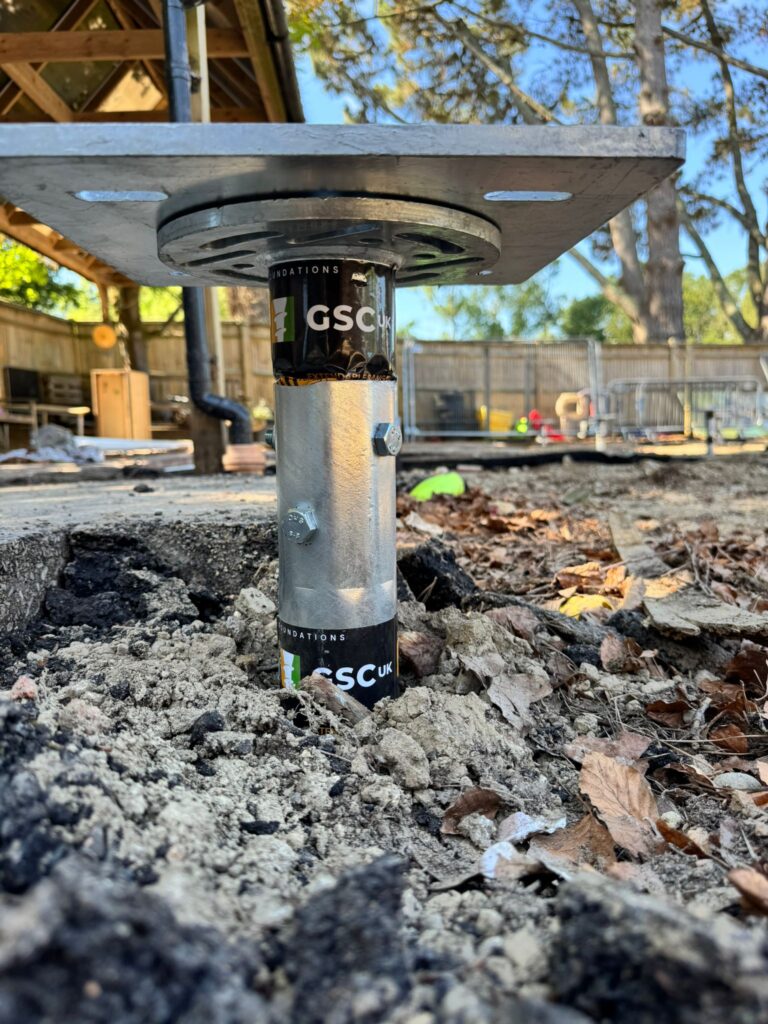
Winter ground varies day to day. What’s frozen solid on Monday might be muddy by Wednesday after rain. The beauty of ground screws is that they work in both conditions – the only limit is how brave you are!
Our professional installation team is always on hand, whether you need help with a back garden build or are planning a large-scale or commercial project. We can also provide load testing for heavier, large-scale, or building regulation-applicable builds.
Comparing Your Options for Cold-Weather Building
Here’s a quick and easy-to-read comparison table that compares typical foundation options and their winter compatability:
| Foundation Type | Weather Dependency | Installation Time | Load-Bearing | Winter Challenges |
| Standard Concrete | High – requires 5°C+ | Days (plus curing) | After curing | Temperature monitoring, thermal protection, frost risk |
| Rapid-Set Concrete | Medium – still needs protection | Hours (plus curing) | After curing | Very short working time, high cost, frost risk remains |
| Concrete Piers | High – same as standard concrete | Days (plus curing per pier) | After curing | Multiple cure points, digging frozen ground, moisture issues |
| Ground Screws | None – works in any temperature | Often same day | Immediate | None |
Ground Screws: Ideal For Winter
If you’re planning a construction project and don’t want to wait for warmer weather, ground screws offer a practical solution that works in ice, snow, and freezing temperatures.
At Screw Foundations UK, we’ve installed foundations throughout winter for decades, working in all conditions, from light frost to deep-frozen ground. While the concrete mixers sit in the yard gathering rust, we never stop!
Ready to get started? Browse our complete range of ground screws and brackets to find what you need, or contact us for advice and guidance.