


The ultimate problem solvers in construction
Concrete has carried construction for over a century. But ask any builder, engineer, or self-builder about the most awkward foundations they’ve ever poured, and you’ll hear the same problems come up again and again.
We’re talking sloping ground, tree roots, sites you can’t get a digger into, soft or contaminated soil, deadlines that won’t move, and clients who want everything reversible.
Rather than being edge cases, they make up a growing share of the projects landing on desks in 2026, and the proportion is only rising.
Luckily, there are solutions to the perennial issues of concrete foundations.
Read on as we walk through some classic and modern construction problems and how to solve them.
Sloping and Uneven Ground Without the Earthworks
A sloping site is a textbook example of concrete’s drawbacks. To pour level foundations on a slope, you generally have to either step the foundations down, retain the higher ground, or excavate and level the whole footprint before you start.
How Ground Screws Handle Domestic Slopes
Ground screws are one such solution that swerves the problem entirely. You can install each screw to a different depth, then adjust the bracket on top above ground to bring everything to a perfect level. There are several benefits:
- No retaining walls or stepped foundations
- No excavation spoil to remove
- One-day installation in most cases
- Brackets that fine-tune the level above ground
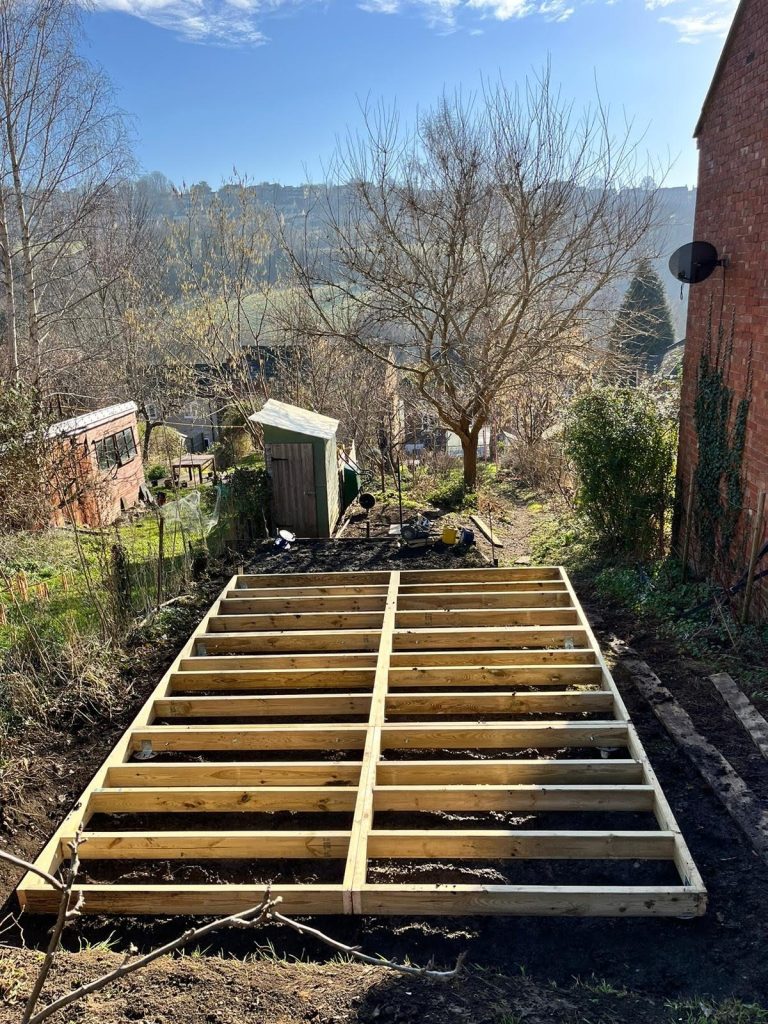
It’s exceptionally easy to maneveure ground screws around a slope, as shown by this steeply sloped garden where we installed a timber base.
Working Safely Around Trees and Root Protection Areas
Trees with Tree Preservation Orders, root protection areas and ancient hedgerows make for some of the toughest planning constraints to design around.
Excavating for concrete foundations within an RPA is usually a non-starter – the digging damages roots, the cement contaminates soil chemistry, and the footprint compacts the ground, harming long-term tree health.
Hand-Installed Ground Screws Among Roots
Ground screws are particularly handy here. We can place them precisely between roots, install them by hand without machinery, and leave the soil structure essentially intact.
There’s no excavation through the root zone, no concrete contamination of soil chemistry, no compaction from heavy plant, and no real disturbance to surrounding root systems. If a major root sits in the way of a planned position, we can simply move the screw a few centimetres.
Raised Platforms on Helical Screw Piles
For raised platforms – boardwalks through woodland, fire engine access routes through TPO areas, decking around mature trees – helical screw piles transfer loads to point bearings at depth, well below the root zone.
The screws thread through the soil profile rather than crushing it, and the overhead structure allows oxygen and water to reach the roots above.
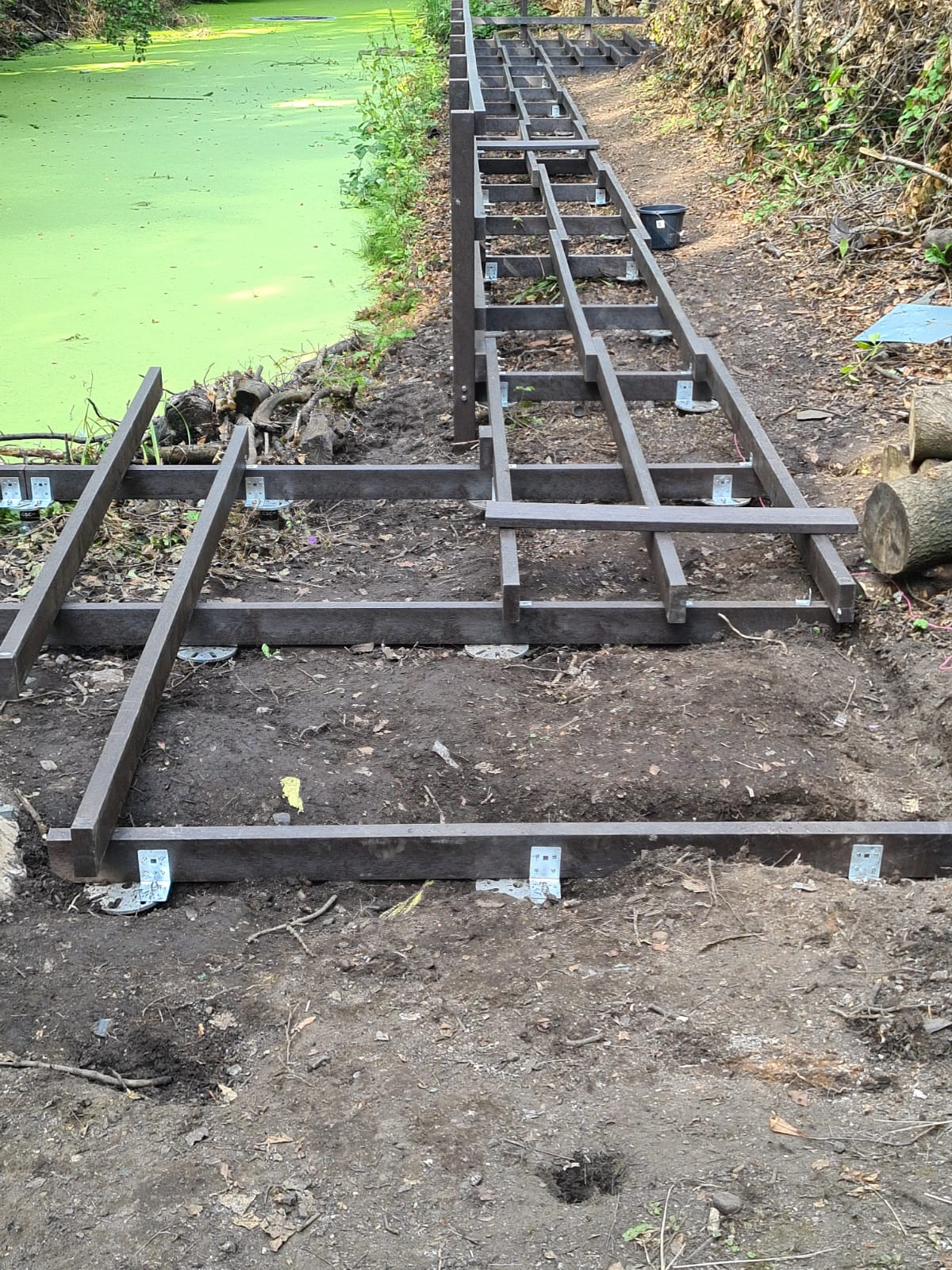
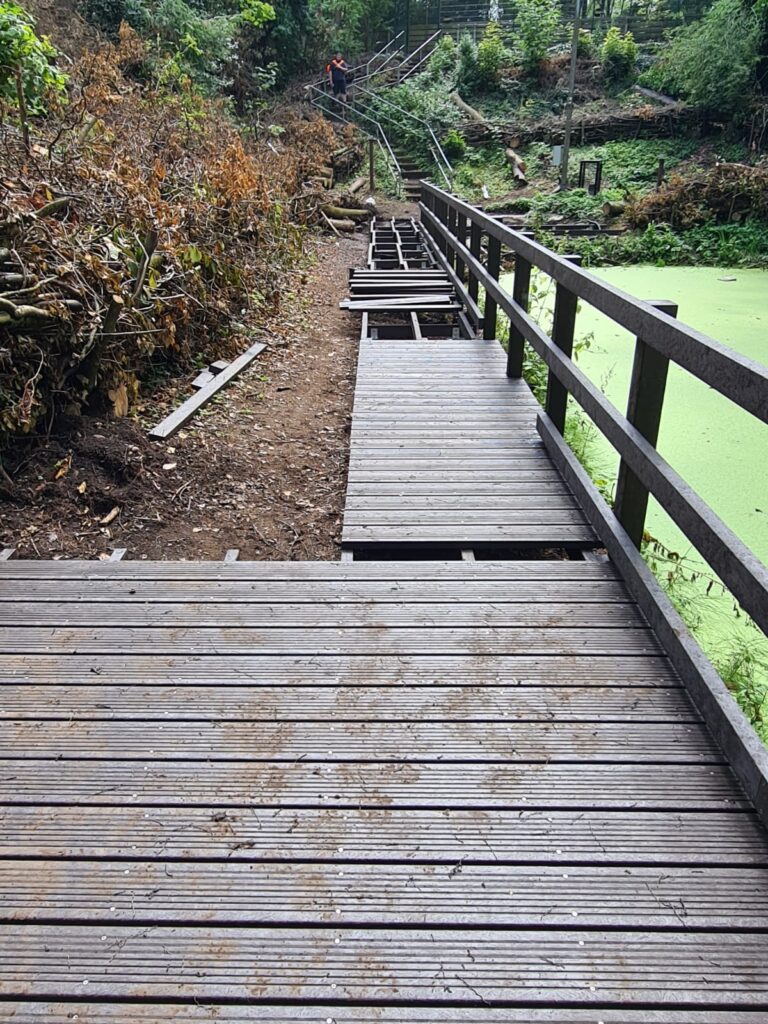
We’ve installed exactly this kind of foundation on protected sites where concrete simply wasn’t an option under planning conditions, such as this school boardwalk in Leicester.
Reaching Awkward Sites That Diggers Can’t Get To
Restricted access is another problem that concrete handles pretty badly. If you can’t get a mixer truck or pump close enough, you’re either barrowing concrete in for hours or paying for specialist equipment. Not ideal (or fun) either way.
Ground Screws Fit Through a Side Gate
We can carry ground screws to the site by hand. The screws themselves, the brackets, and the installation tools all fit comfortably through a side gate or down a path.
For a typical garden room or annex, a two-person team installs a full set of foundations in a single day, even on sites where a digger would never fit.
Smaller Tracked Machines for Tight Plots
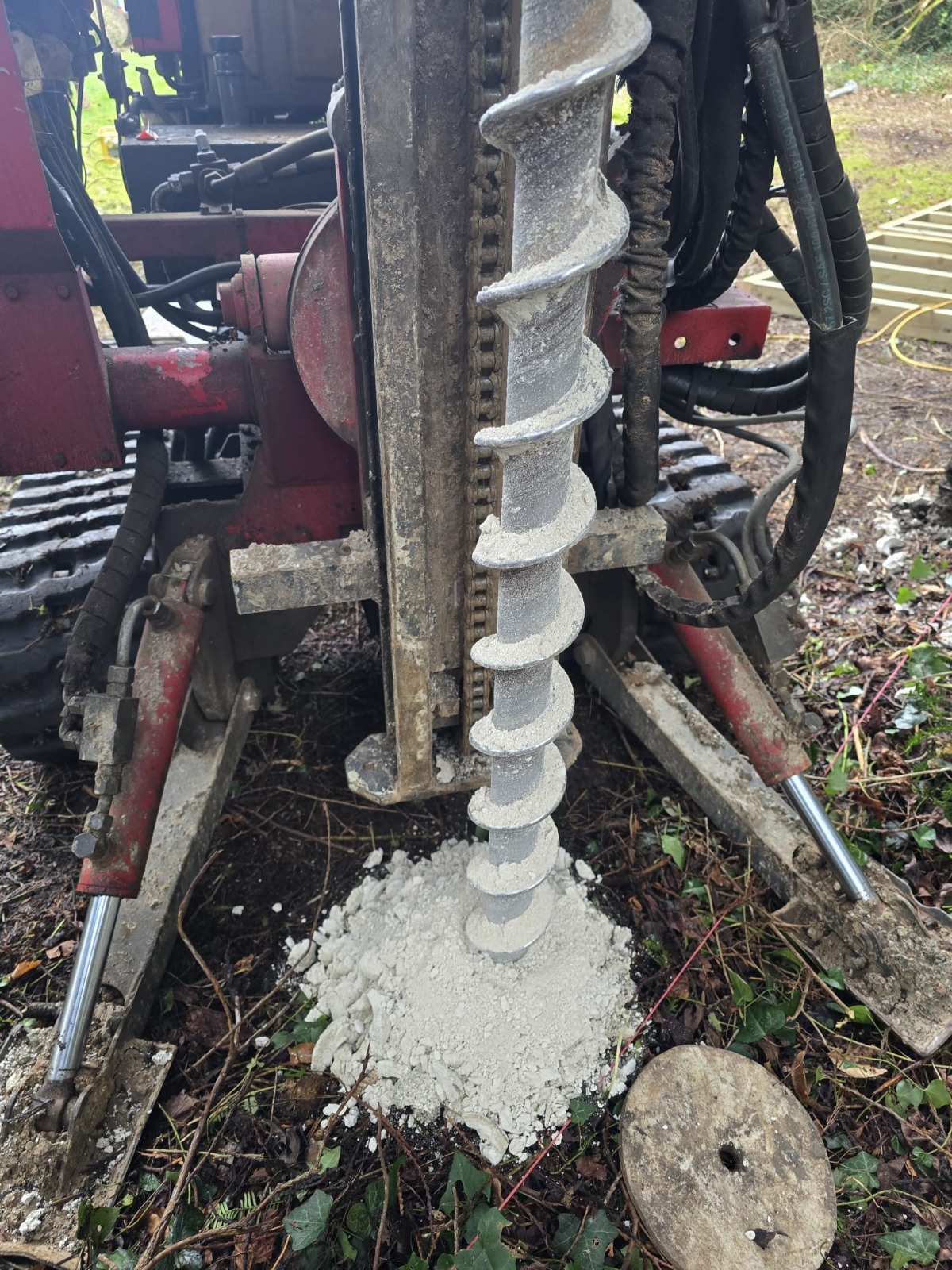
For larger projects, we install helical screw piles using a smaller tracked machine – anything from 1.5 to 13 tonnes depending on the pile size – making them workable on sites where a full piling rig couldn’t operate. That opens up:
- Restricted urban infill plots
- Gardens behind terraced houses
- Tight commercial yards and goods-in areas
- Sites with low headroom or narrow access routes
- Live operational sites where disruption must stay minimal
Beating the Curing Clock on Tight Schedules
Concrete needs time. Even fast-curing mixes need days before they can withstand their top-spec load. For modular buildings, garden rooms, and other times where time is of the essence, you want a quicker solution.
Same-Day Load Bearing
Both ground screws and helical screw piles take load the moment we install them, with no waiting, no curing, and no second visit needed to start the next phase.
We can install a foundation in the morning and have the building craned into place that afternoon for projects such as:
- Temporary classrooms installed during the half-term holidays
- Modular healthcare units on live hospital sites
- Event structures with fixed opening dates
- Commercial fit-outs with strict trading windows
- Holiday parks, suppose y0u need some pods or units erected before peak season
Heavier Projects Where Helical Screw Piles Fit The Bill
For most domestic and light commercial work, ground screws comfortably meet load requirements.
However, when projects scale up – full residential houses, two-story extensions, retaining walls, bridges, gantries, battery storage compounds, data centres – the loads outgrow what a hand-installed screw can deliver.
Standard Sizes and Bespoke Designs
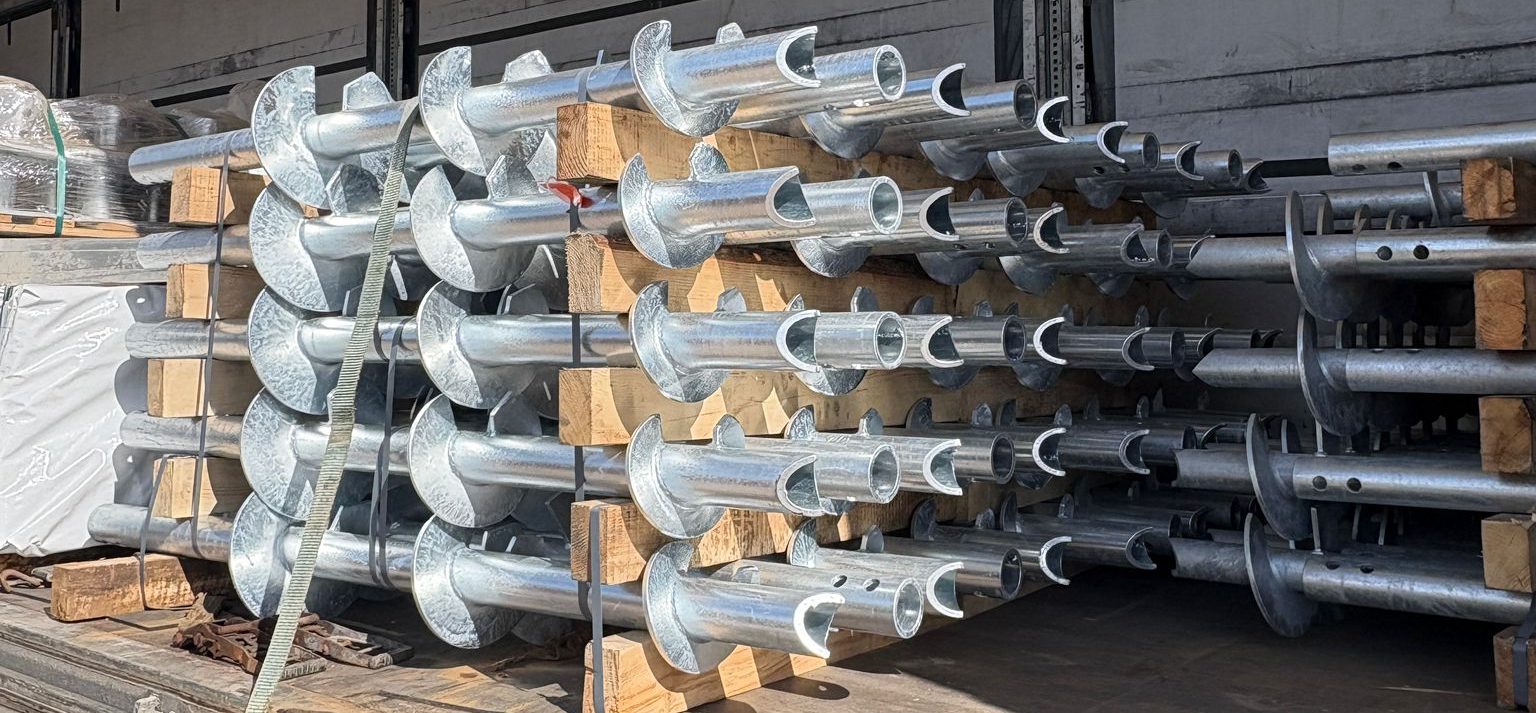
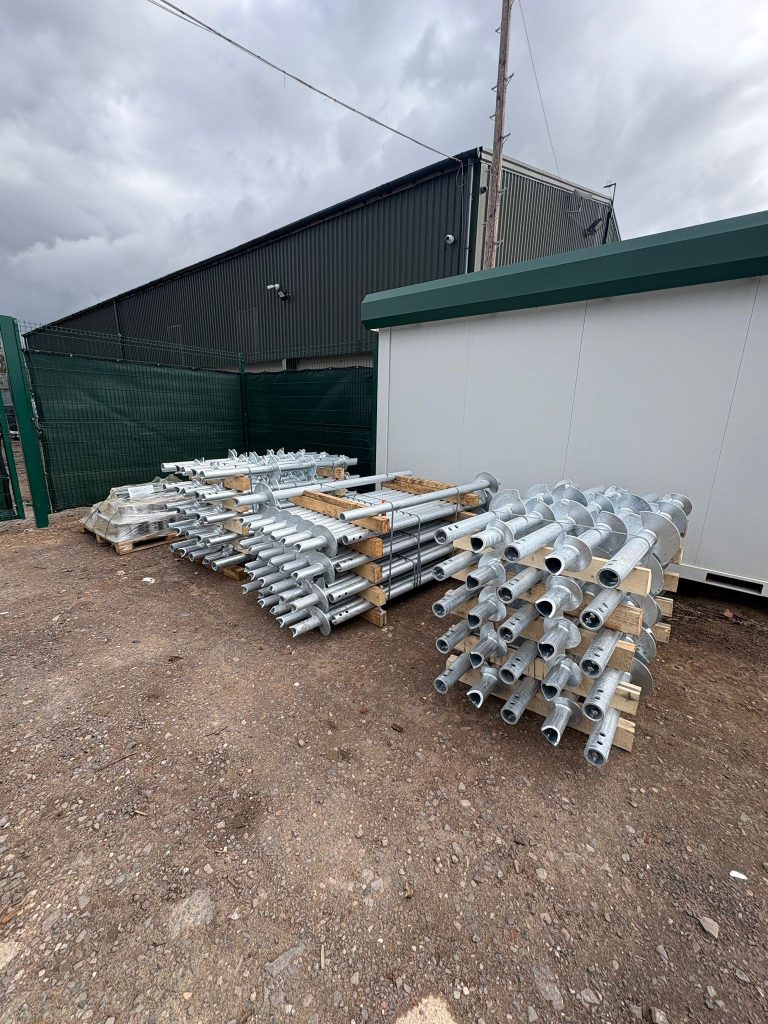
This is where our helical screw pile range comes into play. Available in standard 76R, 89R, 114R and 140R sizes, with bespoke designs to order, these engineered piles handle loads that previously demanded deep concrete piling.
What Comes With Every Pile Installation
When we handle the installation, every project includes:
- Site survey and ground assessment
- Site-specific design with load calculations
- Calibrated torque monitoring during installation
- Full torque pile log for every pile
- Building control documentation and certification
- Optional static load testing where required
Manufactured to EN 10025, EN 10210/EN 10219, EN ISO 1461, and EN 1090 standards, helical screw piles deliver the certified performance that engineers and contractors expect.
Working with Building Control and Engineers
Most commercial projects require various approvals, including Planning Permission and building control approval, and the documentation side of that is typically quite complex, depending on the scale of the project and the site.
Engineers require load calculations that match the installed design, building control officers need evidence that the foundation performs as specified, and planners may want sight of soil reports, manufacturer certificates and installation records before they sign anything off.
Indeed, obtaining permissions can take considerably longer than the build sometimes – so any methods of accelerating the process are warmly welcomed.
What We Provide for Each Project
For helical screw pile projects, we put the documentation together as part of the installation rather than chasing it up afterwards.
For each pile we install, we record the depth, torque readings and load capacity, and the torque pile log goes into the project file alongside the original design calculations and any static load testing the engineer has asked for.
Engineers and building control officers can read this documentation the same way they would for any other piling system, so there’s no new format anyone needs to learn
Working Hand-in-Hand With Engineers and Building Control
Our team works with engineers from the design stage through to sign-off, providing technical data, attending site visits where needed, and making sure the installation matches what’s been specified on paper.
The relationship matters as much as the documentation, because most foundation queries can be answered quickly when everyone has the same information.
For engineers and specifiers, the support package covers:
- Pre-design consultation on pile sizing, depth and load capacity
- Site survey and ground assessment data shared in formats engineers can use directly
- Real-time torque data during installation, with anomalies flagged immediately
- Post-installation reports formatted for building control submission
- Continued technical support through the build and at handover
For building control, that means a foundation they can approve on the documented evidence, without needing to call for additional testing or extra calculations later in the project.
For the project itself, it means one less reason for delay – and one more reason engineers reach for screw foundations on the next job.
Getting Started With the Right Foundation
Every site has its own challenges. The right answer might be ground screws, helical screw piles, or a combination of both – and we’ll tell you which works best for your project.
We’ve been a leading national supplier of ground screws for over 15 years, and we now offer high-quality, larger-scale screw pile foundations for larger construction and infrastructure projects.
For domestic projects, our DIY range and online calculator help you work out what you need.
For commercial and civil work, our in-house engineering team handles design, supply and installation as a turnkey service, with site-specific load testing and full documentation for building control approval.
Contact us to talk through your project. There’s very little we haven’t seen – and almost certainly a foundation solution that works for what you’re trying to build.