


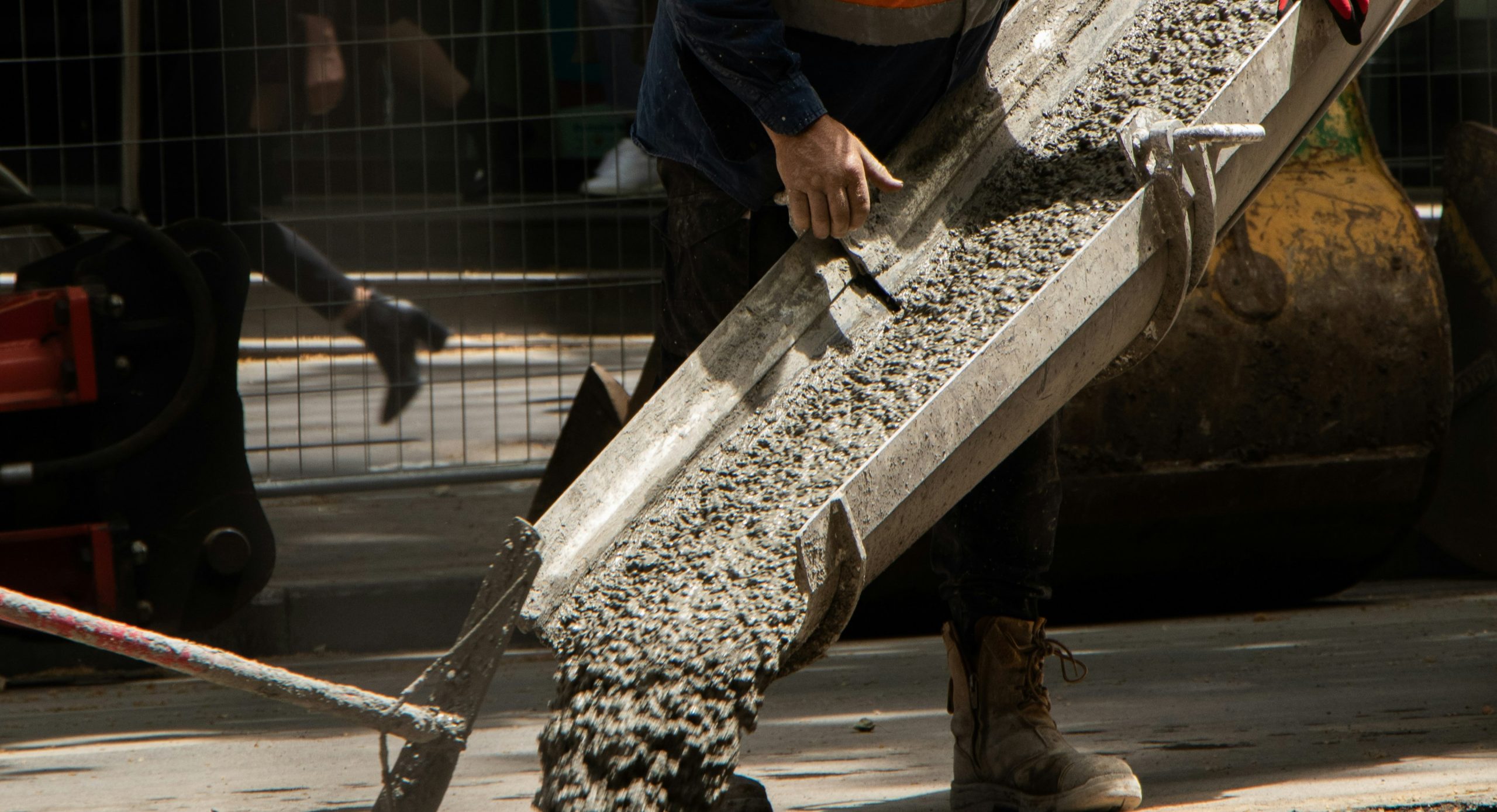
How to keep construction rolling over winter
Are you considering pouring concrete in winter? Is it possible? Is it a good idea?
Understanding the challenges and nuances here is key to avoiding serious issues, wasted money, and delays on your project. More importantly, there’s a better way to build a foundation system that performs as well in January as in July.
In this guide, we’ll walk you through why concrete becomes problematic in winter, how to work around these issues, and the alternatives.
How Temperature Interacts With Concrete
Concrete relies on a chemical reaction called hydration to gain strength. When cement mixes with water, the reaction generates heat and transforms the mixture from a liquid to a solid.
It sounds simple enough, but there’s a catch – this reaction needs some level of warmth to work properly. If you’ve ever searched for a concrete curing temperature chart, you’ll know the numbers are quite specific.
Industry standards require concrete to stay above 5°C until it reaches a strength of 5 MPa (megapascals – a measure of how much pressure the concrete can withstand).
For most standard mixes, achieving this initial strength requires approximately 48 hours at the minimum temperature.
What happens when temperatures drop:
- Water in fresh concrete freezes at around -4°C, expanding by approximately 9%
- This expansion can tear the concrete apart from the inside
- Even temperatures just above freezing dramatically slow strength development
- Concrete exposed to freezing within the first 24 hours can lose up to 50% of its potential 28-day strength
But it’s not just about air temperature. You also need to consider the ground temperature, which must be at least 2°C and absolutely free from frost, ice, or snow. The concrete should arrive on site at a minimum of 5°C, which your supplier may not be able to guarantee on the coldest days.
What Rapid-Set Concrete Can (and Can’t) Do in Winter
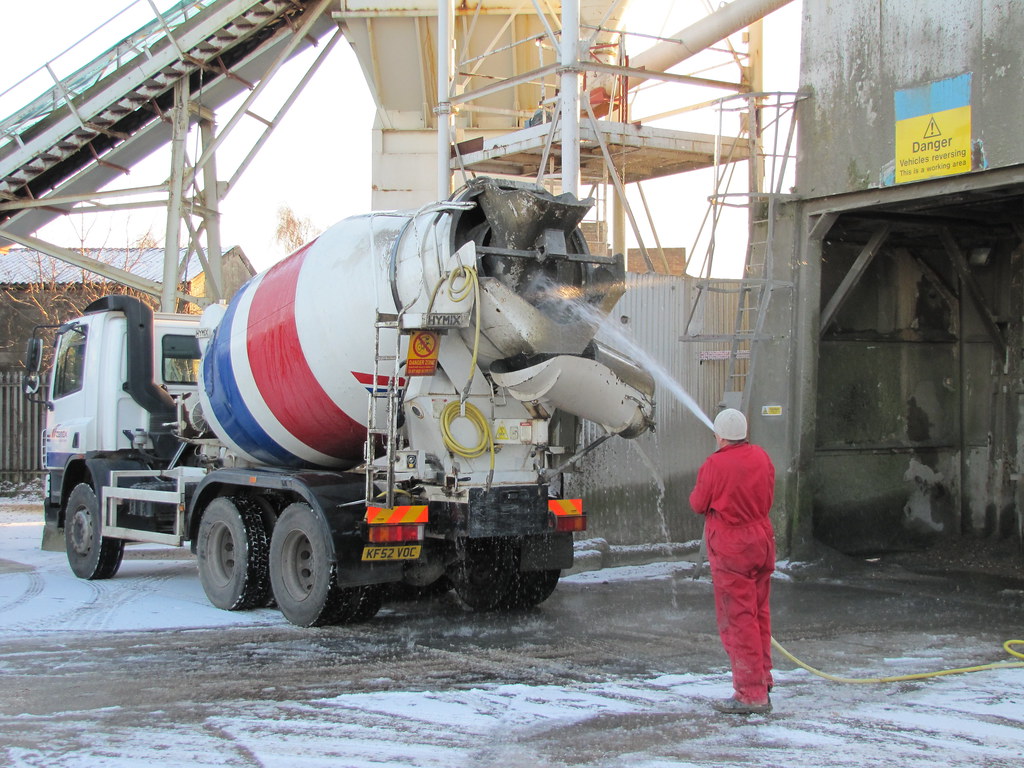
You might have heard about rapid-set or fast-setting concrete as a solution for winter work.
These specialist mixes contain additives that accelerate hydration, allowing the concrete to harden within an hour rather than the usual 48 hours. The faster setting time generates more heat during curing, which sounds like it would solve the cold-weather problem.
What it does:
- Hardens within an hour instead of 48 hours
- Generates more heat during curing
- Performs better in cold conditions than standard mixes
What it doesn’t eliminate:
- The need to keep concrete above freezing during initial setting
- Ground preparation requirements to remove frost and ice
- The need for thermal protection if temperatures drop too low
- Cost concerns (often 60-70% more expensive than standard concrete)
Additionally, the rapid setting time means you have very little working time once it’s mixed, making it unsuitable for larger pours where you need time to place and finish the concrete properly.
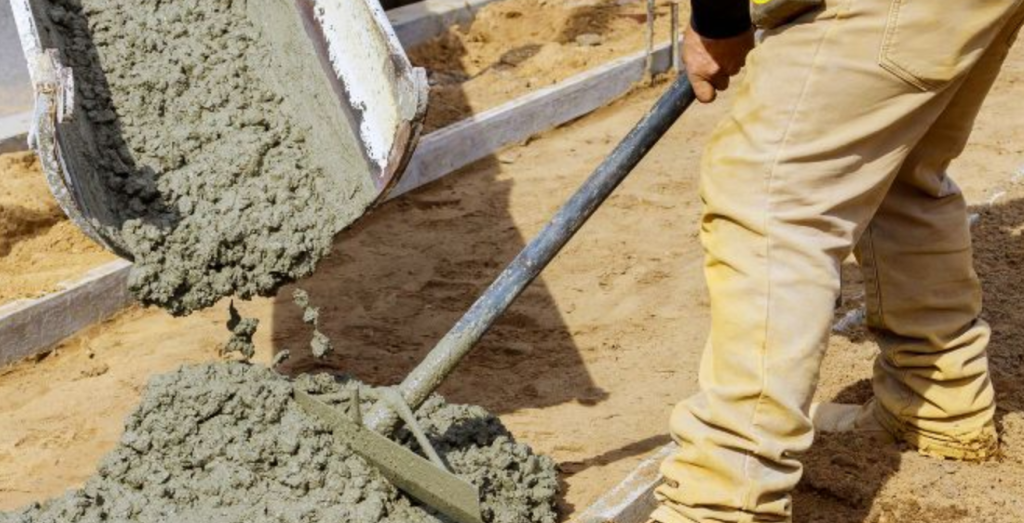
Many suppliers don’t recommend rapid-set concrete for load-bearing structures, limiting its applications for foundation work.
In short, rapid-set concrete reduces, but doesn’t eliminate, the challenges of winter concreting. You’re still weather-dependent, still require extensive preparation, and you’re paying a premium for a product with significant practical limitations.
Pouring Standard Concrete When Temperatures Drop
Successfully pouring concrete when temperatures drop requires extensive planning and equipment. Preparation begins days before the pour, and work continues for days afterwards.
Many people searching for advice on pouring concrete in winter UK discover just how involved the process really is. Here’s what you’re signing up for if you decide to proceed with winter concrete:
Before You Even Start
Preparation begins days before the pour. You’ll need to protect the ground from freezing with thermal blankets or insulation, potentially for several days in advance.
On the morning of the pour, every trench and cavity must be inspected for frost that may have formed overnight. If frost is present, you’ll need ground heaters to thaw the area before work can begin.
During Installation
Speed is absolutely essential. The concrete needs to be transported from the truck and placed as quickly as possible to minimise heat loss. Any equipment used must be kept warm and protected from frost. You can’t simply leave tools and machinery outside overnight.
Wind presents an additional challenge. Even if air temperatures are just about acceptable, wind chill can rapidly cool the concrete surface.
After Pouring
Immediately after finishing, the concrete should be covered with insulating blankets or frost protection. These need to stay in place, and you’ll need to monitor the concrete’s temperature regularly – often every few hours for the first 48 hours.
Even with all precautions, concrete poured in winter carries inherent risks. A sudden overnight drop in temperature can damage concrete. Weather forecasts aren’t always accurate, and temperatures can vary significantly across a building site – particularly in exposed areas or low-lying spots where cold air settles.
If something goes wrong, faulty concrete may need to be removed entirely and the work repeated – potentially weeks later when conditions improve.

Will Concrete Freeze Tonight? The Question That Keeps Builders Awake
During winter’s cold snaps, “will concrete freeze tonight” becomes one of the most frantically searched questions online – and with good reason.
Weather forecasts give you air temperature, but that’s only part of the story. Concrete generates heat during curing, but this slows as temperatures drop, creating a vicious cycle.
Moreover, ground-level temperatures can be several degrees colder than the forecast air temperature, especially in exposed areas or low-lying spots. Wind chill rapidly strips heat from the concrete surface. A forecast of 3°C might mean your concrete surface drops to -1°C by morning.
To summarise, it’s certainly a risk. Which is why ground screws are such an effective alternative for autumn and winter projects.
How Ground Screws Eliminate Weather Concerns Entirely
Ground screws are nothing like concrete despite achieving the same objectives for laying foundations.
Each ground screw from Screw Foundations UK consists of a hot-dip galvanised steel shaft with helical blades. These concrete-free foundations are driven into the ground using handheld or hydraulic equipment capable of generating sufficient torque to penetrate even frozen soil. The process is purely mechanical – no mixing, no curing, no waiting.
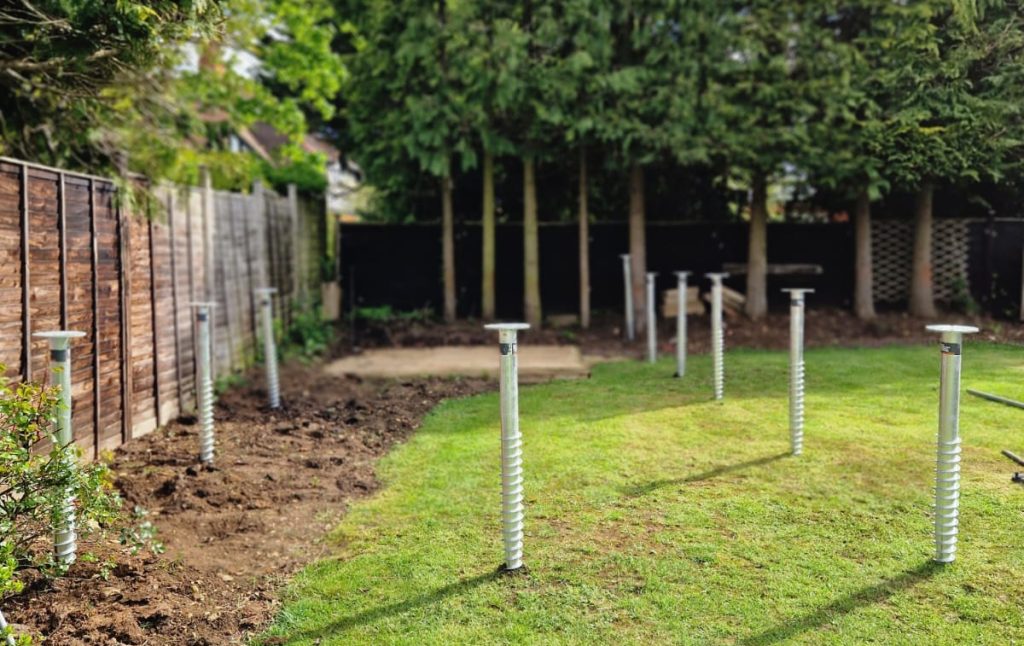
The moment a ground screw is installed and fitted with its mounting bracket, it’s ready to bear loads.
There’s no curing time, no temperature requirements, and no weather dependency. Whether it’s -5°C or 25°C, the installation process and the final strength remain exactly the same.
Why Ground Screws Work When Concrete Doesn’t
The advantages of ground screws for winter installation are substantial:
- Installation in any weather: Ground screws can be installed during frost, snow, or rain. The equipment might need to work slightly harder in frozen ground, but modern hydraulic drivers have no trouble penetrating frozen soil layers. In fact, frozen ground can sometimes be an advantage, as it’s more stable and less likely to become muddy.
- Immediate project continuation: You can begin building as soon as installation is complete. For a typical garden room or decking project, this means work can begin the same day or the next morning. Compare this to concrete, and the difference is night and day.
- Clean installation with minimal mess: There’s no concrete mixing on site, no risk of frozen water in equipment, and no need for skips to remove spoil. That’s a huge benefit when working on cold, wet sites.
- Cost predictability: The price for ground screw installation is consistent year-round. What you’re quoted is what you pay.
We’ve successfully installed ground screws in the very depths of winter. After all, some projects can’t just stop when the weather gets worse. And we find many customers want a head start on their projects before spring comes around.
Real-World Applications for Winter Ground Screw Installation
Ground screws are suitable for a wide range of projects that traditionally would have waited for spring:
Garden Rooms, Home Offices, Sheds, and Decking
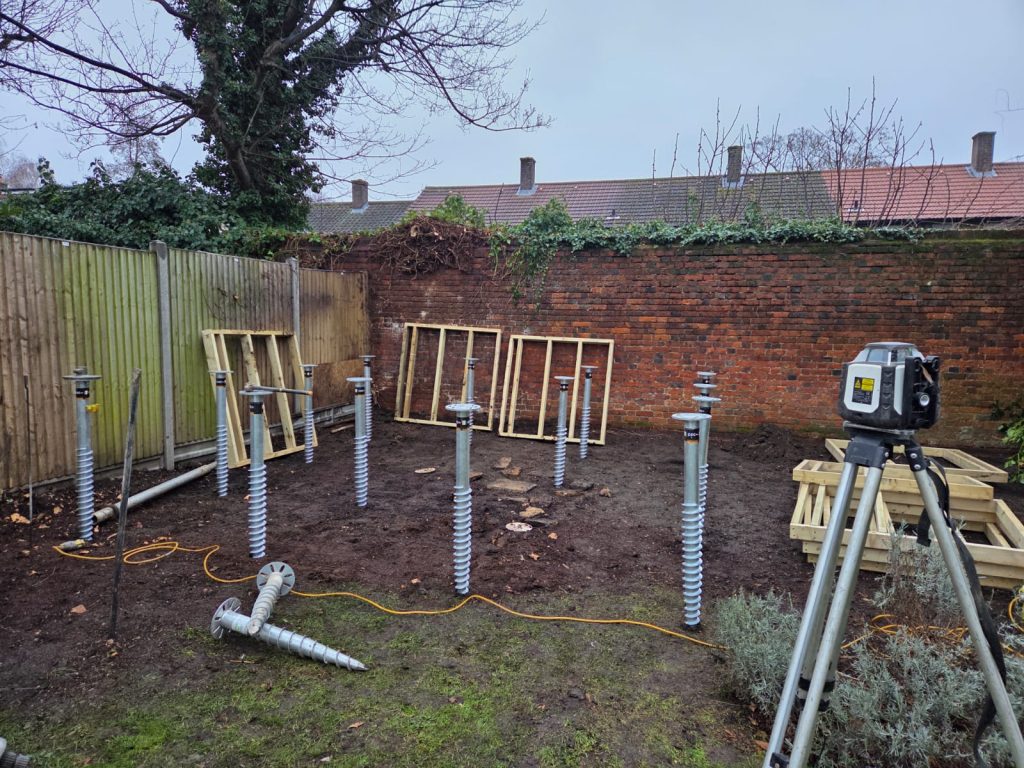
Building a deck in winter? Or a home office, shed, or studio? You’ll need precise, level foundations, which you can install year-round with ground screws.
Our adjustable brackets allow perfect levelling even on sloped or uneven ground, and installation typically takes just a day. Your garden room or decking supplier can then deliver and install without delay.
Fencing and Gates
Fence posts and gate installations are frequently deferred over winter, leaving properties without proper security or boundaries for months. Indeed, it’s often the windy winter weather that necessitates new fencing and gates in the first place!
Ground screws provide instant anchoring for fence posts and gate structures, with no concerns about concrete curing or frost damage.
Commercial and Agricultural Buildings
Larger commercial projects benefit from foundations that can be installed year-round, so you’re not confined to the potentially busier spring and summer months.
Extended concrete curing times can push projects weeks or months behind schedule. Ground screws, conversely, allow commercial construction to continue through the winter, so businesses can hit the ground running come spring.
Professional Installation Makes All the Difference
While DIY ground screw installation is certainly possible for smaller projects, professional installation is highly valuable in winter conditions.
Our installation teams at GSC have over 15 years of experience working in all weather conditions and understand how to adapt techniques for different ground states.
We’ll assess ground conditions on the day and adjust installation methods if needed. We have the proper equipment to handle frozen or hard ground, and our team knows how to achieve perfect levels even under challenging conditions.
For larger or more complex projects – such as garden rooms, commercial buildings, or structures on sloped ground – professional installation ensures everything is done right the first time.
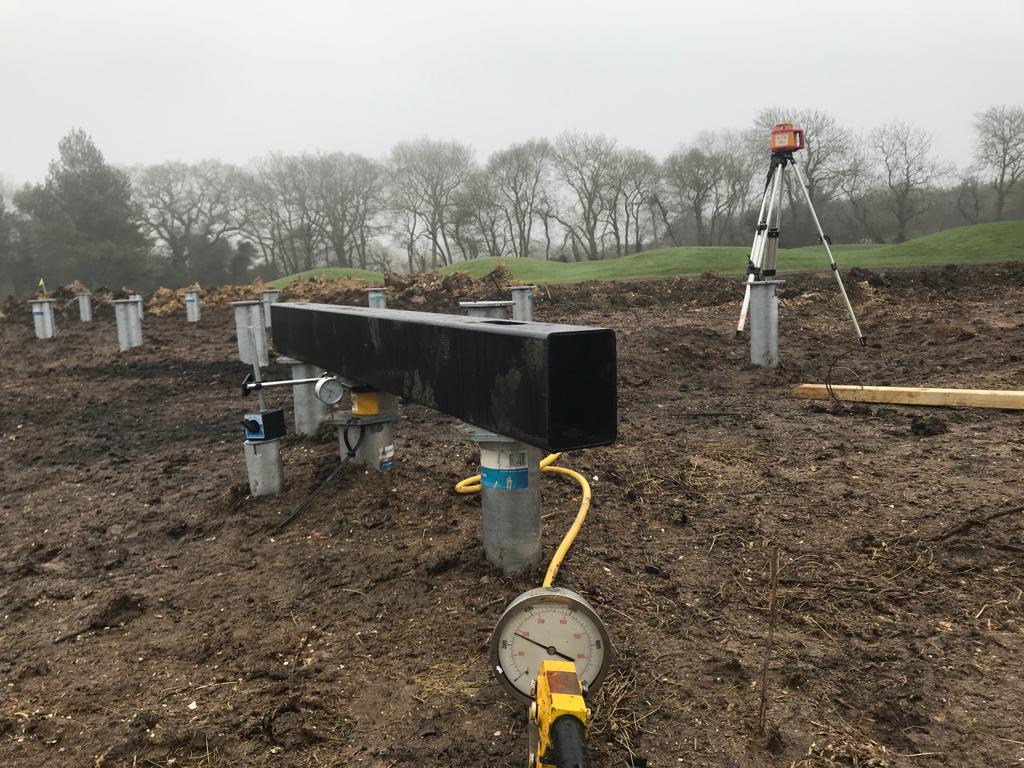
Our teams carry out installations nationwide and can typically complete foundation work in a single day. We also carry out professional load testing for larger, heavier buildings or when precise measurements are needed for other structural or engineering purposes.
Comparing Ground Screws vs Concrete in Winter
When you look at the complete picture, ground screws offer compelling advantages over concrete for winter construction:
| Aspect | Winter Concrete | Ground Screws |
| Weather dependency | Requires temperatures above 5°C, no frost/snow | Works in any weather, including frost and snow |
| Installation time | Several hours plus days of curing | Typically one day, load-bearing immediately |
| Additional equipment needed | Thermal blankets, heaters, monitoring devices | Standard installation equipment only |
| Ongoing monitoring required | 48+ hours of temperature checks | None |
| Risk of weather damage | High – unexpected frost can ruin the pour | None |
| Cost predictability | Variable – weather-dependent premiums | Consistent pricing year-round |
| Project delays | Common due to weather | Minimal |
| Environmental impact | High – cement production, waste removal | Low – minimal excavation, reusable |
Getting Started with Ground Screws This Winter
If you’re planning a construction project and are concerned about the winter weather, ground screws are a compelling solution.
At Screw Foundations UK, we’ve installed ground screws in all weather conditions across the UK. Our hot-dip galvanised ground screws are CE-approved and come with a 20-year guarantee, providing durable, reliable foundations regardless of installation date.
Whether you’re considering DIY installation or would prefer our professional installation service, we can help you choose the right ground screws and brackets for your project.
Don’t let winter defeat your plans. View our complete range of ground screws or contact us to discuss your project.
Our online calculator can help you work out exactly what you need, and our team is always available to provide technical advice.