


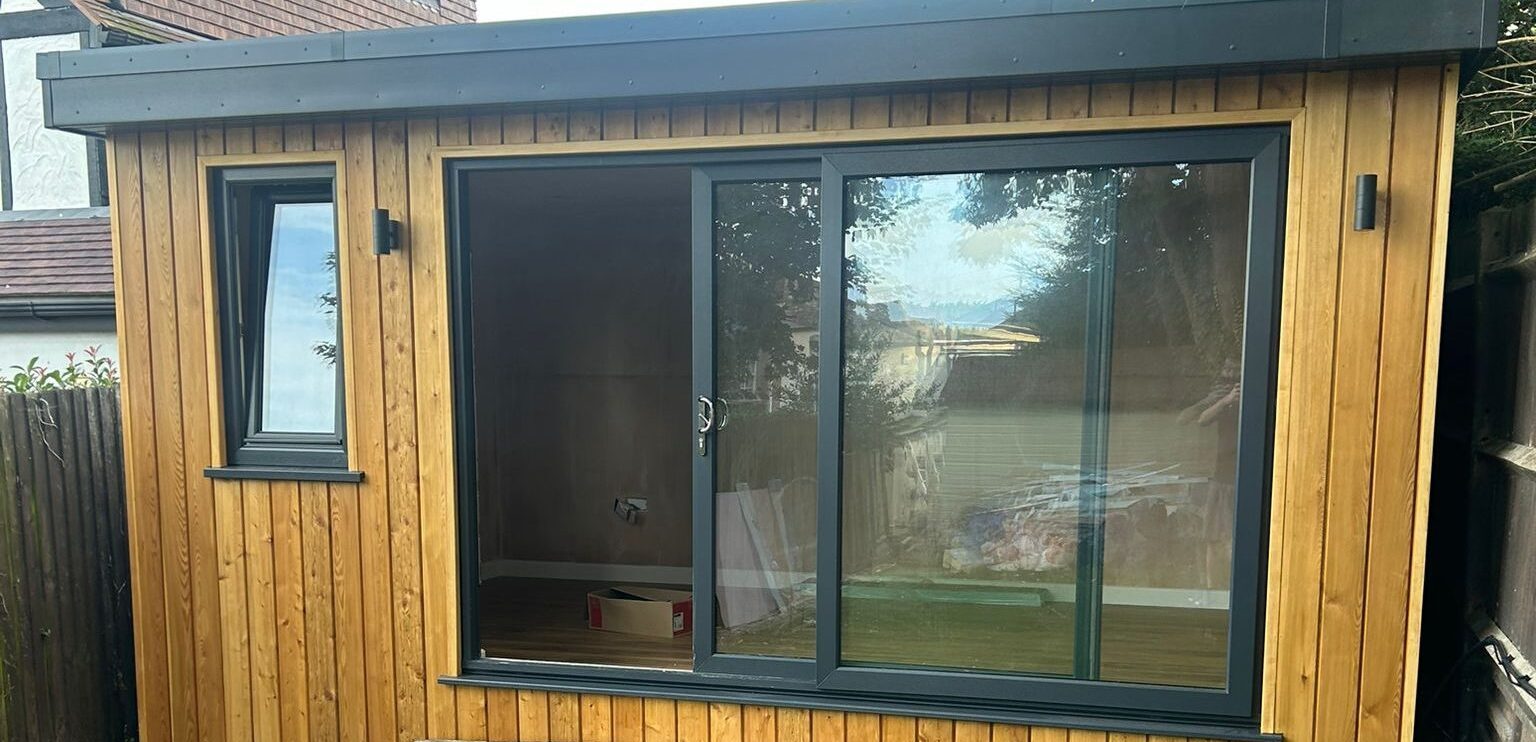
A complete guide to garden rooms for 2026
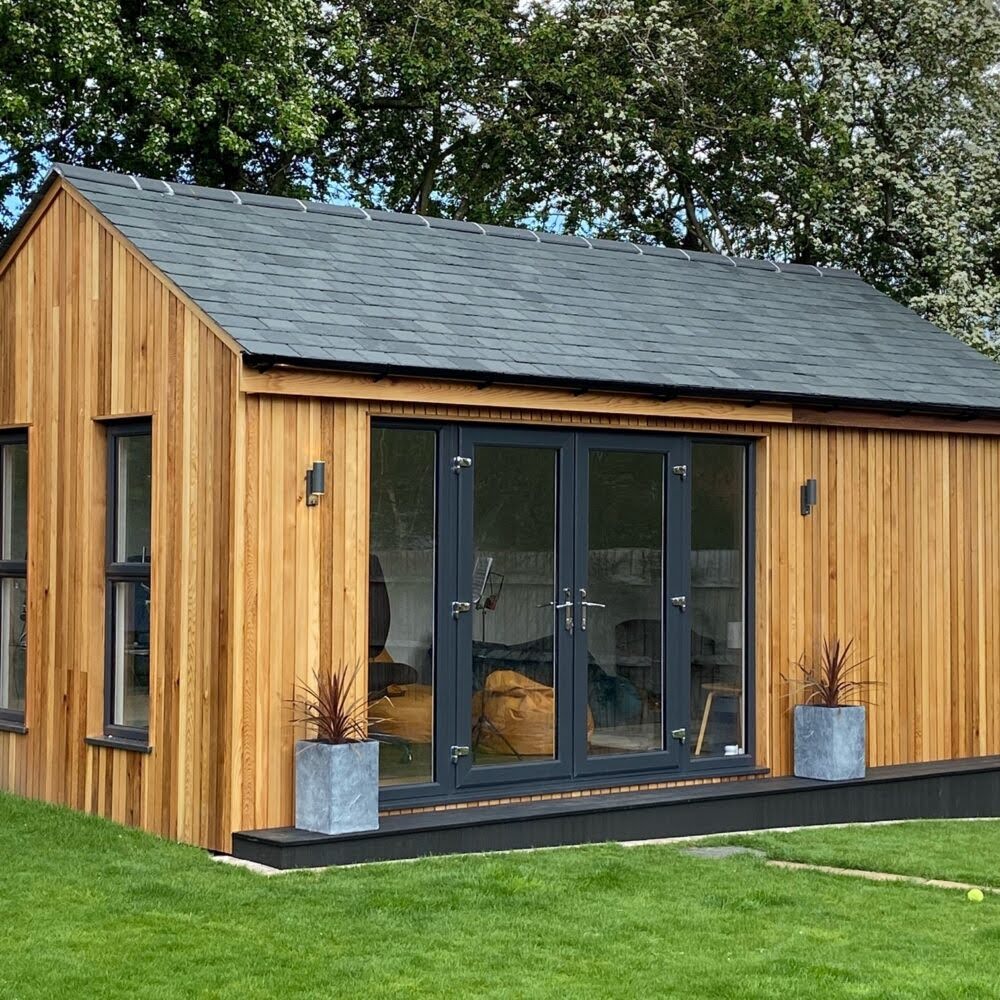
Garden rooms are one of the most popular home improvement projects in the UK right now. Whether it’s a home office, a gym, a studio, or just somewhere to escape to, the appeal is obvious – more usable space without the upheaval of a full house extension.
But they’re also one of the easiest projects to get wrong. Rush the planning, cut corners on the foundations, or ignore access issues, and you’ll end up with a garden room that causes more problems than it solves.
First, we’ll run through the top garden structure projects people are building right now to give you some inspiration. Then we’ll get into the practical do’s and don’ts that apply to virtually any garden build, from foundations and planning to access, timing, and build quality.
Top 5 Garden Structure Projects for 2026
If you’re looking for inspiration, you’re spoilt for choice. Here are five of the most popular garden structure projects people are building right now, and why ground screws bring unique benefits to the table for each.
1. Garden Rooms and Home Offices
Still the number one garden project in the UK, and it’s not hard to see why. A properly insulated, year-round garden room gives you a dedicated workspace without sacrificing a room inside the house.
The UK garden room sector has seen a 22% increase in installations over the past three years, and estate agents estimate that a high-quality garden room can add 5–15% to a property’s value.
Garden rooms need solid, level foundations that can handle a fully insulated, habitable structure. Ground screws deliver this without the excavation, concrete, or curing time – and they’re ideal for gardens with limited access, slopes, or trees you’d rather not disturb. A few reasons they remain our most popular application:
- No waiting around: Ground screws are immediately load-bearing, so your garden room supplier can start building the same day the foundations go in.
- Works on tricky sites: Slopes, tree roots, narrow access – ground screws handle all three without heavy machinery or excavation.
- Year-round installation: No need to wait for warmer weather. We install garden room foundations year-round, including the depths of winter.
- Adds property value: A well-built garden room on proper foundations is an asset to your entire property.
2. Decking and Outdoor Living Zones
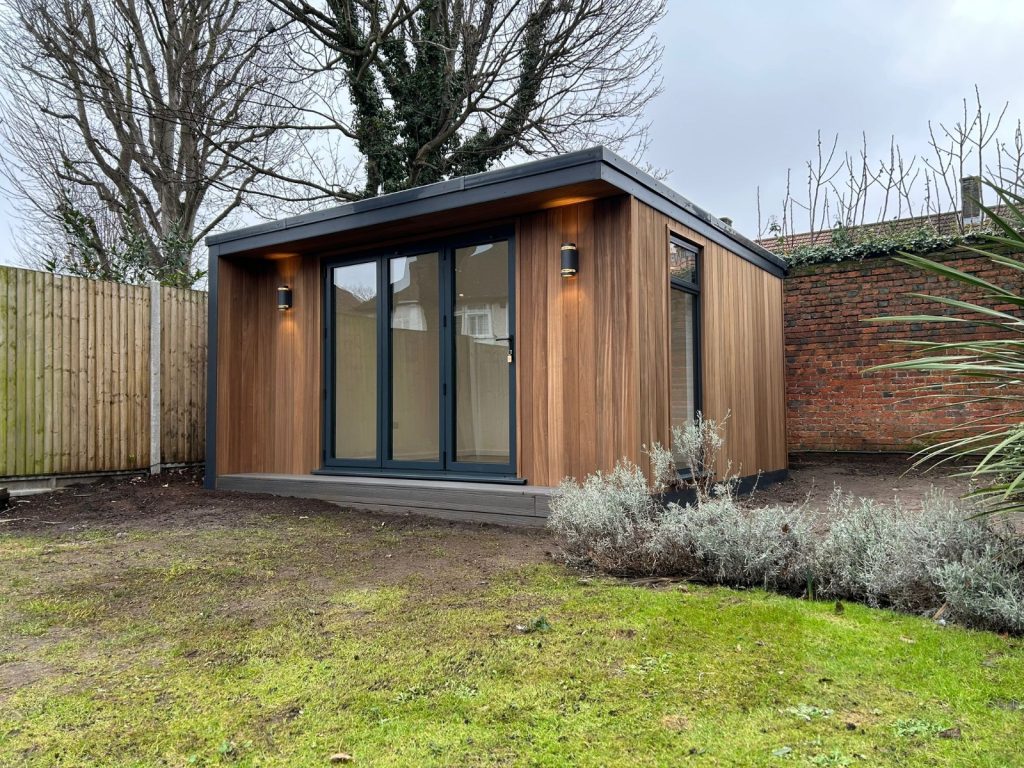
Decking now covers a wide range of zoned areas for dining, lounging, and entertaining, often spanning multiple levels or wrapping around other structures.
The key to great decking is the subframe, and the key to a great subframe is the foundations. Ground screws let you create level platforms on sloping or uneven ground without earthworks, and they integrate seamlessly with timber joist bases. Here’s why they suit decking so well:
- Multi-level made simple: Each ground screw can be driven to a different depth, so creating tiered or stepped decking on a slope doesn’t require extensive groundwork.
- Integrates with other structures: Combining decking with a garden room? You can install both foundations in a single visit for a unified, structurally consistent base.
- No rot from below: Ground screws elevate the joist base off the soil, improving airflow and reducing moisture contact that can cause timber to deteriorate.
- Fully removable: If your plans change down the line, ground screws come out cleanly, leaving no concrete blocks or damaged ground behind.
3. Pergolas and Covered Outdoor Spaces
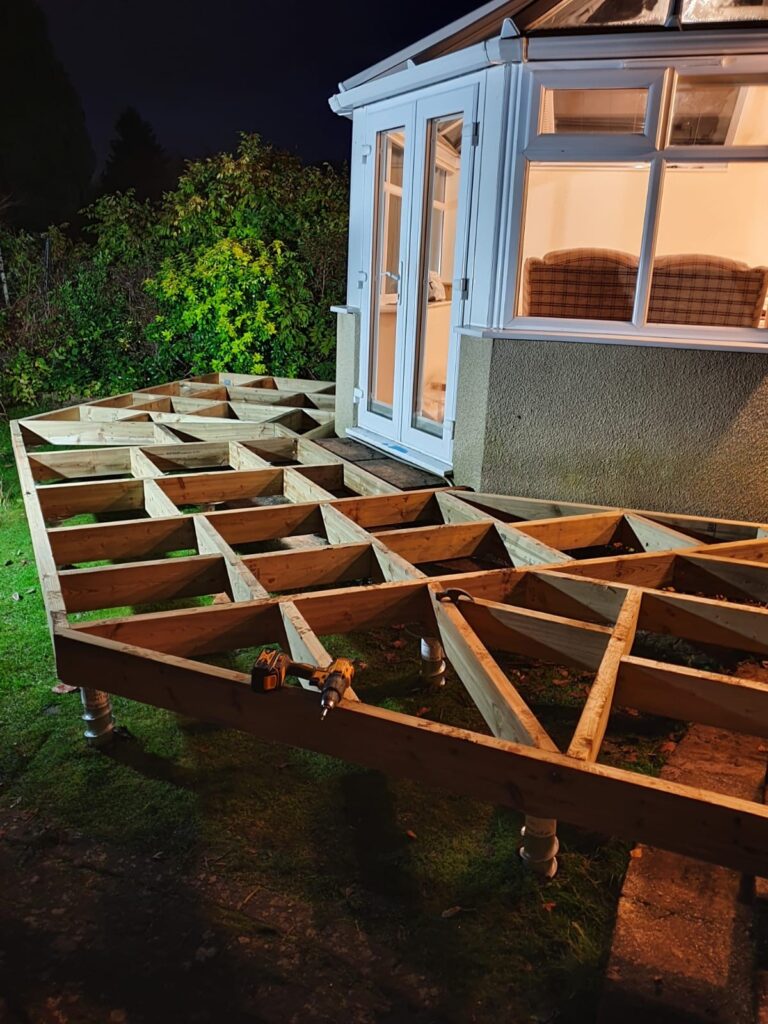
Pergolas with louvred or solid roofs are one of the fastest-growing garden projects in the UK.
They turn an exposed patio or decking area into a sheltered outdoor room you can use whatever the weather – for dining, relaxing, or housing a hot tub with a bit of privacy.
The posts need to be anchored securely, especially given the wind loads a covered structure attracts. Ground screws provide rock-solid anchoring for pergola posts without the need to dig post holes or pour concrete footings. Why they’re a natural fit:
- Handles wind uplift: Helical blades grip the soil along the full length of the screw, resisting the lateral and uplift forces to which covered structures are subject in exposed positions.
- Precision levelling: Our bracket systems work with posts from 80mm to 110mm wide and include full height adjustment – ideal for getting a pergola perfectly square and stable.
- No post hole drama: Forget digging holes, mixing postcrete, and propping posts while it sets. Ground screws anchor posts in minutes.
- Perfect for patios and decking: Ground screws can be installed through existing decking or adjacent to paved areas without tearing up the surface.
4. Outdoor Kitchens and Garden Bars
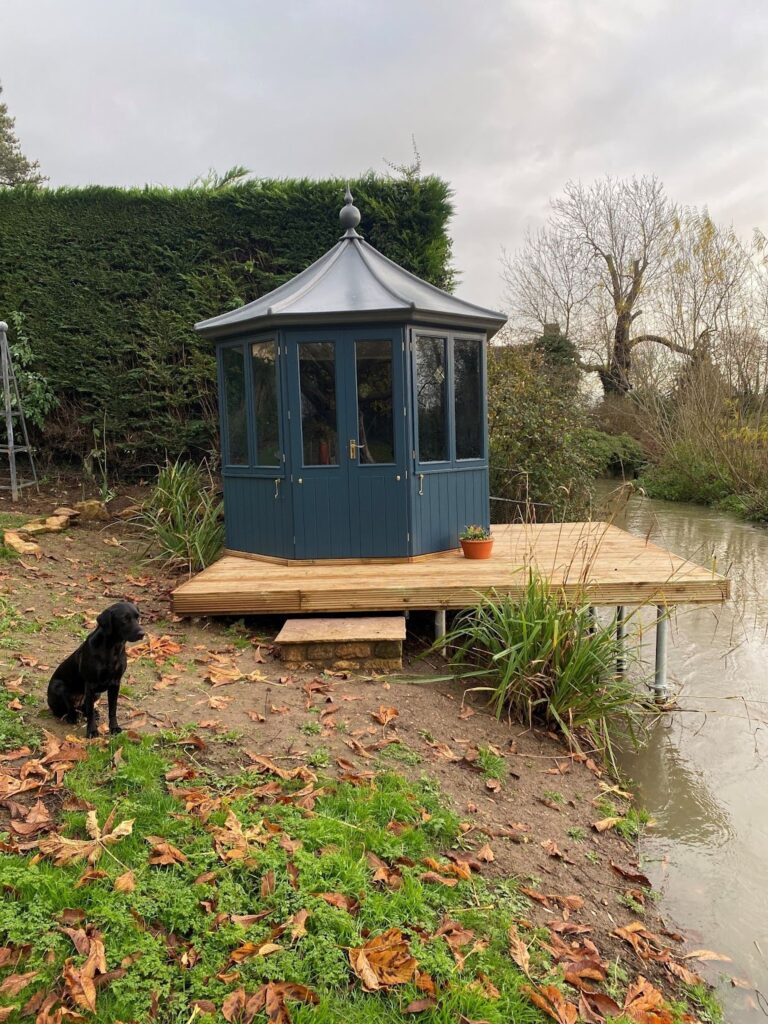
Outdoor kitchens with built-in BBQs, pizza ovens, countertops, and even sinks are becoming proper year-round structures. Garden bars – whether freestanding or built into a larger structure – are equally popular. And who wouldn’ want one?!
These setups need a solid, level platform to build on, and they’re often positioned on decking or a dedicated paved area.
Ground screws provide the foundation for the decking or structure that supports the kitchen, keeping everything level and stable without pouring concrete across your garden. A few things worth knowing:
- Level platform for appliances: Pizza ovens, built-in grills, and countertops all need a flat, stable surface. Ground screws deliver this on virtually any terrain.
- Flexible positioning: Want the kitchen at the end of the garden, next to the house, or integrated into a decking area? Ground screws are highly flexible.
- Future-proof: These setups tend to evolve over time. Ground screws are fully removable, so you can reconfigure without leaving permanent damage.
- Keeps your garden intact: No concrete mixing, no trenches, and no need for skips, so your garden isn’t trashed by the install.

5. Garden Gyms, Cinema Rooms, and Lifestyle Studios
The standard garden office has spawned a whole category of specialist garden buildings – gyms with integrated hot tub canopies, outdoor cinema rooms, music studios, art workshops, and yoga spaces. If you can do it indoors, someone’s building a garden room for it.
These structures often carry heavier loads than a typical garden room – gym equipment, hot tubs, and audio equipment all add up.
Ground screw specifications can be matched to suit, and because many of these builds are on the more ambitious end of the scale, getting the foundations right is non-negotiable. Here’s how ground screws handle it:
- Specified to the load: Longer screws, closer spacing, and heavier-duty brackets can all be specified to match the weight requirements of gym equipment or hot tubs.
- Hot tub ready: Hot tubs filled with water and people are seriously heavy. Ground screws provide the targeted load support needed at specific points beneath the tub.
- Integrated canopies and shelters: Many gym and hot tub builds include a side canopy or covered area. Ground screws support the full structure – building, decking, and canopy – from a single foundation system.
- Professional peace of mind: For ambitious builds, professional installation ensures the foundations are engineered to handle the load from day one.
Whatever you’re building, the same fundamentals apply. Let’s get into the do’s and don’ts that’ll help you get it right.
Do: Select the Right Foundations
Everything about your garden room depends on the foundations. Get them wrong, and you’ll be dealing with uneven floors, doors that stick, windows that won’t close properly, and moisture creeping in where it shouldn’t.
There are a few common foundation options for garden rooms:
- Concrete pads or slabs: The traditional route, involving excavation, pouring, and waiting for concrete to cure before building can begin. Reliable when done well, but time-consuming and messy.
- Ground screws: Steel shafts with helical blades that are driven directly into the ground, creating instant foundation points. The structure can often be erected on the same day.
Ground screws suit garden rooms particularly well. They’re quick to install, cause minimal disruption to your garden, and handle slopes and uneven ground without extensive earthworks.
Each screw can be driven to a different depth while the tops remain level, giving you a flat platform on virtually any terrain.
They’re also immediately load-bearing. The moment the screws are in and the brackets fitted, your garden room base is ready to build on.
How Downland Garden Rooms Built a Solid Base in a Single Day
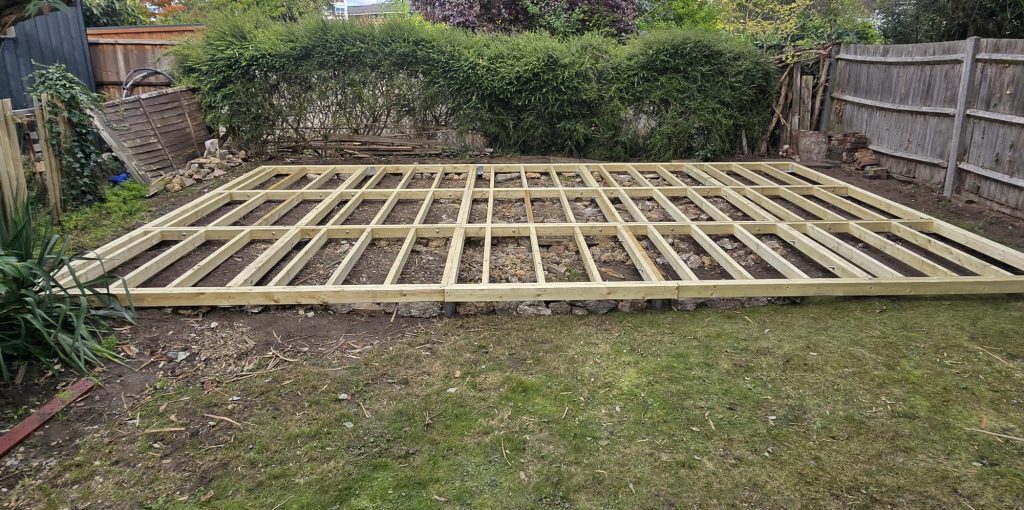
We installed 24 x 76mm x 1250mm ground screws and a 4″ x 2″ joist base with a double-ring beam for our long-standing trade partner ,Downland Garden Rooms, on a project in Epsom, Surrey.
The entire foundation was completed in a single day, and because ground screws are immediately load-bearing, there was no waiting around before erecting the garden room on the base.
Don’t: Underestimate What’s Beneath Your Feet
Hidden slopes, soft patches, heavy clay, compacted rubble, and tree roots can all affect foundation performance.
Before committing to any foundation method, take time to assess your site properly. A few things to look out for:
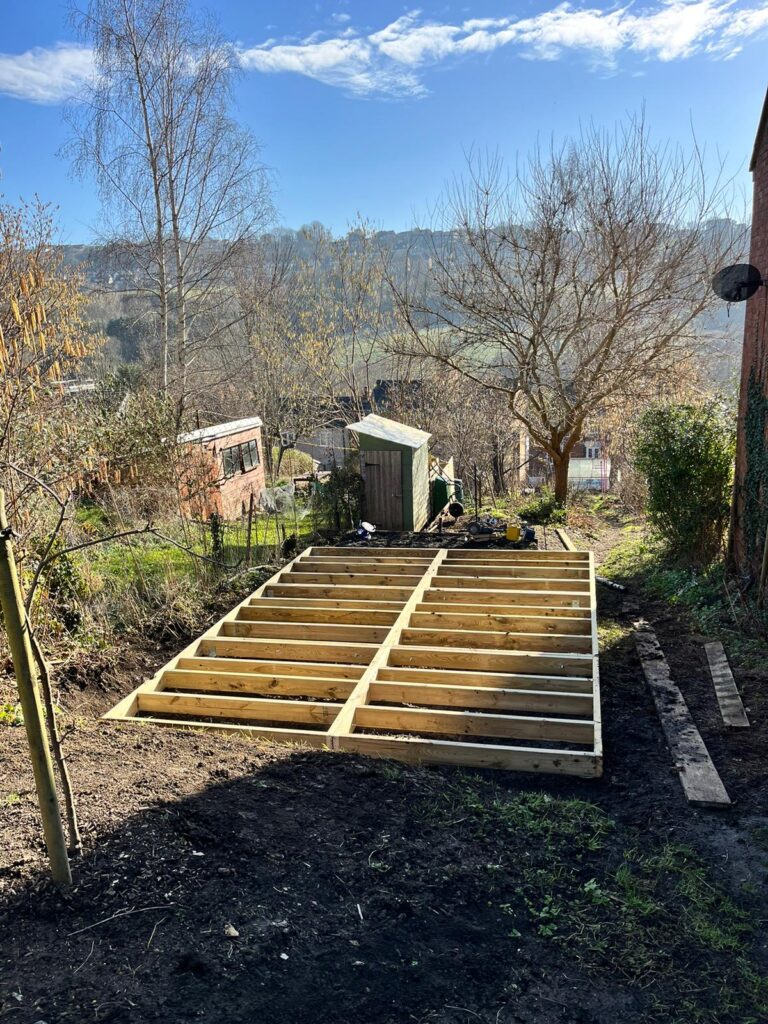
- Sloping ground: Is the ground sloping, even slightly? A gradient that looks negligible can cause real problems once you’re trying to level a structure across several metres.
- Nearby trees: Roots can interfere with concrete foundations and cause ground movement over time.
- Soil type: Clay expands and contracts with moisture, sand drains quickly but offers less support, and rocky ground makes excavation difficult.
- Underground services: Pipes, cables, and drains need to be identified before any foundation work begins.
If you’re unsure, get a professional assessment before uncovering issues in the build.
Do: Plan for the Worst Weather, Not the Best
People assume they need to wait for spring or summer to start their garden room project.
If you’re using concrete foundations, there’s some truth to that. But ground screws don’t have this limitation. Installation is purely mechanical – the helical blades cut through soil regardless of whether it’s January or July.
In fact, early spring and winter building have some distinct advantages:
- Better availability: Contractor availability is often higher during the colder months, which can lead to lower costs and faster scheduling.
- Beat the rush: Your garden room is ready to enjoy when the weather actually improves, rather than being built during the months you’d want to be using it.
- Firmer working conditions: Frozen or firm ground can actually create better conditions – less mud, fewer soft patches, and firmer surfaces for equipment and foot traffic.
Beating the Winter Rush in London
We worked with Downland Garden Rooms on a project in London in January, installing a 4″ x 2″ C24 treated joist base with a double ring beam and 1250mm ground screws. The temperature was close to zero, and conditions were far from ideal – but the entire foundation was completed before midday.
Ground screws don’t need sunshine or warmth to perform, so the build could proceed immediately without worrying about overnight frost damage. The customer had their garden room ready for spring when they actually wanted to use it.
Don’t: Forget About Getting Everything Into Your Garden
This is one of the most overlooked issues in garden room construction, and it catches people out more often than you’d think. Common access issues include:
- Narrow side passages: The gap between your house and the boundary fence may not be wide enough for large equipment or materials.
- Soft lawns: Gardens churn into mud under heavy foot traffic or equipment, especially in wetter months.
- Overhead obstacles: Low branches, washing lines, or other obstructions can restrict what you can carry through.
- Boundary constraints: Neighbouring fences or walls that limit the width of access routes.
If you’re using concrete foundations, you also need to consider whether a concrete lorry can reach your garden – and if it can’t, you’re looking at pumping equipment or wheelbarrow runs, both of which add cost and time.
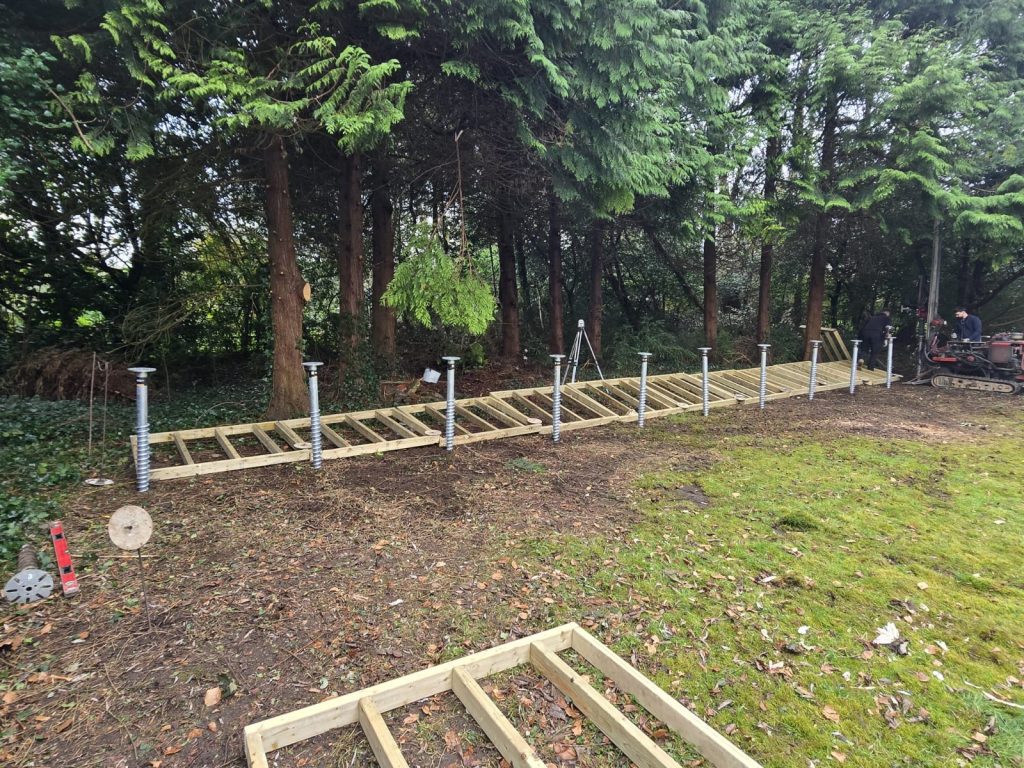
Ground screws and their installation equipment are designed to work in tight spaces. Our screws, brackets, and hand tools can all be carried through standard garden access. For larger projects, our tracked installation machine fits through most openings, and its tracked base minimises damage to surrounding lawns.
Handling a Near-100m² Foundation in a Residential Garden
For one of our largest Downland Garden Rooms projects to date – close to 100 square metres incorporating both a garden room and integrated decking – we brought in our tracked installation machine to handle 90 ground screws in compacted, resistant soil. Despite the scale of the installation, the tracked base caused minimal damage to the surrounding garden.
Do: Choose the Right Specification for Your Particular Build
Garden rooms vary enormously. A compact 3m x 3m home office is a very different structural proposition from a 10m x 8m studio with an integrated decking area. The foundations need to match.
When specifying ground screws for a garden room, the key factors are:
- Screw length: Determined by ground conditions and load requirements. Softer ground or heavier structures need longer screws driven deeper.
- Screw diameter: Larger diameter screws handle greater loads.
- Spacing: The distance between screws depends on the structure’s weight distribution and the joist base design.
- Bracket type: Standard L-brackets for most joist bases, adjustable brackets for precision levelling, square top brackets for double joist positions, and U-brackets for post-mounted structures.
Don’t guess at these. Use our ground screw calculator to work out what you need for your project, or speak to our team.
Don’t: Overlook Building Regulations and Planning Permission
Many garden rooms fall under permitted development rights, meaning you don’t need formal planning permission. But “many” doesn’t mean “all,” and the rules have conditions that are easy to fall foul of.
A few things to check before you start:
- Size and height limits: Permitted development has specific restrictions on the size and height of your garden room, depending on its position relative to your house and boundaries.
- Intended use: If your garden room is for habitable use (a bedroom, annexe, or self-contained living space), you’ll almost certainly need Building Control approval and potentially full planning permission.
- Conservation Areas and TPOs: If you’re in a Conservation Area, permitted development rights may be restricted. Tree Preservation Orders (TPOs) can also affect what foundation work is possible – concrete excavation near protected trees is often prohibited, whereas ground screws cause minimal root disturbance.
- Building Control: Where approval is required, ground screw foundations can be load-tested on-site, with a detailed findings report for your Building Control officer. This provides documented evidence that the foundations meet the required load-bearing capacity for your structure.
We’ve worked on hundreds of garden room projects across the UK and have plenty of experience helping customers understand what’s needed from a regulations perspective.

Do: Take Your Time With the Levelling
Even with ground screws and adjustable brackets, achieving a perfectly level base takes care and patience. It’s one of the most rewarding stages to get right – and one of the most costly to rush.
A few tips for nailing the levelling:
- Start from your highest point: Work outwards from there. This gives you the most adjustment range across the rest of the base.
- Use proper levelling tools: A long spirit level or laser level is essential – over a span of several metres, even small discrepancies become noticeable. Your eyes alone won’t cut it.
- Adjust in stages: Adjustable brackets let you fine-tune individual support points even after the initial levelling, so take advantage of that flexibility as the build progresses.
- Sweat the small stuff: A few millimetres might not seem like much, but across a 4m or 6m span, it adds up. Doors, windows, and internal fittings all depend on a level base.
An extra hour spent getting this right will save you years of living with the consequences of an uneven base.
Don’t: Cut Corners on the Joist Base
The joist base is the structural layer between your ground screw foundations and the garden room itself. It needs to be properly specified, properly treated, and properly constructed. This isn’t the place to save a few quid.
Common joist base mistakes to avoid:
- Using untreated timber: Your joist base sits close to the ground and is exposed to moisture. Untreated timber will rot, and it’ll do so faster than you expect.
- Undersizing the joists: 3″ x 2″ joists might seem adequate for a small structure, but 4″ x 2″ C24 construction-grade treated timber provides far greater rigidity and longevity. For larger builds, this isn’t optional – it’s essential.
- Skipping the double ring beam: A double ring beam around the perimeter of the joist base adds substantial structural rigidity. It’s standard practice across all of our professional installations for good reason.
All three of the Downland Garden Rooms projects we’ve referenced in this article used C24-treated joist bases with double-ring beam configurations.
Getting Your Garden Room Project Off the Ground
A well-planned garden room build doesn’t need to be stressful, expensive, or weather-dependent. The key is getting the fundamentals right – starting with the basics and building from there.
Whether you’re planning a compact home office or a large studio with decking, we can help you find the right foundation solution. Use our ground screw calculator to work out what you need, browse our complete range of ground screws and brackets, or contact our team to discuss your project.
We offer DIY supply, trade supply, and professional installation – so whatever level of support you need, we’ve got you covered.