



A smarter tomorrow for construction
Decades ago, the idea of installing a permanent building foundation in a single afternoon – without a single bag of cement – would have sounded like a fantasy. Today, we do it every week.
So what does the next 50 years hold? Well, construction is changing faster than at any point in living memory, and the direction of travel is fairly clear.
We’ll have to manage climate targets, planning restrictions, modular buildings, labour shortages, and tighter project deadlines – all in the context of rising cost pressures.
Cumulatively, these trends signal a move towards engineered foundation systems we can design, certify, and install rapidly, with minimal impact.
Here, we’ll examine where foundations are heading over the years ahead, what’s already changing on site today, and why ground screws and helical screw piles are central to this progression.
The Pressures Affecting How We’ll Build in 2075
Of course, pretty much anything can happen between now and then. But there is a clear trajectory that we’ve been tracking.
1. The Carbon Squeeze on Concrete
Concrete is one of the most carbon-heavy materials in widespread use. The Institution of Civil Engineers reports that concrete alone accounts for around 1.5% of all UK emissions, with cement production driving the bulk of that footprint.
The wider built environment goes further – Historic England estimates that built environment emissions make up roughly 40% of the UK total, once you include surface transport.
With net zero now enshrined in law, the pressure to cut embodied carbon is now almost universal.
Carbon reporting is creeping into planning applications. Embodied carbon limits are turning up in commercial framework agreements. Procurement teams now score suppliers on sustainability credentials.
Even on smaller domestic projects, clients are asking us more and more about greener alternatives. Gardens are valued more than in the last 20 years, and there’s a huge appetite to keep green spaces thriving for wildlife.
2. The Rise of Modular and Offsite Construction
Modular construction is growing in popularity, with modular buildings themselves rising in spec and coming down in cost.
Data shared by Construction News shows the share of new-build projects using modern methods of construction climbed from 9% in 2017 to 16% in 2023, and the trajectory is still upward.
Modular schools, modular healthcare, modular housing, and modular commercial units all need foundations set out precisely and ready to take load rapidly once they arrive on-site.
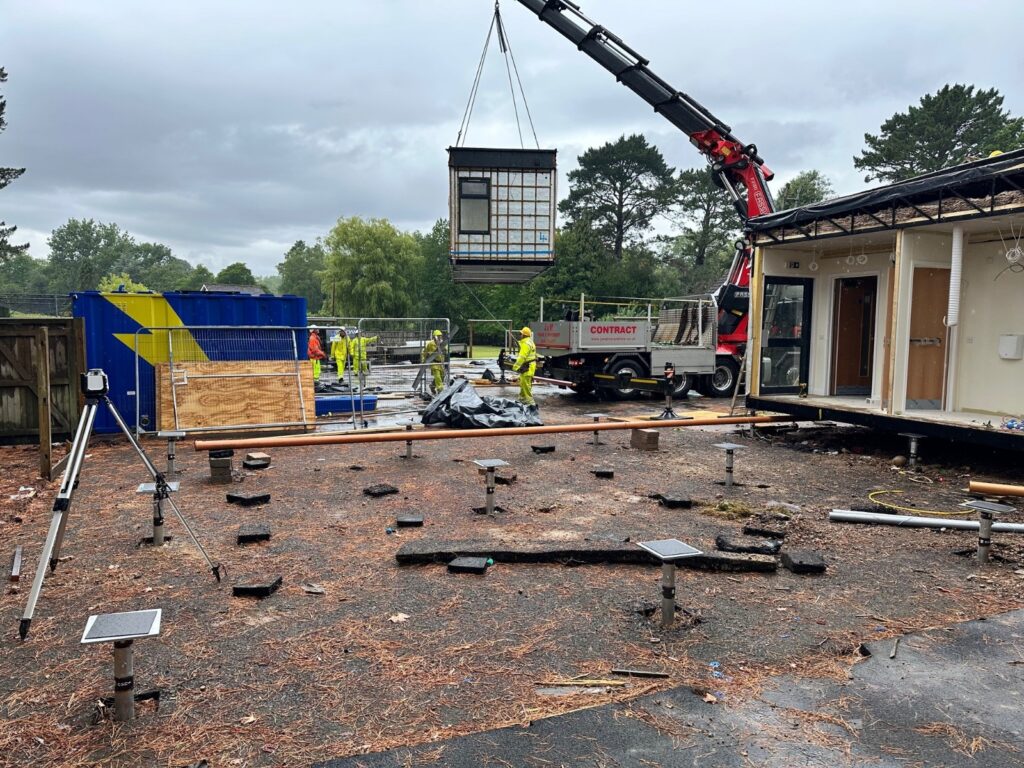
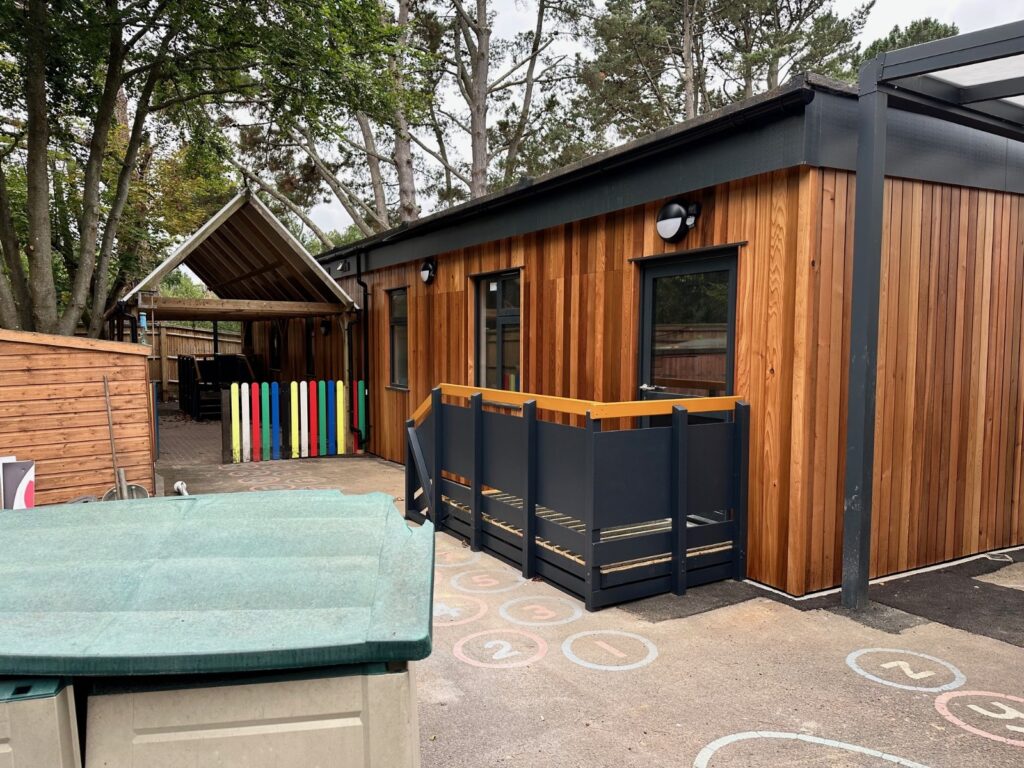
They’re a natural fit for ground screws or larger ground screw piles, as shown by this build at St Andrews CofE in West Sussex. Completing this build in days with concrete? Forget it!
Tighter Land and Tighter Rules
More projects are being squeezed onto contaminated, sloping, or previously developed sites. Planners keep tightening the rules around root protection areas, waterways, and sensitive habitats.
Excavation-heavy methods are increasingly unwelcome, while engineered foundations that work cleanly in difficult conditions are gaining ground year on year.
A Shrinking Pool of Skilled Labour
Construction is also wrestling with a generational workforce shortage. The latest CITB outlook puts the gap at roughly 47,860 extra workers per year through to 2029 – around 239,300 people over the next five years.
With about 35% of the existing workforce already over 50, methods that achieve more with fewer people on site for shorter periods will continue to show their value.
Why Concrete Won’t Carry Us All the Way
Concrete will still have its place in 2075. Basements, slabs, and very large structures will still need a poured base for many years to come.
But innovative solutions such as ground screws and screw piles are set to consolidate their growing role in construction, both for small-scale domestic projects and large-scale construction.
The Hidden Costs of Pouring
It’s easy to see concrete as cheap because the mix itself isn’t expensive. However, the full cost is hidden in everything around the pour, from the spoil that needs to be trucked away to the extended schedules.
There’s mixer access to organise, shuttering to build, and skip hire, waste haulage, and disposal fees on top. And once it’s down, you’re committed – removing it means breaking it out, with all the cost and disruption that brings.
Building for a Changing Climate
Wetter winters, drier summers and more frequent flooding are starting to affect how foundations perform over their full service life, particularly on clay-heavy soils where seasonal shrinkage and swelling are becoming more pronounced.
The ground conditions causing most concern for traditional foundations include:
- Shrink-swell movement on clay-heavy soils through wetter winters and drier summers
- Repeated saturation on low-lying or poorly draining sites
- Falling water tables affecting the bearing capacity of soft strata
- Freeze-thaw cycles reaching further south than historical patterns
- Surface flooding in areas not previously classed as flood risk
Subsidence repairs on traditional foundations are expensive, disruptive, and often involve removing the building above to access the work. While that’s a worst-case scenario, it doesn’t take much ground movement to crack open a concrete base and unleash all sorts of issues upon a project.

Screw Foundations Are Adaptive
Ground screws and helical screw piles can be adjusted long after installation, giving engineers options not available with concrete.
In practice, that means we can:
- Re-level the brackets above ground if a structure starts to settle on one side
- Install additional helical pile sections alongside an existing pile to reach deeper bearing
- Lift, drive deeper and reset screws under a relocated or reconfigured building
- Remove screws entirely if a site needs returning to its original condition
This kind of long-term adjustability is becoming a huge benefit for how we specify foundations on projects where the building is expected to outlast current ground conditions.
Ground Screws as the Standard for Smaller Builds
For garden rooms, annexes, decking, modular classrooms, glamping pods, lodges and similar projects, ground screws have already proved themselves.
A ground screw is a hot-dip galvanised steel shaft, driven into the ground with a hand-held or tracked machine. It loads instantly, works on slopes, copes with most ground conditions, and is removable, with a low environmental impact.
Over the next 50 or so years, we expect this to become the norm rather than the exception, particularly across the following projects:
- Garden buildings and lightweight home extensions
- Temporary classrooms, welfare cabins and site offices
- Holiday lodges, glamping pods and leisure accommodation
- Domestic decking, fencing and outdoor structures
- Solar arrays and small-scale renewable energy installations
For a sector under pressure to build more, faster and more sustainably, ground screws are unparalleled, and we strongly expect their popularity to scale new heights in the years ahead.
Helical Screw Piles and the Future of Major Projects
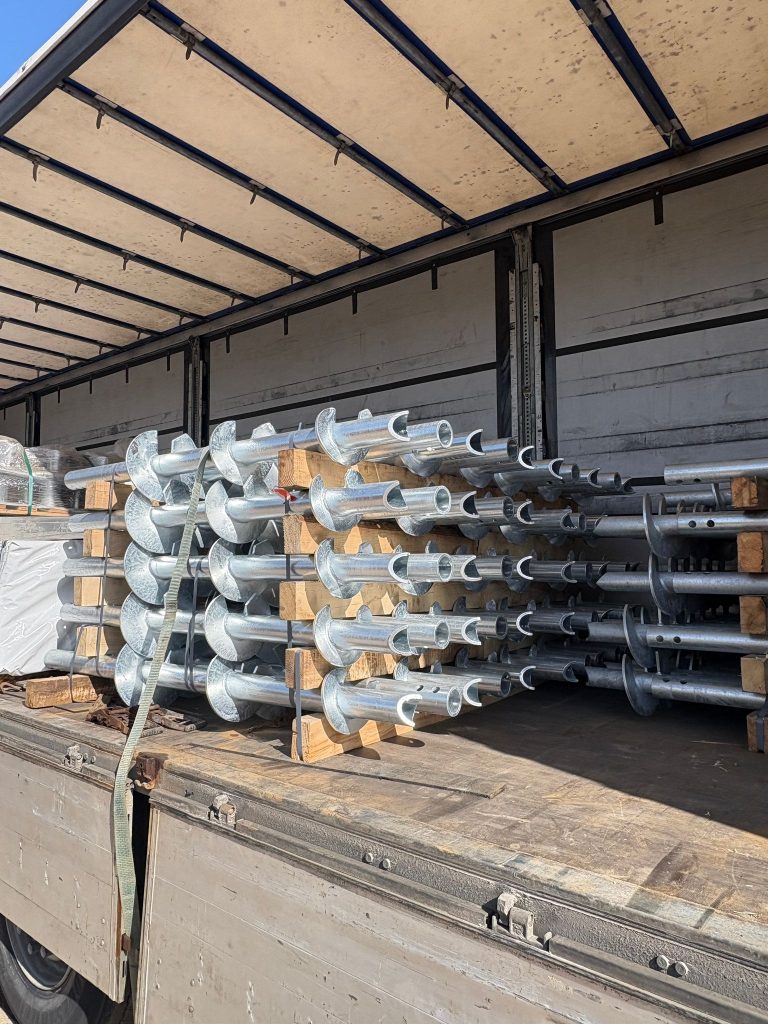
For bigger builds, the future belongs to helical screw piles. These engineered foundations use steel tubular shafts with welded helical plates, which a tracked machine or excavator with a rotary torque driver rotates into the ground.
The result is a certified, data-backed foundation that carries loads comparable to traditional piling, without environmental damage or spoil, unpredictable delays, or carbon impact.
What Engineers Gain From Verified Torque Data
For larger-scale projects, helical screw piles can deliver a torque pile log showing depth, torque, and verified load capacity for each pile.
Combined with deep foundation software certification and, where required, our load testing service, it provides engineers with documented assurance comparable to that of heavier-duty foundation solutions.
Which Projects Suit Helical Screw Piles?
Over the next half-century, helical screw piles will increasingly suit:
- Bridges, walkways and raised access platforms
- Gantries, masts and telecoms towers
- Battery energy storage systems and data centres
- Retaining walls and pile caps for civil works
- Modular and permanent commercial buildings
- House extensions and full residential houses on tricky plots
- Underpinning of existing structures
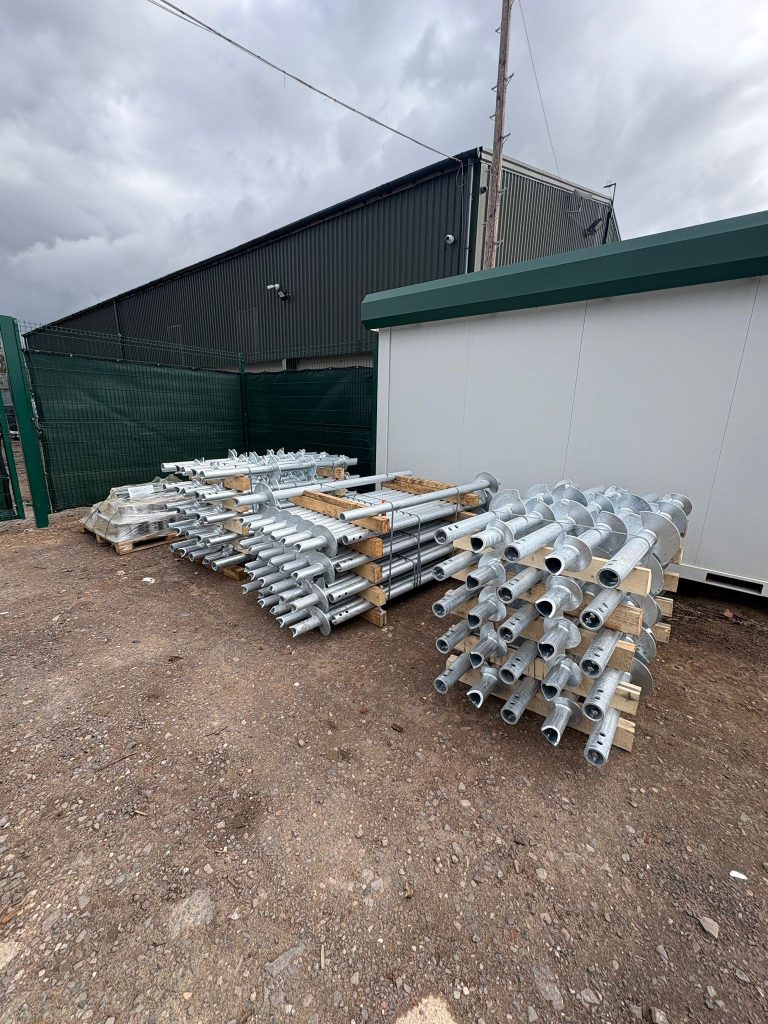
Manufactured to standards including EN 10025, EN 10210/EN 10219 and EN ISO 1461, with CE/UKCA conformity under EN 1090, our helical screw piles meet the same compliance requirements engineers expect from any structural element.
Where Screw Foundations UK Fits in the Next 50 Years
We’ve spent over 15 years building the kind of construction expertise this future demands, with a product range that covers both ends of the market – from a small set of ground screws for a garden room through to fully designed and certified helical screw pile foundations for civil and infrastructure projects.
The buildings of 2075 will be more modular, under pressure to leave a much lighter footprint without sacrificing durability, resilience, or integrity.
Screw foundations are rising to the challenge, in both lighter-weight ground screws and heavier-duty screw piles.
If you’re planning a build today and want it to meet tomorrow’s standards, contact us or view our product range.