


Sustainability is key to construction in more ways than one
Sustainability has become a key topic in construction, not to mention a powerful competitive advantage. And ground screws are a fantastic way to deliver it to customers and clients.
Recent research shows that consumers are willing to spend nearly 10% more on sustainably produced goods, with that set to increase dramatically over the months and years ahead.
For businesses in construction and landscaping, your customers increasingly want to understand the environmental impact of every decision, from the materials you use to the methods you employ.
Screw foundations represent an answer to these concerns, offering a demonstrably lower-carbon alternative to traditional concrete – whether that’s a ground screw under a garden room or an engineered helical screw pile under a bridge deck.
Let’s explore why sustainability matters to your customers, how screw foundations compare with concrete, and how you can meet expectations at any project scale without compromising on quality or budget.
The Environmental Implications of Concrete Foundations
Concrete dominates construction for good reasons. It’s versatile, widely available, and construction teams understand how to work with it. But the environmental cost is substantial.
Cement production accounts for between 4% and 8% of total global CO2 emissions. To put that in perspective, if cement manufacturing were ranked alongside countries based on carbon impacts, the cement industry would be the third-largest CO2 emitter in the world, after China and the United States.
900 kg of CO2 are emitted for the fabrication of every ton of cement. For a typical small garden room foundation requiring perhaps 3-4 cubic meters of concrete, you’re looking at well over a ton of CO2 emissions before construction even begins.
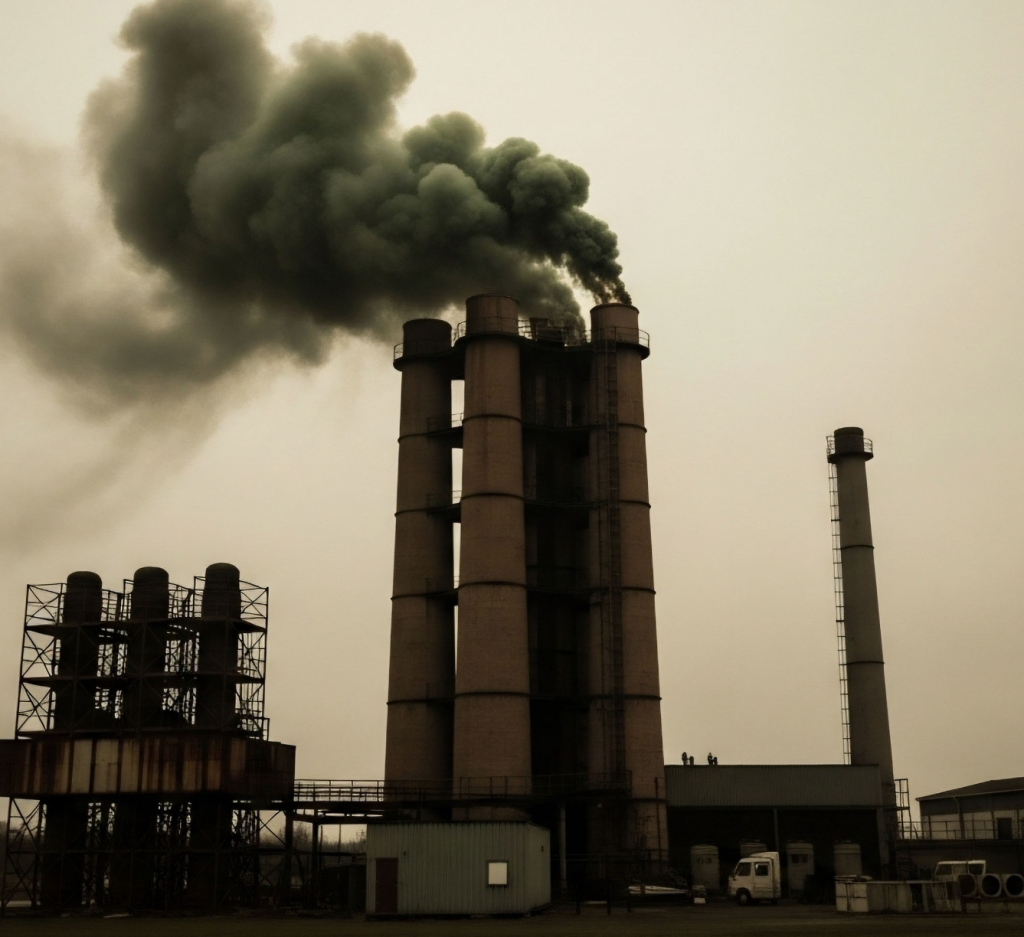
Beyond emissions, concrete creates other environmental problems that cascade through the environment and damage customer desire and trust for the material:
Waste Generation Becomes Unavoidable
Every concrete pour creates waste. Excess concrete can’t be saved for later use, so it ends up in skips headed for landfill. Mix too little, and you need another delivery.
The excavation required for concrete footings creates additional waste – soil and hardcore that needs to be removed from the site.
Site Disruption Affects Everyone
Concrete delivery requires heavy vehicles that compact soil, damage access routes, and create noise.
The excavation process disrupts drainage patterns and can damage tree roots. For residential customers, this means long-term disruption and property damage.
Permanence Limits Future Flexibility
Once concrete sets, it’s there permanently. If site requirements change – adding an extension, relocating a structure, or restoring a garden – that concrete becomes a problem.
Removal requires breaking equipment, skip hire, and more environmental impact from disposal.
Chemical Leaching Affects Soil and Plants
Fresh concrete is highly alkaline, with a pH around 12-13. As it cures and over time, alkaline substances leach into the surrounding soil, altering pH levels and potentially harming sensitive ecosystems. This leaching can continue for years, affecting established plantings and making it difficult to grow certain species near concrete foundations.
The problem becomes more pronounced in gardens with rhododendrons, azaleas, camellias, and other plants that require acidic conditions. Customers who’ve invested in mature landscaping often don’t realise their new concrete garden room foundations could damage plants they’ve nurtured for years.
What Customers Mean When They Ask About Sustainability
When customers ask about sustainable options, they’re rarely requesting a technical breakdown of embodied carbon calculations. It’s far more practical and more varied than that.
Many want to minimise visible environmental damage. They’ve spent years developing their garden, and the thought of excavators churning up established areas is a major barrier.
Others have experienced flooding or drainage issues and understand that large concrete bases can exacerbate water management problems. Customers also want reassurance that their project won’t breach environmental regulations or planning conditions.
Tree Preservation Orders (TPOs), proximity to waterways, and Conservation Area restrictions all present scenarios where traditional concrete work becomes problematic, if permitted at all. Customers need solutions that comply without gruelling planning battles.
How Ground Screws Compare on Environmental Impact
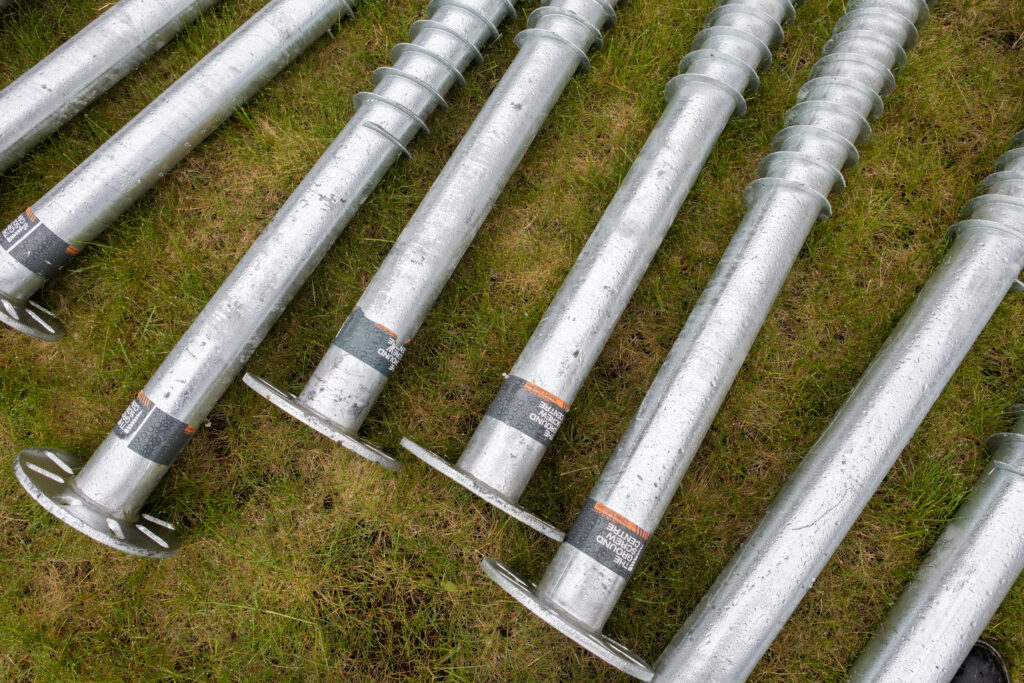
Ground screws reduce environmental impact across many dimensions. For those who aren’t familiar, ground screws are pretty much what they say on the tin. They’re large helical coils that you screw into the ground to create a highly stable, fixed foundation point.
The comparison with concrete isn’t just about carbon emissions – though that is obviously central – it’s about the entire installation process and long-term site effects.
Manufacturing and Material Differences
First off, steel production is significantly more efficient than concrete, and crucially, steel is infinitely recyclable without loss of quality. At end of life, ground screws can be extracted and recycled, or left in place where they pose no environmental harm.
Concrete, by contrast, becomes waste at end of life. While concrete recycling exists, it typically downcycles the material into low-grade aggregate for road base or similar.
Installation Process Impact
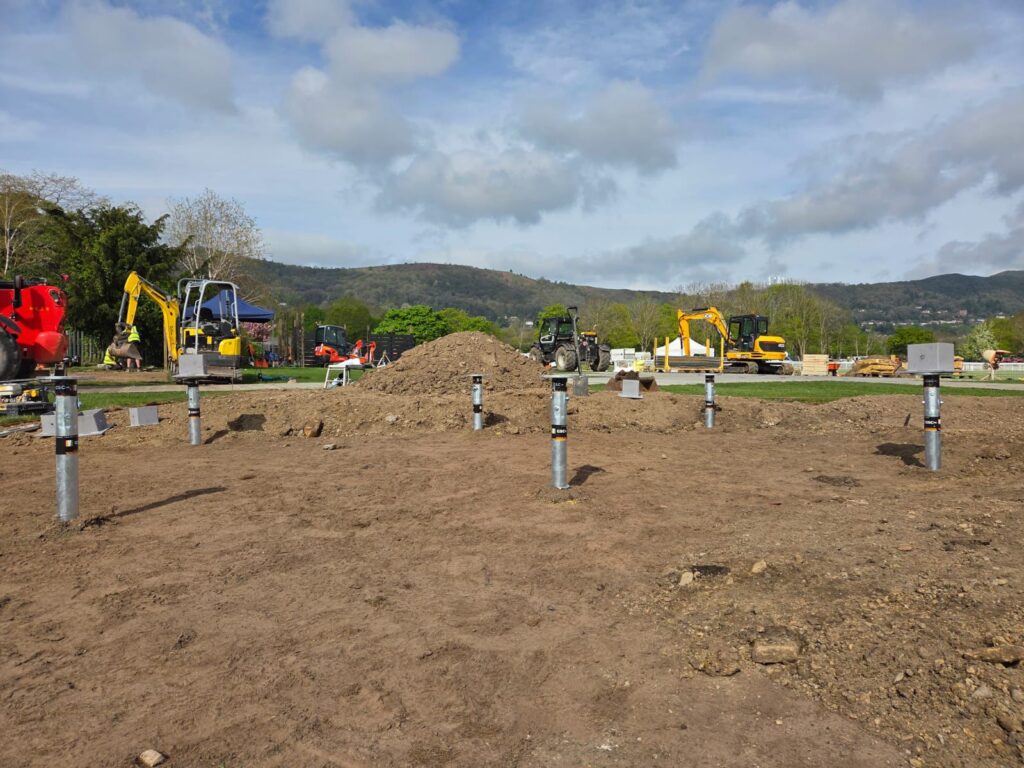
Ground screw installation creates minimal ground disturbance. The screws displace soil rather than removing it, leaving drainage patterns intact and avoiding damage to surrounding vegetation and tree roots. There’s no excavation waste requiring skip hire and disposal.
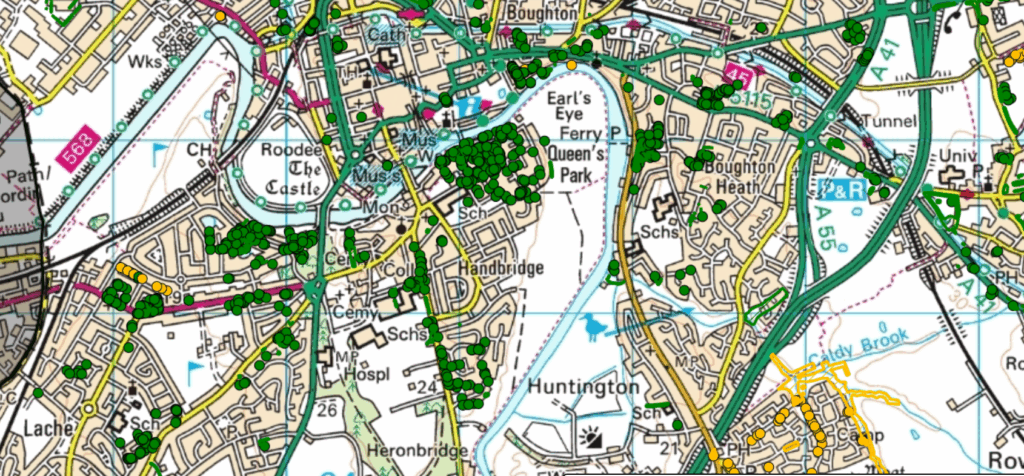
This proves a major asset, as demonstrated by our recent bridge installation in rural Wales and boardwalk in a school conservation area.
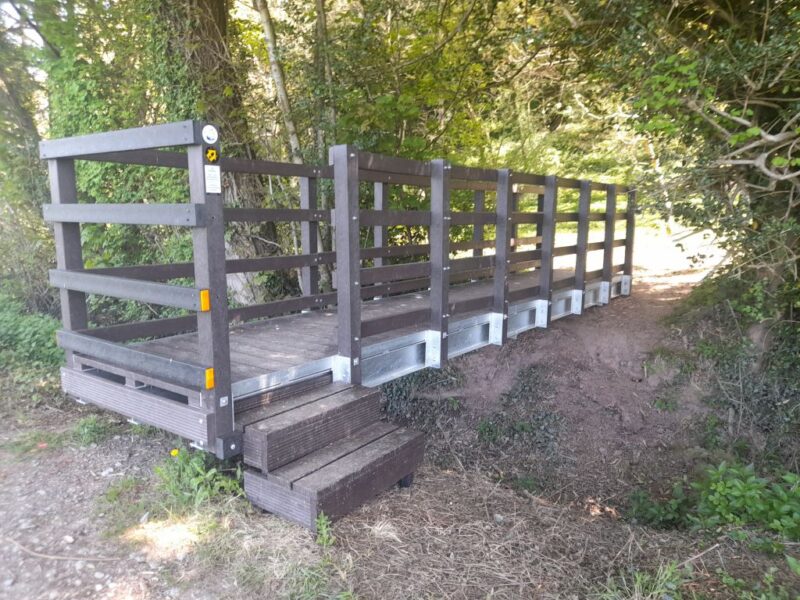
Installation equipment fits in a standard van, avoiding soil compaction and access damage caused by concrete lorries. For sites with restricted access or sensitive surrounding areas, this makes a significant practical difference.
Waste Generation Differences
Traditional concrete foundations generate waste at multiple stages:
- Excavation spoil requiring skip hire and disposal
- Excess concrete that can’t be saved for later use
- Packaging waste from cement bags and materials
- Eventual demolition waste when structures are removed or relocated
Conversely, ground screw installation generates virtually no waste. The screws arrive ready to install and create zero by-products during installation.
Reversibility and Site Restoration
Ground screws can be completely removed, allowing sites to return to their original condition.
We do this often at Ground Screw Centre, e.g. for temporary events such as the RHS Malvern show. This matters for temporary structures, seasonal installations, or situations where buildings need to be relocated.
Concrete, on the other hand, is mostly permanent, requiring breaking and disposal if removal becomes necessary. Each concrete foundation thus represents a permanent commitment to that specific site configuration.
The Business Case for Offering Sustainable Options
Sustainability credentials directly impact your profitability and market position. Your customers increasingly expect sustainable solutions, and being able to deliver them affects everything from tender success to word-of-mouth recommendations.
Here’s how offering sustainable foundation options strengthens your business:
Competitive Advantage in Tenders and Quotes
Commercial clients increasingly require environmental credentials in tender submissions:
- Selection criteria: 62% of construction professionals consider their suppliers’ commitment to sustainable construction as a factor in their selection
- Differentiation: Demonstrating lower-carbon foundation options gives you an edge over competitors still defaulting to concrete
- Tender compliance: Many public sector and commercial projects now include sustainability requirements in their specification
- Word-of-mouth impact: Residential customers increasingly discuss environmental credentials when recommending contractors to neighbours and friends
Meeting Planning and Regulatory Requirements
Planning authorities are placing greater emphasis on environmental impact, particularly for the following situations:
- Tree Preservation Orders: Ground screws can be installed without damaging protected root systems
- Conservation Areas: Reversible construction methods are preferred or required in sensitive locations
- Flood risk areas: Permeable surfaces and minimal site alteration help projects gain approval
- Green Belt restrictions: Removable foundations can satisfy planning requirements where permanent structures might not
In all of these cases, ground screws may be the key to unlocking a project that would not be otherwise feasible.
Insurance and Liability Considerations
Environmental damage claims are becoming more common, with local councils often taking action for non-compliance, resulting in hefty costs.
If your concrete work damages protected tree roots, disrupts drainage, causes flooding, or breaches planning conditions, you face potential liability. Ground screws comprehensively reduce these risks.
Practical Ways to Communicate Sustainability Benefits to Customers
Marketing sustainability can be challenging as it’s not always tangible. Here are three tips for making it a key advantage for your business:
1. Focus on Tangible, Visible Benefits
Rather than leading with carbon figures, start with what customers can see and experience.
For example, “Ground screws mean no excavation, so your established plants and lawn stay intact. We’ll be finished in a day rather than waiting weeks for concrete to cure, and there won’t be any skips or waste to dispose of.”
This connects sustainability to practical benefits such as reduced disruption, faster completion, and protection of their existing garden.
2. Address the Reversibility Advantage
Many customers value flexibility even if they don’t plan to move structures immediately.
For example, “If you ever want to relocate your garden office or add an extension, ground screws can be removed completely. The site returns to its original condition – no broken concrete to excavate or dispose of.”
This positions sustainability as future-proofing, which adds value in its own right.
3. Connect to Their Existing Values
Pay attention to what customers mention during initial conversations. If they talk about their garden’s mature trees, emphasise how ground screws avoid root damage. If they mention previous flooding issues, discuss how ground screws maintain natural drainage.
Sustainability becomes relevant when it connects to problems they already understand and care about.
Common Questions Customers Ask About Sustainable Foundations
Building on the above, there are quite a few common questions that arise around the notion of “sustainable foundation.” Here are three questions we’ve become familiar with:
Are Ground Screws Stronger Than Concrete?
This question usually masks a concern that ‘sustainable’ means ‘weaker’. Address it directly by explaining that ground screws are engineered to specific load requirements, just like concrete foundations. You calculate the exact specifications for the building’s weight and on-site ground conditions.
For many applications, they perform better than concrete because each screw reaches stable ground at depth, rather than relying on surface conditions. This becomes particularly valuable on sites with variable soil quality or where surface conditions change seasonally.
For larger or commercial projects, mention load testing options that provide certified performance data.
Do Sustainable Options Cost More?
Ground screws are budget-friendly versus concrete. There are no excavation costs, no skip hire, no curing time, and installation is frequently completed in a day.
Many customers find the total cost works out lower, especially on sites with difficult access or slopes. The speedy install process also means less disruption on-site.
How Long Do They Last?
Does sustainability mean a trade-off in longevity? Absolutely not! Our ground screws are hot-dip galvanised steel with a 20-year product guarantee. Galvanising protects against corrosion, and because steel doesn’t degrade like concrete can, it maintains its structural integrity over the long term.
Unlike concrete, which can crack and deteriorate, especially in freeze-thaw cycles, galvanised steel screws remain stable long-term.
Scaling the Same Benefits Up to Commercial Projects
Everything above applies to ground screws, but the sustainability argument doesn’t weaken as projects grow in scale.
Helical screw piles carry the same principle into structural and civil work, where the volume of concrete being avoided is far greater.
A helical screw pile is a steel tubular shaft with welded helical plates, driven by an excavator fitted with a rotary torque driver until it reaches the specified depth or torque. It displaces soil rather than removing it, so there’s no spoil to dispose of, no formwork, no curing, and no concrete lorries compacting the site. Vibration and noise remain low, which matters on live sites like schools and hospitals.
The environmental case sharpens on a few specific site types:
- Contaminated and brownfield land. Piles install without disturbing contaminated soil, so there’s no excavation, no testing regime and no disposal cost for material that would otherwise be classified as hazardous waste.
- Protected trees and root protection areas. The same TPO logic that makes ground screws viable in a garden applies to raised roads and walkways across woodland, where the alternative is often no scheme at all.
- Renewable infrastructure. Solar farms and battery storage sites need hundreds of foundation points, and clients building emissions-reduction infrastructure tend to want foundations that reflect that.
- Underpinning existing buildings. Structural remediation without the excavation a traditional approach would demand.
There’s also a longevity point worth making to clients who assume sustainable means short-lived. Our ground screws carry a 20-year product guarantee. Helical screw piles are specified with a design life of up to 120 years, manufactured to EN 1090-1 and hot-dip galvanised to EN ISO 1461, with every pile torque-monitored during installation and recorded in a pile log for your engineer and building control.
If you’re pricing a scheme where the loads have outgrown ground screws, our engineering design team can tell you which system fits and what the numbers look like.
Meeting Customer Expectations Through Sustainable Foundations
Customer demand for sustainable construction is rising across every level, from small back garden installations to commercial-scale projects. Ground screws offer an innovative, robust, and sustainable option that helps meet sustainability objectives while providing numerous other practical benefits for any project.
The business case? Offering sustainable foundation options gives you a competitive advantage in tenders, helps overcome planning restrictions, and positions your business for an industry where environmental credentials are becoming standard requirements.
Ready to explore how ground screws meet customer sustainability expectations?
Use our ground screw calculator to see specifications and costs for your project, browse our complete range of screws and brackets, or contact our team for specific advice on sustainable foundation solutions.