Helical Screw Pile Foundations for Underpinning
When existing foundations fail – through subsidence, ground movement, or inadequate original design – underpinning with helical screw piles provides a fast, low-disruption solution that stabilises the structure without the extensive excavation and concrete work required by traditional underpinning.
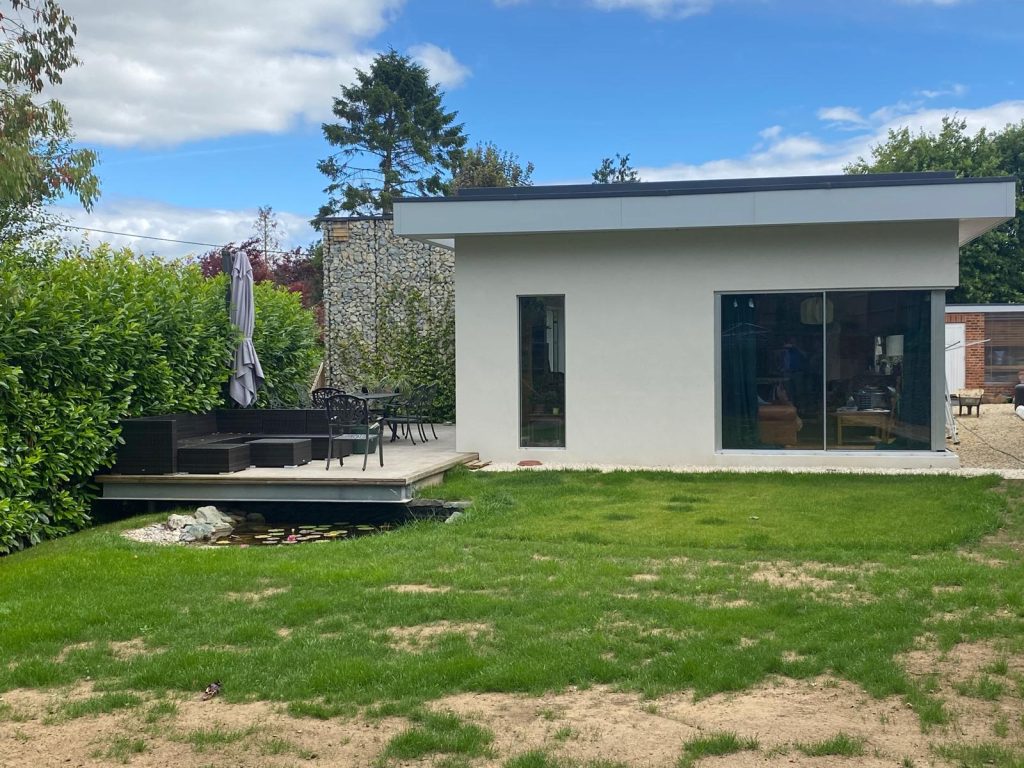
Why helical screw piles are specified for underpinning
Traditional underpinning involves excavating beneath the existing foundation in stages and filling with mass concrete. It’s slow, disruptive, and often impractical for sites with restricted access.
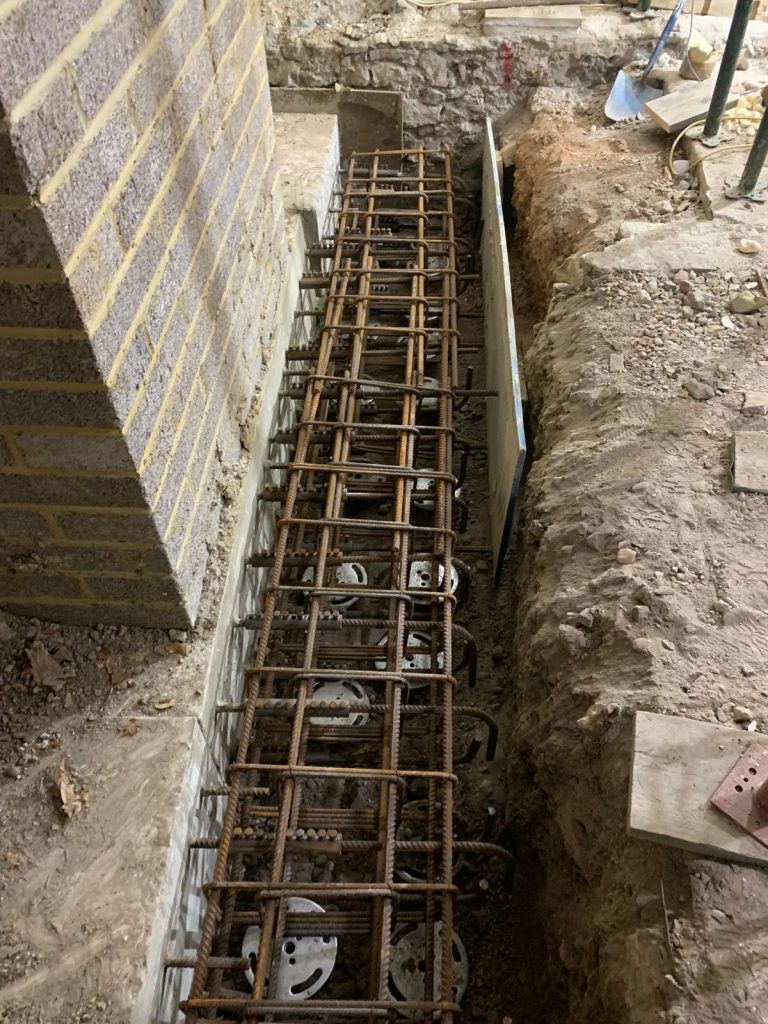
Helical screw pile underpinning works differently. Piles are installed at angles through or alongside the existing foundation, transferring the structural load down into stable ground strata. There’s no major excavation, no concrete curing, and no need to vacate the building during the work. The structure is stabilised as each pile is installed.
The benefits of screw pile underpinning
-
Minimal Disruption to the Existing Structure
No large-scale excavation beneath the building. Piles are installed using compact equipment, making the process suitable for a wide range of residential and commercial properties. -
Works in Restricted-Access Locations
Our tracked machines and compact excavators access locations where traditional underpinning methods would be impractical – tight residential gardens, internal basement spaces, and confined commercial sites. -
Installed at Angles to Reach Stable Ground
Helical screw piles can be installed at a range of angles, allowing them to be driven beneath and alongside existing foundations to transfer loads into deeper, more stable soil strata. -
Certified Load Data for Every Pile
Every pile is installed with calibrated torque monitoring. Comprehensive torque pile logs record installation torque, depth, pile identification, and performance data – providing the documented proof of capacity that structural engineers and building control require. -
Immediate Load Transfer
Unlike concrete underpinning, which requires curing time before the load can be transferred, helical screw piles are immediately load-bearing. The structure is stabilised progressively as each pile is installed. -
Built to Recognised Standards
All helical screw piles are manufactured to EN 1090-1 (CE/UKCA), ISO 3834 (welding quality), and EN ISO 1461 (hot-dip galvanising). Design life of up to 100 years.
Common underpinning applications
- Subsidence repair on residential properties
- Stabilisation of commercial and industrial buildings
- Underpinning failed or inadequate existing foundations
- Foundation strengthening for additional storeys or increased loads
- Structural repair following ground movement or washout
- Stabilisation of listed or heritage buildings where minimal intervention is required

Our service for underpinning projects
We offer a complete turnkey service for underpinning – from site assessment through to certified installation:
- Site-specific helical screw pile design
- GPS mark out and GPR (ground penetration radar)
- Professional installation with calibrated torque monitoring
- Comprehensive torque pile log and monitoring report for every pile
- Certified load capacity reports generated through deep foundation software
- Stock sizes from 76R to 140R, with bespoke manufacturing available
- Static load-bearing testing where required
We work directly with structural engineers, insurance assessors, loss adjusters, and contractors to deliver the engineering documentation your underpinning project requires.
Frequently asked questions
-
Helical screw pile underpinning is increasingly used for insurance-funded subsidence repair. Every pile is installed with calibrated torque monitoring and produces a comprehensive torque pile log, providing the certified load data that structural engineers, loss adjusters, and building control require.
-
Traditional underpinning involves excavating beneath the existing foundation in stages and filling with concrete – a slow, disruptive process. Helical screw pile underpinning is faster, requires minimal excavation, and transfers loads to stable ground immediately. Every pile is torque-verified, providing certified data rather than relying on concrete cube test results weeks later.
-
Yes. Because the installation is low-vibration and requires no large-scale excavation, helical screw pile underpinning is well-suited to listed and heritage buildings where minimal intervention is required. The process preserves the existing structure while stabilising the foundations beneath it.
-
Yes. We work with structural engineers, loss adjusters, and insurance assessors on subsidence repair projects. Every pile is installed with calibrated torque monitoring and produces a comprehensive torque pile log, providing the certified engineering data that all parties require.