


Ground screws offer businesses a plethora of benefits
When you’re running a commercial project, foundations might not be the most exciting part of the build, but they’re often where budgets start to unravel.
Concrete foundations have been the default choice for decades, but they bring complications that don’t always advertise themselves in the initial quote.
Extended timelines, weather dependency, and multiple site visits all add cost and risk to your project. Ground screws and helical screw piles both solve these problems while typically costing considerably less – the difference between them comes down to the loads you’re carrying and the ground you’re building on.
We’ve worked with hundreds of commercial clients over the past 15 years, and we’ve seen how businesses choose screw foundations to save time and money, only to discover a plethora of less obvious benefits beneath the surface. That experience now extends from hand-installed ground screws through to engineered helical screw piles for heavier structural loads.
In this article, we’ll walk through the business case of ground screws and helical screw piles, where they deliver benefits, and why they’re growing in popularity for an array of commercial work.
What Foundations Cost Your Business
Quotes for concrete foundations will cover materials and installation at a minimum, but they tend to chronically overlook a few vital variables. Understanding such hidden expenses is essential for making an accurate comparison between concrete and ground screws.
The difference often lies not in the obvious costs, but in the expenses that don’t appear on the initial quote but end up on your final bill. We’ve seen numerous clients shocked by how much their foundations cost once all the extras are totalled up.
Time is the Expensive Factor
As the old adage dictates, “time is money.” Concrete needs time to cure before you can build on it – typically 7-28 days for standard concrete to reach full strength, though rapid-set options can reduce this to 24-48 hours.
Even with rapid-set concrete, you’re still waiting at least a day, and it costs more than standard concrete. During that curing period, you’re paying for:
- Site management and security
- Trades kept on standby
- Project coordination overhead
- Lost revenue if the building could already be operational
The waiting period varies depending on what concrete you use and what loads it needs to bear. Light structures might be fine on partially cured concrete after a few days, but commercial buildings with substantial loads typically need to wait for full cure.
If your building is meant to generate income once complete, even a week of delay represents lost earnings. For a retail unit or commercial office, this waiting period can cost more than the foundations themselves.
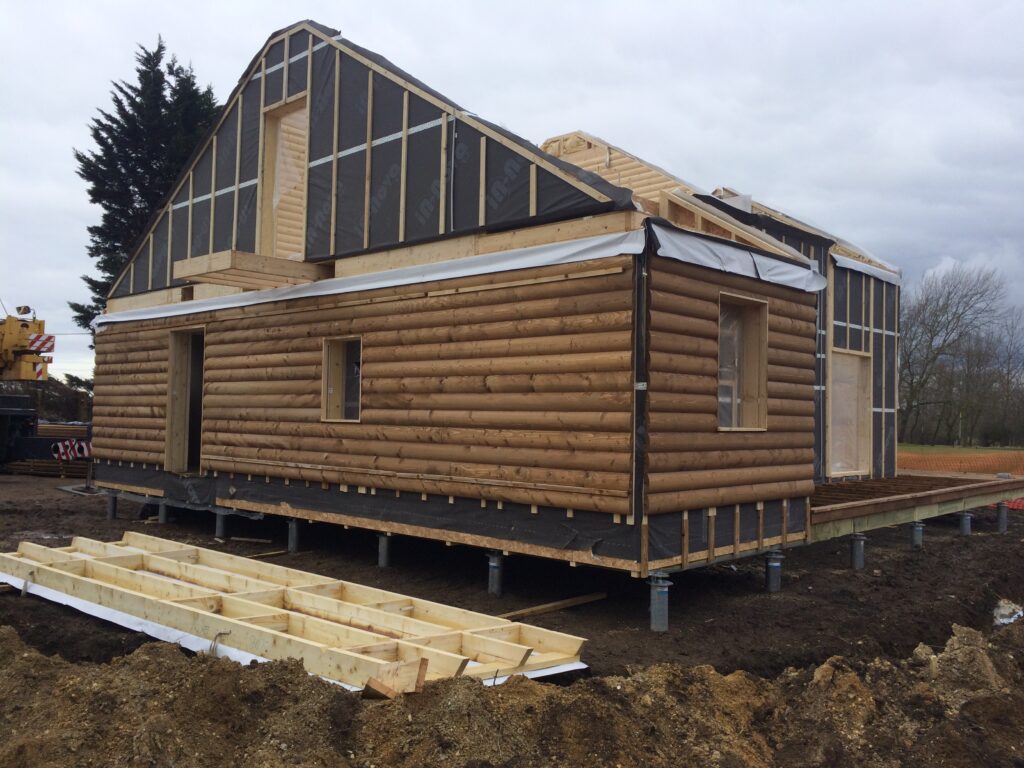
Ground screws are immediately load-bearing – no waiting at all. Your builders can start framing the same day the screws go in, regardless of weather conditions or load requirements.
Weather Creates Unpredictable Risk
Concrete can’t be poured in frost, heavy rain can affect curing times, and extreme heat can cause problems, too. In the UK, this means your schedule depends entirely on the weather forecast.
Ground screws can be installed in virtually any conditions and varying soil types. We’ve installed them in driving rain, during frost, even in snow. This is a huge advantage that compresses construction timelines and opens new opportunities to build year-round.
Multiple Trades Mean Multiple Costs
Concrete foundations require:
- Excavation teams
- Formwork specialists
- Concrete suppliers and pourers
- Finishing crews
- Return visits for formwork removal
Many of these tasks require additional equipment, such as diggers, which increases costs before you consider disposal, skip hire, and managing any contaminated soil. Ground screws, conversely, mostly require a single dedicated team and relatively simple and compact equipment.
We should acknowledge that, depending on the project, there may be other foundation types available – strip foundations, pad foundations, or piled foundations, each with its own installation requirements and timescales.
However, most of these alternatives share similar drawbacks or are only suitable for smaller or niche projects. Ground screws suit small-scale commercial projects, such as signage, all the way up to modular buildings and large solar farms.
Commercial Applications Where Screw Foundations Excel
Ground screws work for a wide range of commercial projects, but certain applications suit them very strongly indeed.
We’ve installed ground screws for everything from small business premises to major infrastructure developments, and over the years, we’ve learned where they deliver the strongest returns.
Modular Commercial Buildings
Retail units, offices, and hospitality buildings built using modular construction benefit enormously from the speed. Modular buildings arrive ready to use, so the faster you lay foundations, the faster they’re operational.
We’ve helped developers cut 4-6 weeks off project timelines compared to concrete. For a retail unit, that could mean opening before Christmas rather than after, or catching the spring trading period rather than missing it. For schools, that means completing projects over the holidays and not while kids are running around.
Case Study: When St Andrews CofE Primary School in Horsham needed a new modular classroom, they had just six weeks during the summer holidays to get it done. We installed 28 ground screws with expander plates in days rather than weeks, allowing the modular building to be craned in and fully ready for the start of term.
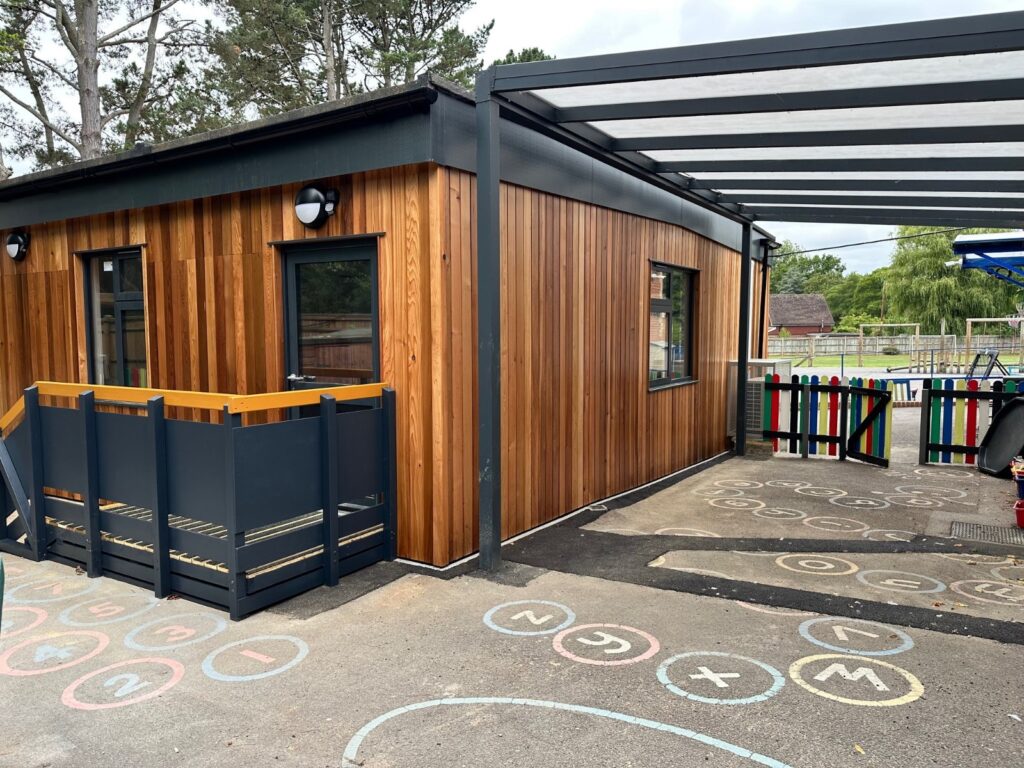
Traditional concrete foundations would have pushed the project into the new school year, disrupting lessons and leaving pupils without the space they needed. Read the full case study here.
Industrial and Warehouse Facilities
Industrial sites often sit on challenging, sometimes contaminated, ground. Ground screws handle:
- Slopes and uneven terrain
- Soft soil that would need stabilisation for concrete
- Sites with underground services where deep excavation isn’t possible
- Brownfield land with contamination concerns
They’re also ideal for minimising site disruption and solving the types of access problems that could prove decisive for planning and permits.
Solar Installations and Renewable Energy
Solar farms can require anything from a handful to hundreds of foundation points, emphasising the need for speed and sound budgeting. Ground screws fit that bill perfectly while also reducing carbon footprints, which suits renewable energy clients.
When you’re building infrastructure to reduce emissions, using foundations that produce a fraction of concrete’s carbon certainly makes sense both commercially and reputationally.
This is one of the fastest-growing commercial sectors, and we’ve installed ground screws for solar projects from small commercial arrays through to utility-scale developments.
Temporary Commercial Structures
Site offices, event venues, and temporary retail spaces are unique in that they typically need to be torn down and removed. For obvious reasons, concrete doesn’t work for that brief and causes disruption and damage in the process.
Ground screws are permanent when needed, but they can still be removed similarly to any screw.
This opens up opportunities for temporary commercial ventures such as pop-up retail, seasonal hospitality, construction site facilities – anywhere you need substantial structures temporarily rather than permanently.
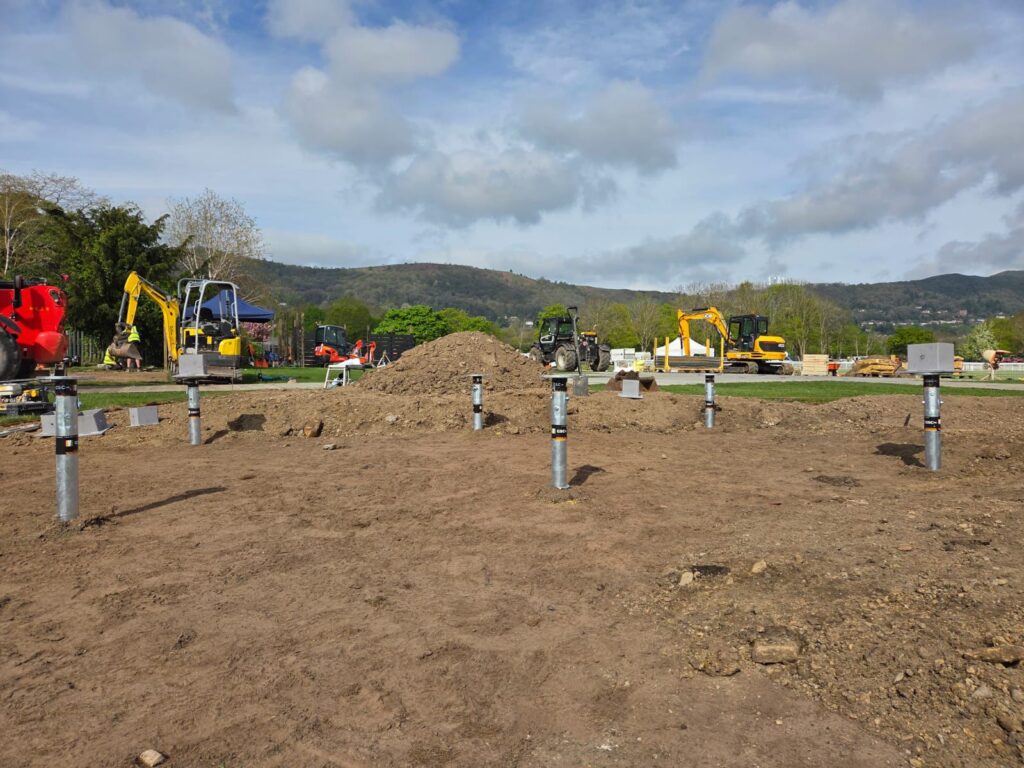
Case Study: At the RHS Malvern Spring Festival, one of the UK’s premier horticultural events attracting over 100,000 visitors, we installed six ground screws with custom-made brackets for exhibition structures. The showground hosts over 200 events annually, so permanent concrete foundations were impossible.
We completed the installation during the tight setup window and, after the festival, removed every screw without leaving a trace. Read the full case study here.
Ground Screws Are Sustainable
Sustainability is often baked into tender requirements, investor expectations, and planning applications. Ground screws help align projects with sustainability and environmental objectives while also saving you money – something that’s increasingly rare.
The World Economic Forum (WEF) has reported that concrete production accounts for roughly 8% of global carbon emissions. Ground screws produce a fraction of that. If you’re bidding for contracts where environmental credentials matter, or reporting to investors on carbon reduction, this difference is substantial.
The broader benefit comes from avoiding excavation:
- No contaminated soil to manage or dispose of
- No runoff controls or sediment measures
- No site restoration after you’ve dug everything up
- Simpler planning approval on sensitive sites
On brownfield land, contaminated soil management alone is a major factor in project budgeting and management. Ground screws sidestep that completely. Sites near waterways, in conservation areas, or anywhere with environmental restrictions particularly benefit.
Read more about how broad ground screw applications are here.
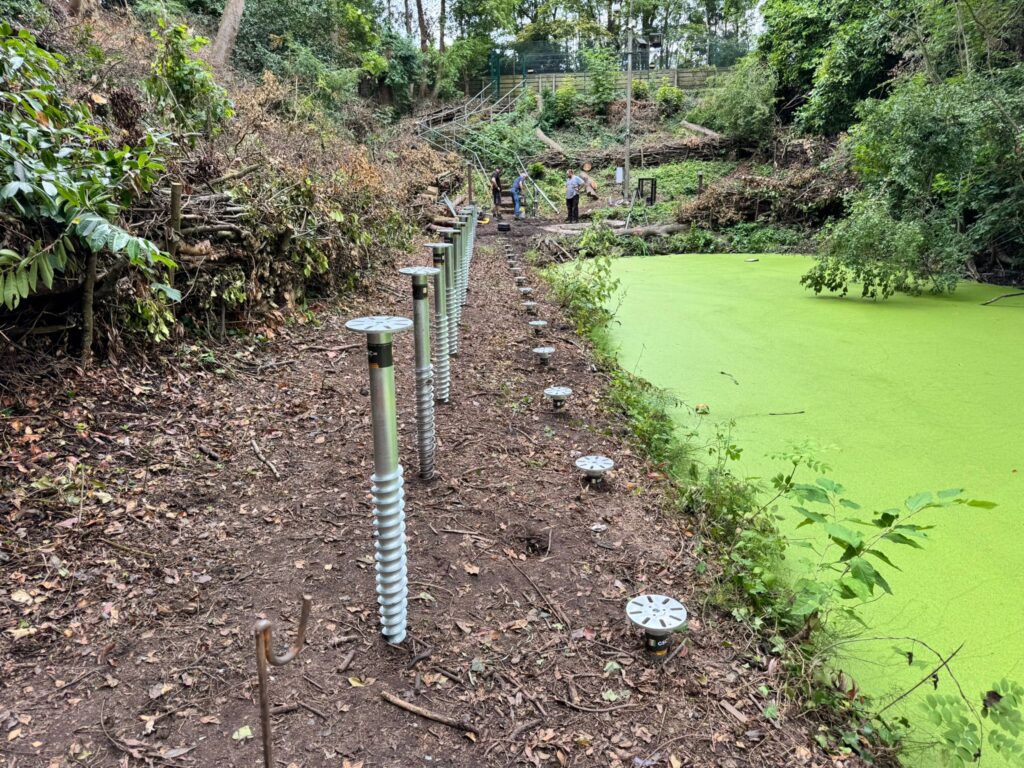
A Practical Cost Comparison For Ground Screws
Let’s look at a real-world comparison of the unit economics of ground screws vs concrete.
This is based on the foundations required for a medium-sized modular commercial building, typical of the projects we handle regularly.
Traditional Concrete Foundations
- Excavation and site preparation: £12,500
- Concrete materials and labour: £18,000
- Equipment hire (diggers, mixers, etc): £4,200
- Skip hire and waste removal: £3,800
- Project timeline: 3-4 weeks, including curing
- Total cost: £38,500
Ground Screw Foundations
- Ground screws and brackets: £14,000
- Professional installation: £9,500
- Equipment: £1,500
- Waste removal: £0
- Project timeline: 2-3 days
- Total cost: £25,000
This is just a starting point. If this building generates £3,000 per day in revenue once operational, opening three weeks earlier would add £45,000-£60,000 in income during the period when concrete would still be curing.
You can apply similar logic to schools, event structures, anything where time has a direct impact on operations.
Suddenly, an immediate cost saving can become a much greater advantage, and that’s before you factor in reduced risk from weather delays, simpler project management, speedier planning and permits, and more.
Professional Screw Foundation Installation For Commercial Projects
The benefits we’ve described hinge on correct project specification and professional installation.
Load calculations, compliance documentation, and teams who understand engineering requirements are all prerequisites to success. This isn’t something that can be improvised – commercial projects need certainty from the outset.
Here’s what that involves:
Site Assessment and Technical Specification
Every commercial project starts with a thorough understanding of your site and project requirements. Our site assessments cover:
- Soil type and ground conditions
- Underground services or obstacles
- Required load-bearing capacity
- Appropriate screw sizes and depths
- Installation methods and equipment needs
We want to derisk the project from the outset and outline the best path forward, providing you with accurate costings and timelines upfront.
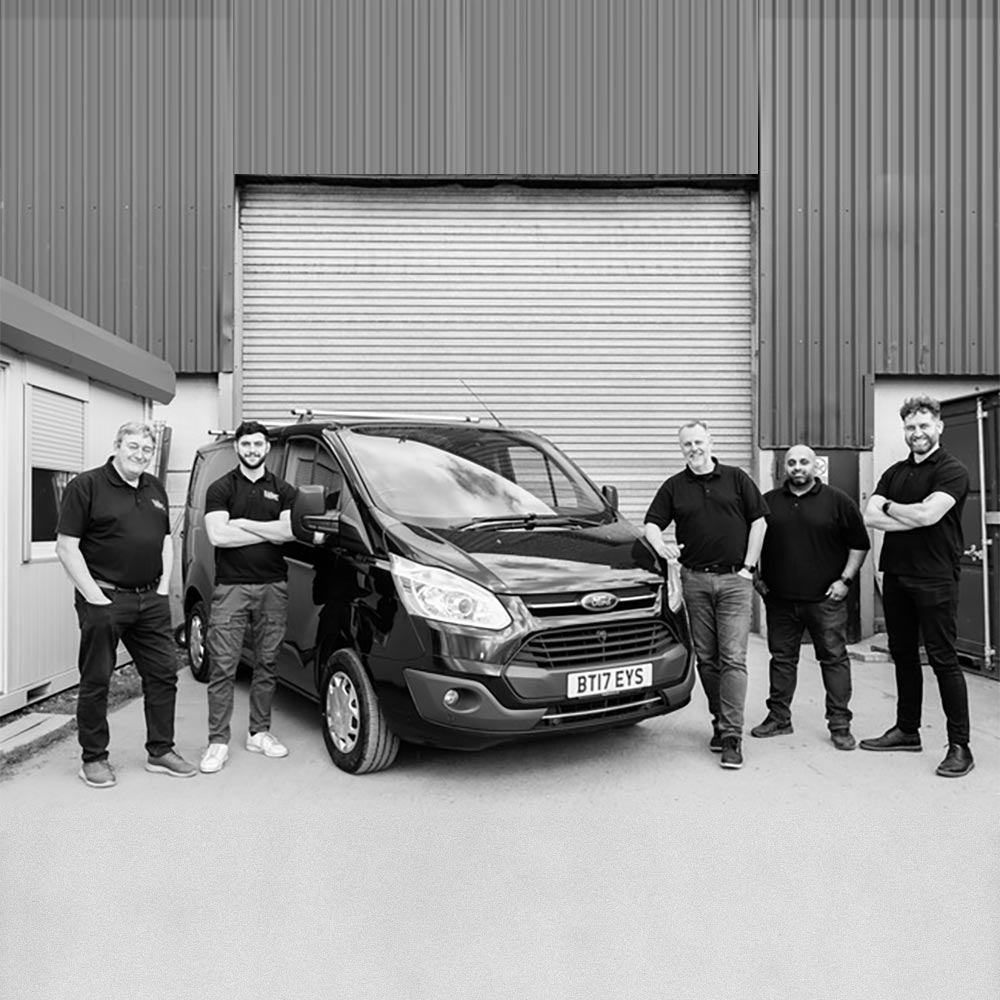
Professional Installation with Commercial Experience
Our installation crews have worked on projects ranging from single commercial buildings to complex infrastructure developments. We bring:
- Specialist equipment for efficient installation
- Experience working around operational sites
- Understanding of commercial timelines and coordination
- Ability to work within restricted access or time windows
- Full health and safety compliance for commercial environments
Ground screws are straightforward in principle, but delivering stellar results for commercial projects means juggling a wide range of variables and project-specific nuances. We know what complications to watch for and how to handle them when they crop up.
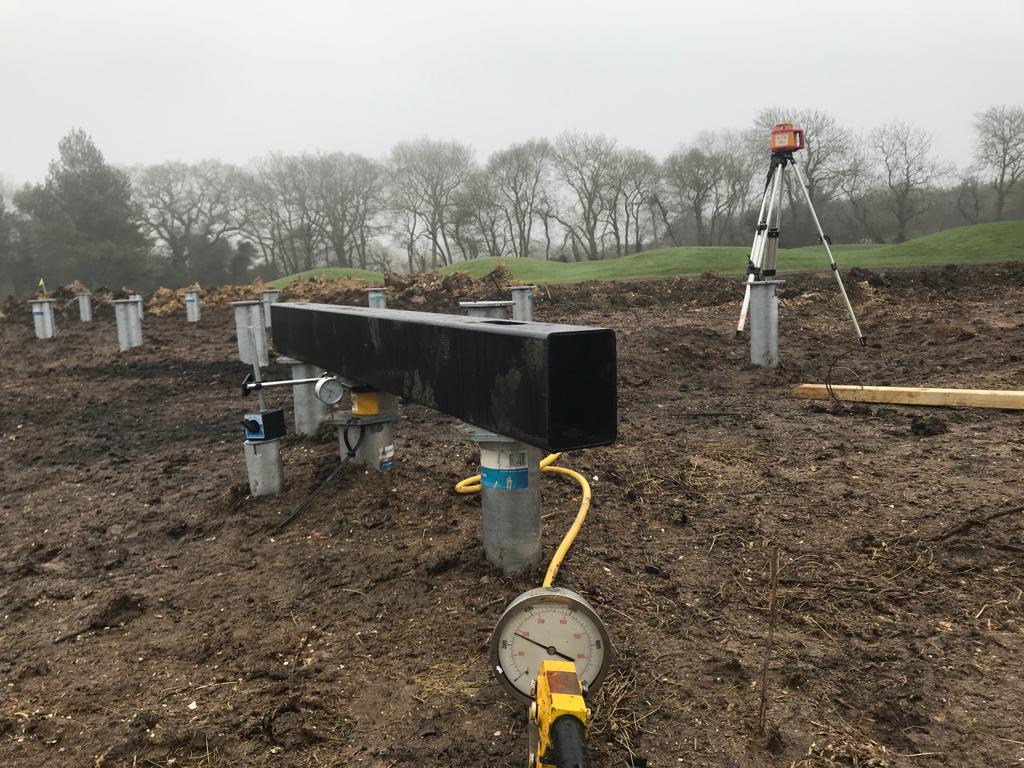
Load Testing and Compliance Documentation
Commercial projects need proper verification, not guesswork. We provide:
- Site-specific compression, tension, and horizontal load testing
- Comprehensive load and displacement reports
- Building control approval documentation
- Structural engineer sign-off
- CE certification and warranty records
We’ve been conducting load tests for over 15 years, working with engineers, surveyors, architects, and contractors to meet design load requirements across thousands of projects. Building control officers need to see the right paperwork, and we make sure you have it.
Professionalism, clarity, and collaboration from start to finish are why commercial clients from McDonald’s to Manchester United trust us with their foundations.
And dare we say we’re a friendly bunch to deal with on and off-site. You can count on us to support you, as demonstrated by our outstanding track record of Google reviews!
When Your Project Calls for Helical Screw Piles
Everything above holds true for ground screws, but some commercial projects carry loads that a ground screw isn’t designed to take. That’s where helical screw piles come in.
A helical screw pile is a steel tubular shaft with precisely welded helical plates, rotated into the ground in sections by an excavator fitted with a rotary torque driver. Where ground screws are installed by hand or with compact plant, helical screw piles are machine-installed and driven until they reach either the specified depth or the required installation torque, which proves the load capacity has been achieved.
The working principle is the same, so you keep every advantage described so far. There’s no digging and no spoil to dispose of; vibration and noise remain low; curing is eliminated; and the piles perform on contaminated land where excavation would create a disposal problem. We stock 76R and 89R for rapid dispatch, with 114R and 140R available on short turnaround, and our engineering design team can specify bespoke shaft diameters, helix configurations and lengths where a project demands it.
Helical screw piles tend to be the right answer for:
- Bridges, raised roads and walkways
- Battery storage and data centres
- Retaining walls and pile caps
- Gantries, towers and masts
- Underpinning and structural remediation
- Residential houses and larger extensions
You also get a different level of evidence. Every pile is installed with calibrated torque monitoring, and you receive a comprehensive torque pile log on completion, detailing installation torque, depth, pile identification and performance data for each pile. For your structural engineer and building control officer, that log is the proof of load capacity they need to sign the scheme off. Design life runs up to 120 years.
If you’re not sure which system your project needs, that’s a question our team answers as part of the design process. It comes down to your load requirements, ground conditions, access and budget – and on some sites, the answer is a combination of both. You can also browse the helical screw pile range if you want to see the sizes first.
Working with Screw Foundations UK for Commercial Projects
Commercial work is different from residential – the stakes are higher, the coordination is more complex, and there’s less room for error. That’s why we’ve built our commercial service around certainty, speed, and collaboration. No surprises, no excuses, no problems.
We offer:
- Free site assessments and feasibility studies
- Detailed technical specifications and load calculations
- Transparent quotations with no hidden costs
- Nationwide professional installation
- Full compliance documentation and testing
- CE-approved products with 20-year guarantees
- Technical support throughout your project
We work on projects of any scale, from single commercial buildings through to large-scale private and public infrastructure developments. The service is the same. Understand your requirements, specify the right solution, install professionally, and provide the backup you need.
Contact our friendly team to discuss your project requirements. We’ll talk through what you’re planning, explain how ground screws could work for your specific situation, and provide clear information to help you make the right decision.