


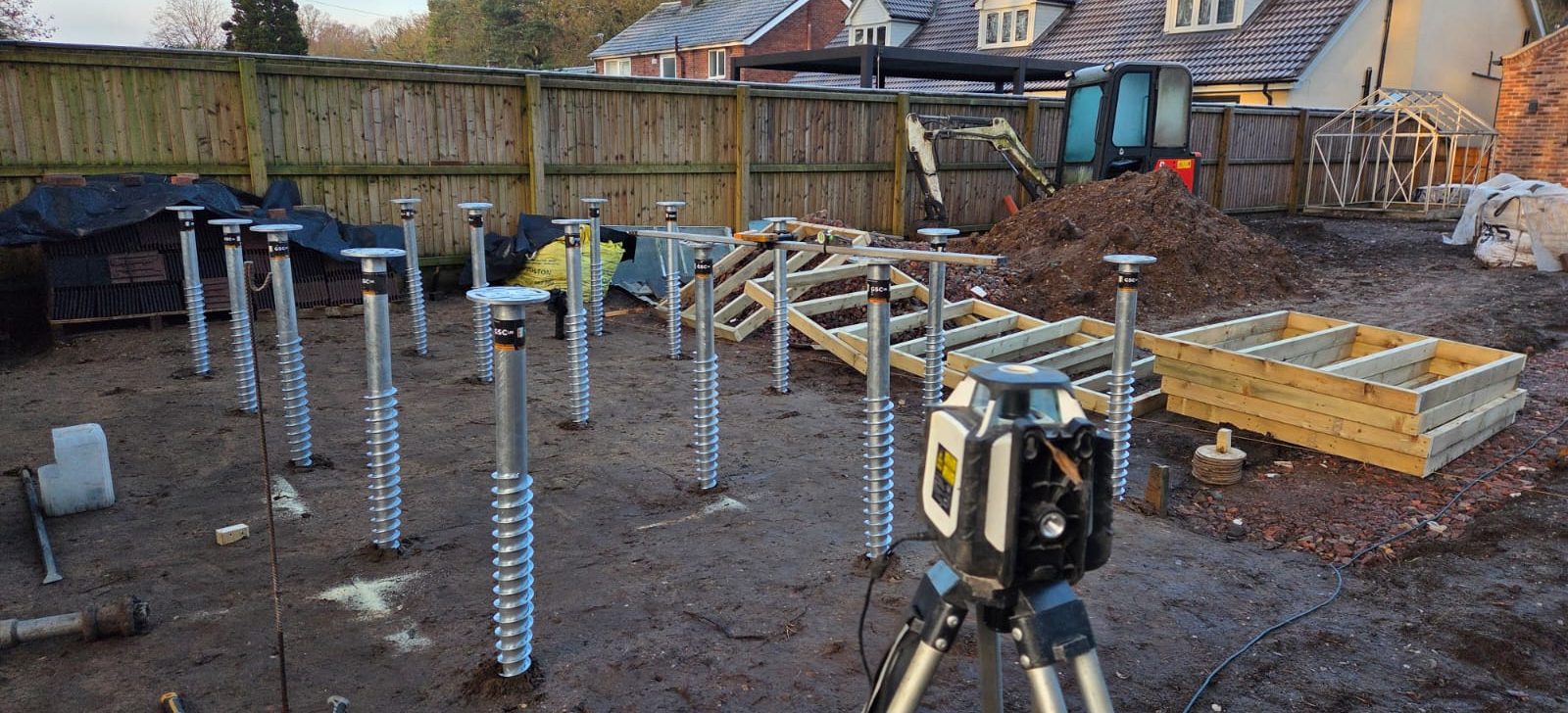
Beat the spring-summer rush with ground screws in winter
If you’re planning a construction project during the colder months, you might assume you’ll need to wait until spring to lay foundations.
Traditional concrete typically requires warmer weather to lay and set properly, but ground screws are an entirely different proposition.
Read on to learn about how ground screws suit cold weather conditions and why you don’t need to postpone your plans till the warmer days make their return.
What Are Ground Screws? A Quick Recap
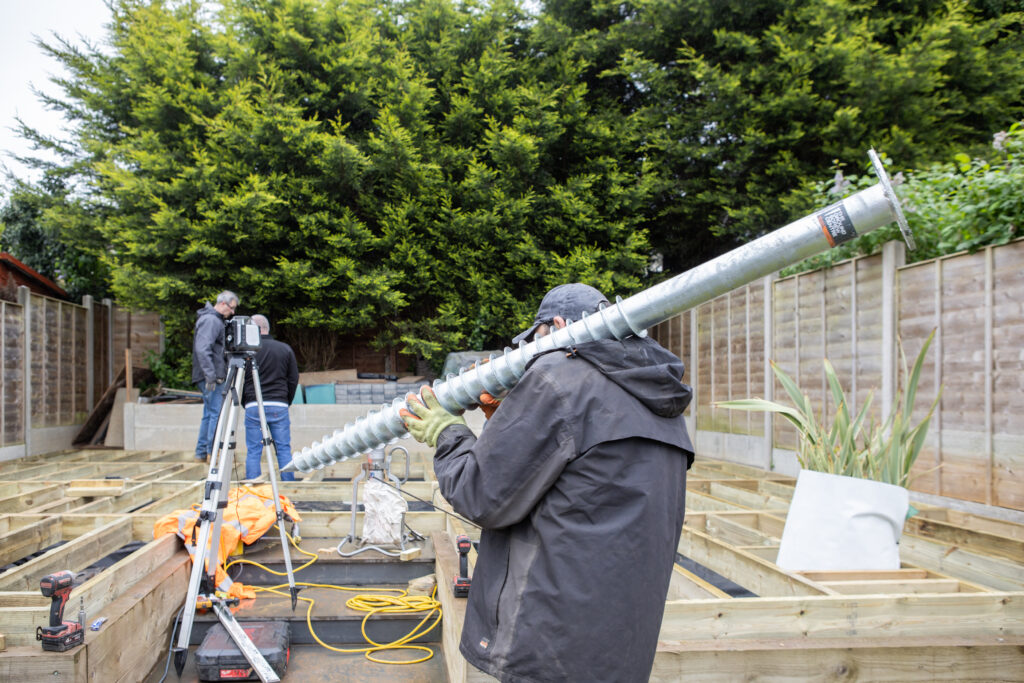
Ground screws are steel foundations driven into the ground to create secure anchor points for your structure. They look like giant corkscrews – a steel shaft with helical blades that cut through the soil and compress it as the screw is twisted down.
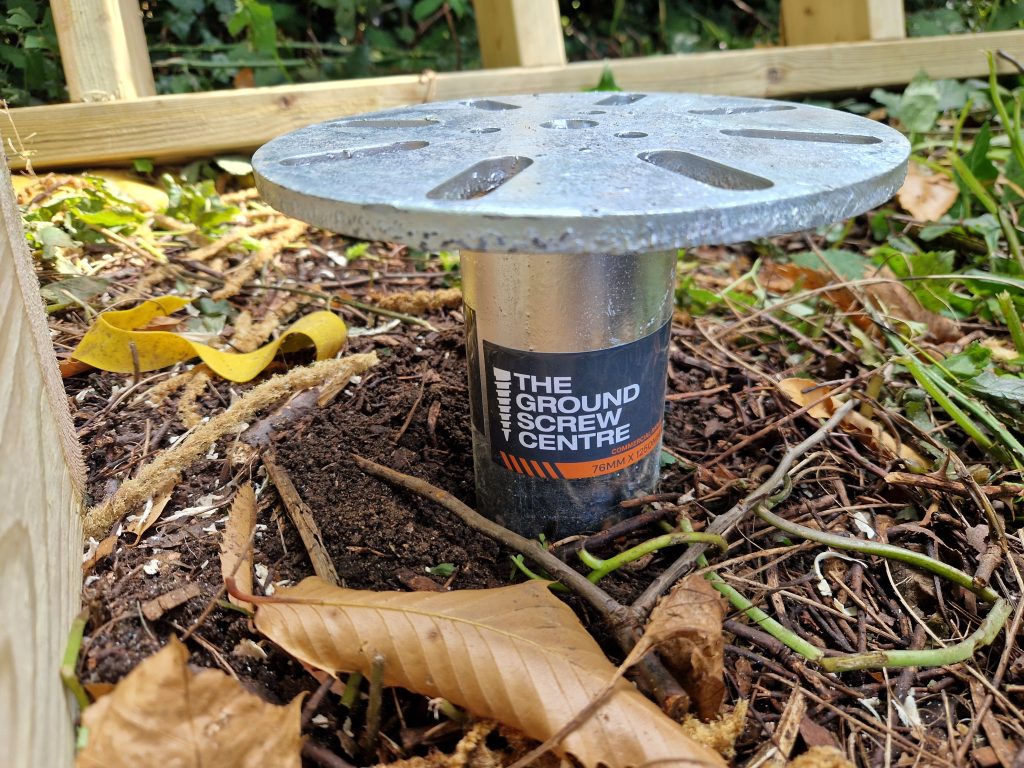
A mounting bracket fits on top, providing a connection point for your building. The key difference from concrete is that ground screws are purely mechanical. No mixing, no pouring, no curing time. Once they’re in, they’re ready to support your structure near enough immediately.
Why Ground Screws Work Well in Cold Weather
Ground screws bypass the main problem that stunts cold-weather concrete work: the chemical curing process.
When you pour concrete, you’re relying on a chemical reaction that needs specific temperature conditions to function optimally. Drop below 5°C, and that reaction slows to a crawl or stops entirely. Water trapped in concrete can freeze and expand, destroying the foundation from the inside.
Ground screws, on the other hand, rely on an entirely mechanical installation process that isn’t affected by weather conditions. The helical blades cut through the soil, and the installation is complete. The moment the screw is in place and fitted with its mounting bracket, it’s ready to bear load.
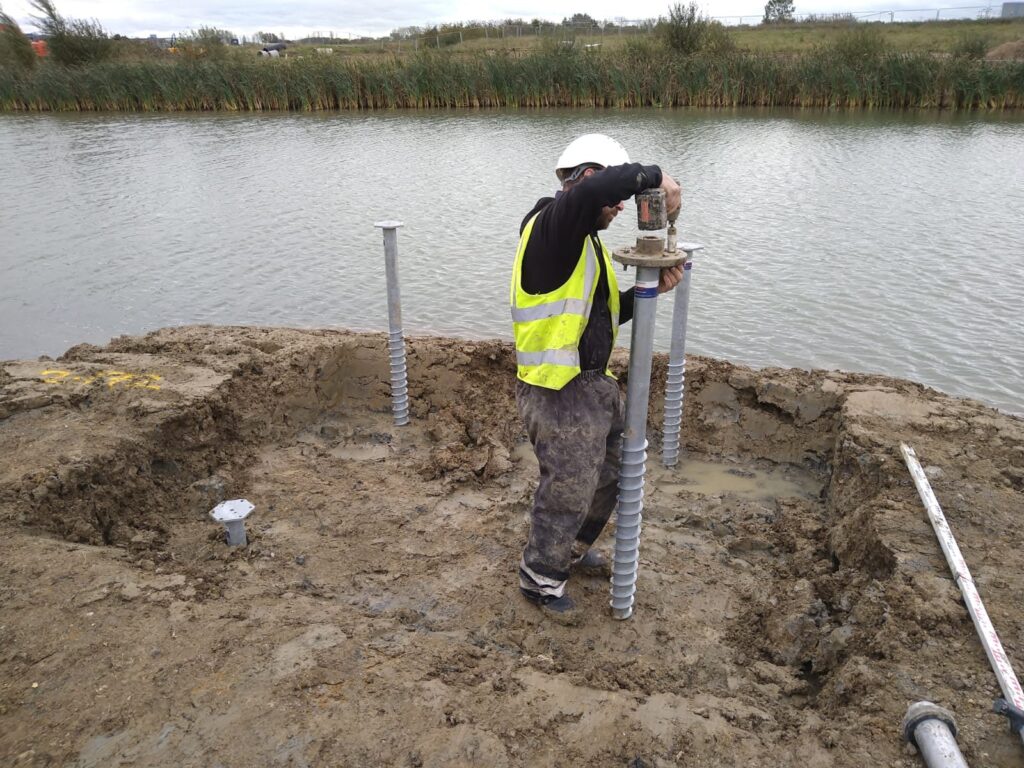
We’ve installed ground screws all year round, proving that domestic and commercial projects don’t need to obey the seasons. Our case studies illustrate just how flexible ground screws are, bringing concrete-free foundations to projects that would otherwise be prohibitively challenging or even impossible.
How Frozen Ground Can Work in Your Favour
We can go a step further than ‘ground screws work in winter’ though. Frozen or solid ground can actually create better working conditions than you might expect. Here’s why:
- Firmer, more stable ground: If the soil does happen to be frozen soil, it’s solid and predictable. There’s no mud, no waterlogging, and fewer soft patches that move under equipment. The installation team can work on firm ground that holds its structure, making positioning and levelling more precise.
- Less site disruption: Winter ground doesn’t churn into mud under foot traffic or equipment. You’re not dealing with boggy conditions or leaving deep ruts across your garden.
- But mud doesn’t matter anyway: No one enjoys working in muddy conditions, but they don’t bother ground screws. They penetrate well below the topsoil, so mud is practically irrelevant.
- No excavation mess: Ground screws don’t require digging trenches or removing large amounts of soil. The screw is driven directly into the ground with minimal surface disturbance. In frozen conditions, this means even less mess than usual.
- Better access in some cases: For rural or agricultural sites, frozen ground can provide better vehicle access. Heavy equipment can traverse areas that would be impassable in spring’s muddier conditions.
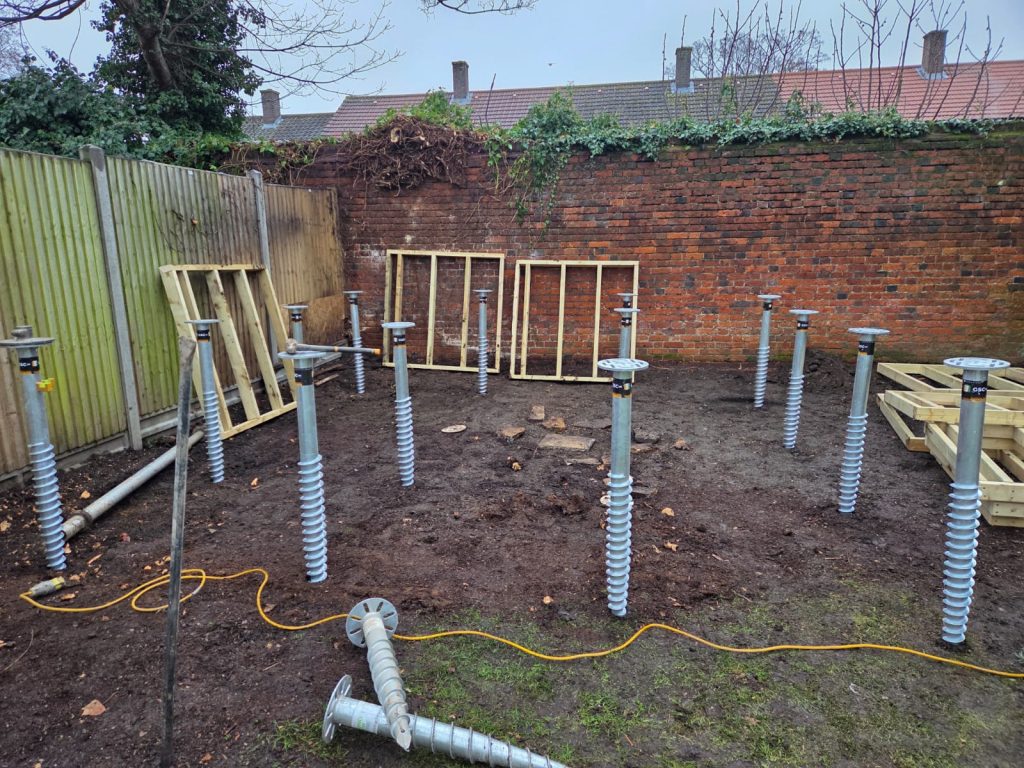
The key is having the right equipment and a team that isn’t afraid of the weather – like our stellar installation team at Screw Foundations UK.
Moreover, it’s important to note that as the ground thaws or warms, this will not affect the foundations provided installation is done properly.
Ground screws penetrate far deeper than the top levels of soil, anchoring into the generally more consistent ground below. They also function in multiple ground conditions, which you can read about here.
Winter Installation for Different Project Types
Ground screws suit a wide range of winter construction projects. Let’s overview how they work for some common applications:
Garden Rooms and Home Offices
Garden room installations are often postponed over winter simply because concrete foundations aren’t viable.
With ground screws, there’s no reason to delay. The foundations can be installed in December or January, even in frozen ground, and your garden room supplier can deliver and install the building immediately afterwards.
This means you can have your new home office or studio ready for the new year, rather than waiting until April or May when the weather improves.
For anyone working from home or needing a winter project to tide them over, that can prove invaluable. Also great for getting holiday lodges built before the season kicks off.
Decking Projects
The assumption with decking is that you need warm weather to lay foundations, so the whole project gets pushed back to spring or summer – exactly when you’d rather be using the deck than building it.
When you build a deck in winter using ground screws in, say, late winter, you’ll ensure that by the time spring arrives, your deck is ready to use. You avoid the summer rush for contractors and ensure everything is ready to rock and roll before barbecue season starts.
Fencing and Gates
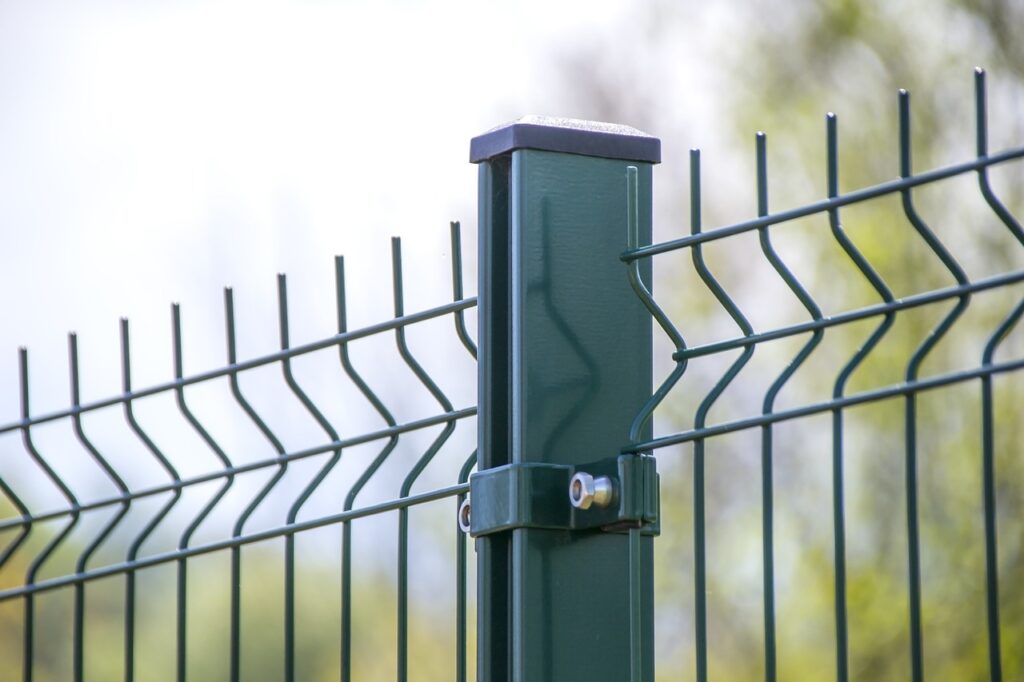
Ground screws provide instant anchoring for fence posts, even in hard or frozen ground. You can complete fencing projects year-round, maintaining security and boundaries regardless of the season. This is excellent news for anyone whose fence was blown down by a winter storm!
Commercial Buildings and Extensions
Ground screws, ever becoming a more popular option in commercial construction, keep projects moving through the winter months. Contractor availability is often better, translating into lower costs.
For example, installing modular classrooms or extensions during term breaks – even in January or February – means buildings are ready without disrupting the school year. You’re not competing with dozens of other school projects all crammed into the six-week summer holiday.
The same logic applies to numerous projects. And you’ve got to factor in that it could even be cheaper to build out of season for this very reason – it’s altogether calmer and less competitive.
Professional Installation vs DIY in Winter
While smaller ground screw projects remain DIY-friendly all year round, winter’s altogether more challenging conditions make professional installation particularly worthwhile.
Our installation teams at Screw Foundations UK have decades of experience working in all weather conditions and understand how to handle frozen or hard ground effectively. Here’s what we offer:
- Proper equipment: Professional hydraulic drivers can easily penetrate hard or frozen ground.
- Experience with winter conditions: We understand how frozen ground behaves and can adapt our technique to ensure proper installation depth and alignment.
- Site assessment: We’ll assess ground conditions on the day and determine whether pilot drilling is needed or if any special considerations apply.
- Speed and efficiency: We complete installations quickly, minimising the time your garden or site is a work zone. This matters more in winter when shorter daylight hours limit working time.
- Load testing and verification: Professional installation includes load testing when necessary to ensure each screw meets the required load-bearing capacity for your structure.
From garden rooms to larger decking projects, commercial buildings, or fencing and signage, professional installation ensures your foundations are installed correctly the first time, regardless of ground conditions.
Getting Started with Winter Ground Screw Installation
The bottom line? You can install ground screws in any weather – you just need the right plan and team.
We’ve worked in all conditions from light frost to deep frozen ground, not to mention snow, sleet, hail, and heavy rain. As they say, when the going gets tough, the tough get going!
Our hot-dip galvanised ground screws are available in multiple sizes and are designed to work in all UK soil conditions and weather, providing reliable foundations year-round.
Don’t let winter weather put your construction plans on hold. Use our online calculator to work out what you need for a small to medium-sized project, or contact our team to discuss your plans.