

What helical piles are and what you can achieve with them
Helical piles are fast becoming one of the most popular foundation options in the UK, used on a huge variety of projects.
If you’ve never installed them before, the terminology can be a bit off-putting. Screw piles, helical piles, ground screws, helices, flights – all common terms that often pop up in the same conversation.
The good news is that helical piles are refreshingly simple once you understand the basics.
Read on as we explain what they are, how they work, what’s involved in installation.
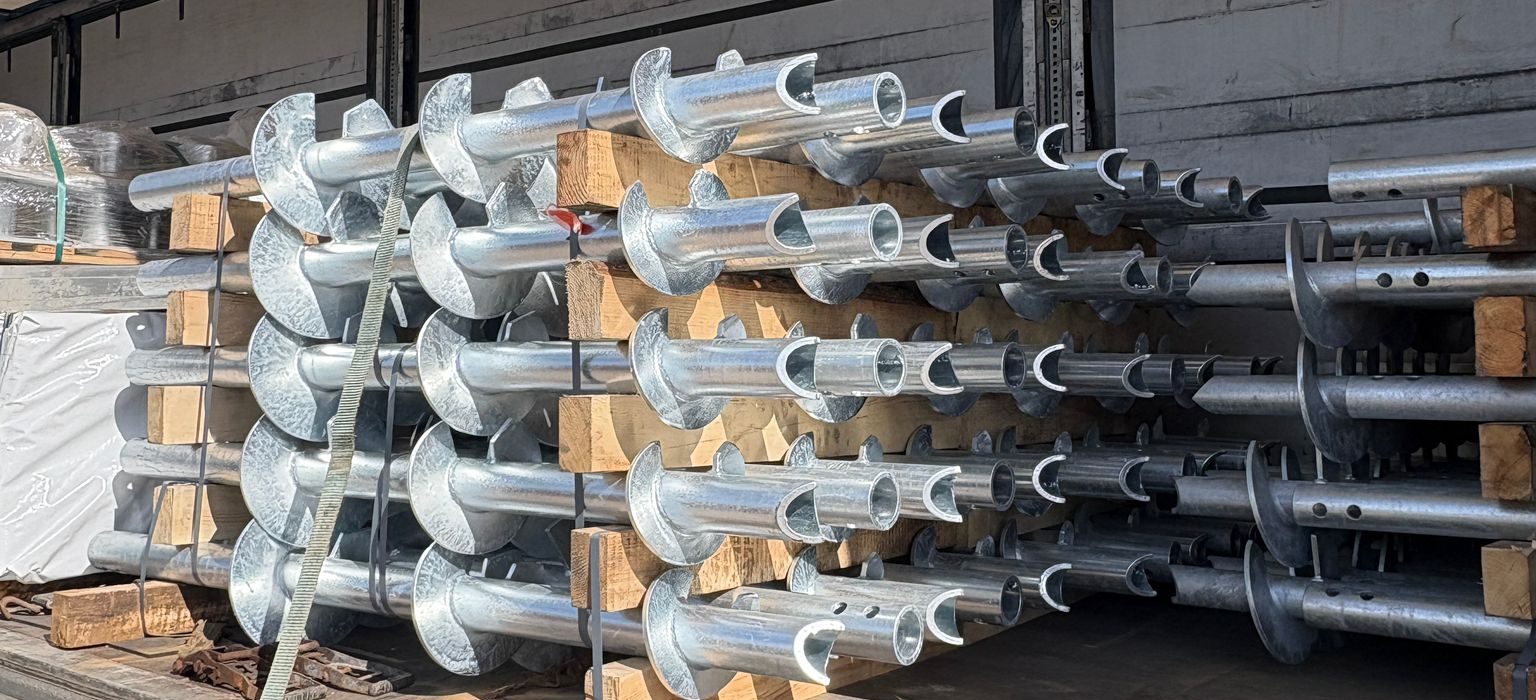
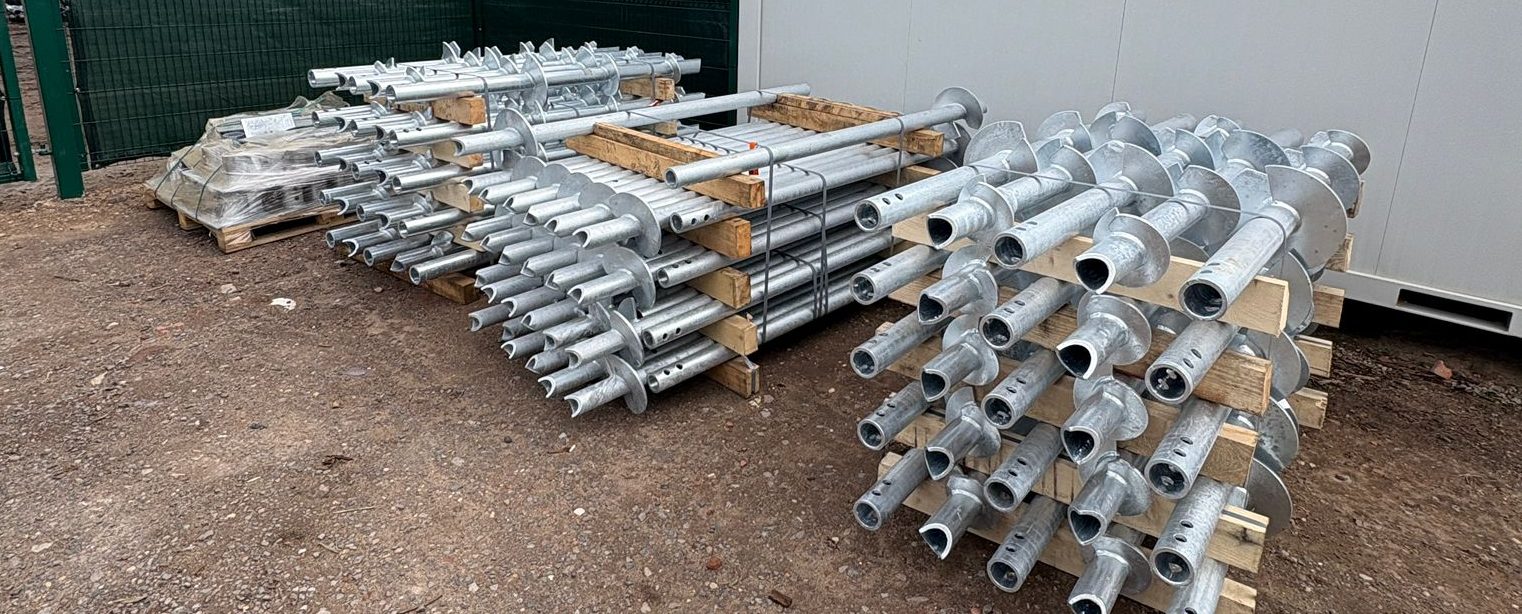
A helical pile is a steel tube, or shaft, with one or more helical plates welded to the shaft at different depths depending on ground conditions.
Each plate is a circular steel plate formed into a shallow spiral. The plates spread the load from the shaft into the surrounding soil.
The bottom section of the pile, known as the lead section, carries the helical plates and a pointed tip. Once installation is complete, the top of the pile connects to the structure through a pile cap, a ground beam or a steel frame.
Engineers call these plates helices (a single one is a helix), and you’ll sometimes hear them called flights or helical plates.
Our helical screw piles come in four standard sizes – 76R, 89R, 114R and 140R – with shaft diameters up to 140mm. If a project needs something different, we can also make bespoke piles to order.
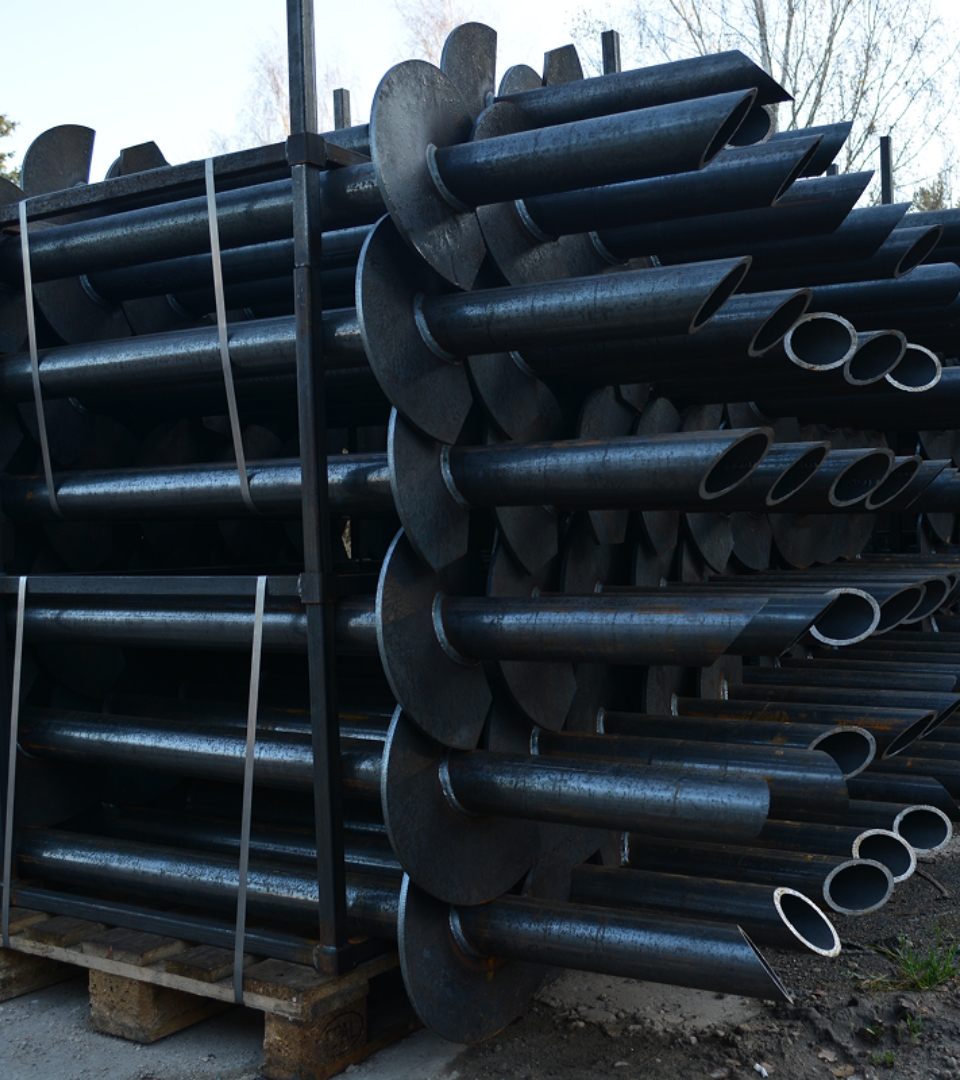
In the UK, “screws foundations” is somewhat of an umbrella term, and it covers two related products that are totally different in the engineering world:
There’s some overlap between the two. On certain jobs, a heavy-duty ground screw and a small helical pile could effectively perform the same job.
Overall, the choice between ground screws and screw piles comes down to loads, ground conditions, site access, and budget.
To understand how a helical pile carries load, it helps to compare it with a traditional strip footing.
A strip footing spreads the weight of the walls across a wide band of concrete and relies on the soil directly beneath that band for support. On soft clay, made ground, or loose fill, the trenches should be deeper to find soil strong enough to bear on.
A helical pile solves the same problem differently. Rather than spreading the load near the surface, the steel shaft carries it straight down through the weak upper layers to the helical plates, which are positioned in firmer ground at depth.
Each plate then acts as a bearing plate, transferring the load into the surrounding soil. The pile’s capacity depends mainly on the size and number of plates, the depth they reach and the strength of the soil at that depth.
Torque is the rotational force the drive head applies to turn the pile into the ground. As the helical plates cut through the soil, the soil resists that rotation.
Generally, the stronger the soil around the plates, the more torque the machine needs to keep the pile advancing.
The installation rig’s monitoring system measures this force throughout installation, so you can track how resistance changes as the pile progresses through each layer of ground.
Engineers use the final installation torque to estimate each pile’s load capacity. At the design stage, the engineer uses it to calculate the minimum installation torque each pile must reach to achieve the required capacity, along with the minimum depth needed to reach the soil type in the screw pile design.
Calibrated torque monitoring equipment records the final torque and depth for every pile, giving the engineer and building control a full installation record for the foundation.
Compared with conventional piling, helical piles need surprisingly little kit. All you need is a tracked machine or excavator fitted with a rotary torque driver and a torque monitoring system – no large piling rig required.
There’s no digging, either, so there’s no spoil to clear and no skips to fill. The installation is quiet, with minimal vibration, which is a big plus on schools, hospitals and busy construction sites, where everyone else needs to carry on as normal.
Every site is a little different, but we can still discuss the general installation process:
Once you’ve fitted the pile heads, the foundation is ready to build on more or less straight away.
Moreover, helical pile installation doesn’t depend on conditions the way a concrete pour does, so you don’t run into the same issues as pouring concrete in winter.
If you already own excavators, you’ve ticked off one box already. The main additions are a rotary torque driver and a torque monitoring system to record each pile.
Our supply and training option combines pile delivery with on-site installation training from our team, covering both installation and torque monitoring.
We’ll also be on hand for technical support throughout the project.
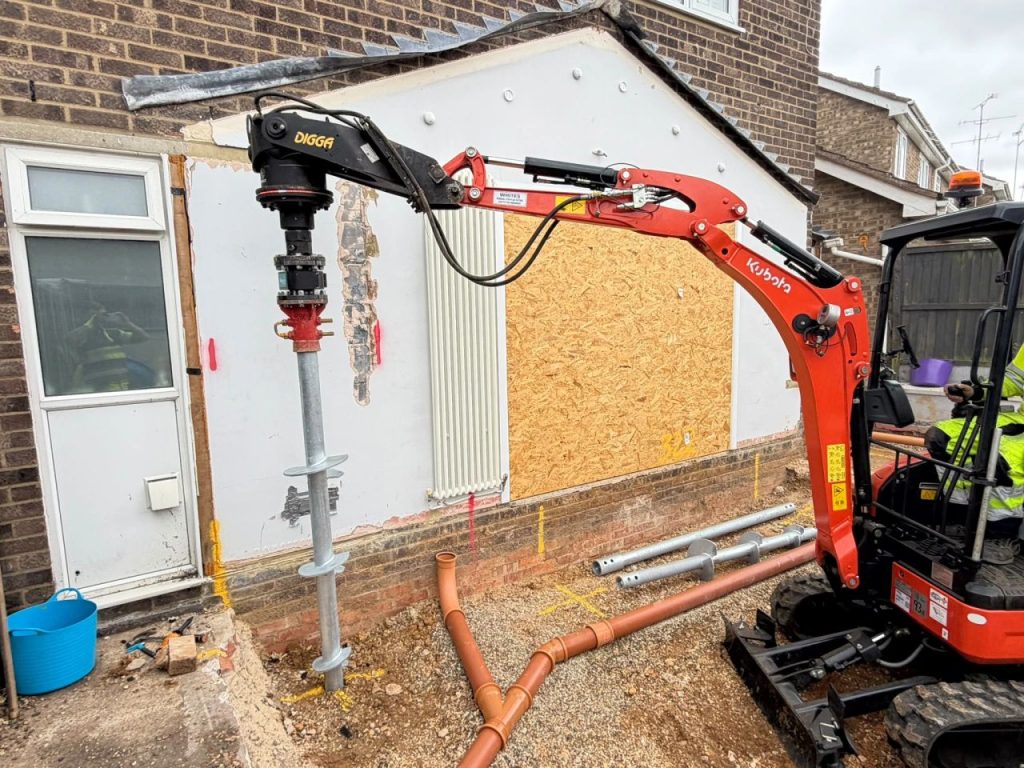
Helical piles support a wide range of permanent structures on both domestic and commercial jobs.
Ideal scenarios include when traditional foundations are cumbersome or would need to be installed particularly deeply. Or when there’s a protected tree next to the build or a back garden with poor access.
Here’s a summary:
| What you find on the job | Why helical piles are worth raising |
| Soft, variable or made ground, with firm ground well below the surface | Piles reach firm ground without a deep trench, spoil removal or large volumes of concrete |
| Clay near mature trees, or trees with a Tree Preservation Order | Very little excavation, and you can position piles to avoid the roots |
| A site close to water or with a high water table | No open trench to flood and no concrete near watercourses |
| Contaminated land | No spoil to dig out, test and dispose of |
| Tight or restricted access | Smaller rigs than conventional piling, with no concrete lorries or skips |
| Sloping ground or changes in level | Each pile reaches its own depth, with no stepped footings |
| A tight programme or winter start | Piles are ready to build on straight away, with no curing time and fewer weather delays |
| A client or engineer who needs certified load data | A torque log for every pile, plus static load testing where needed |
Generally speaking, a structural engineer calculates the loads the foundation must carry, and those loads help inform the pile layout and the target torque.
The core standard governing pile installation is BS 8004, the UK code of practice for foundations, which includes an annex dedicated to helical steel piles. Eurocode 7 is also relevant.
As for the piles themselves, ours have a design life of up to 120 years and are manufactured to:
Proper documentation is very important. If a contractor can’t produce a full log, treat it as a red flag – it’s one of the first points to check when choosing a screw piling contractor.
It depends on the site. Every extra metre of trench means more digging, more spoil and more concrete, and the rising costs of concrete have narrowed the gap even further.
Helical piles primarily cut out many of the costs and delays that come with concrete:
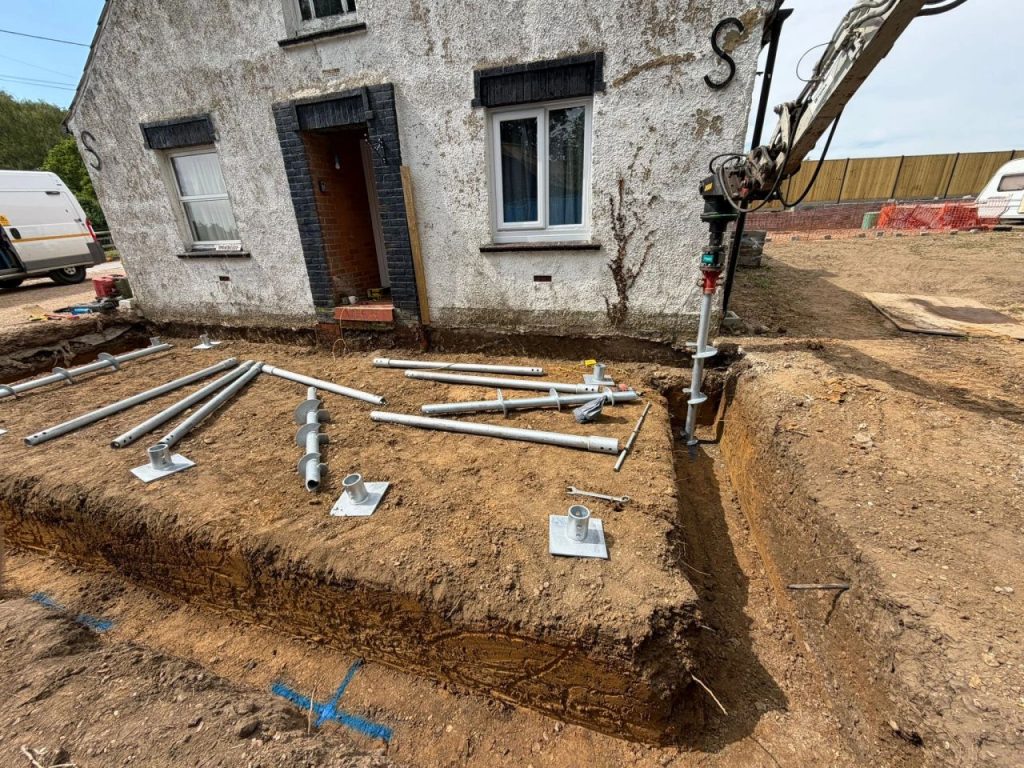
Our helical pile service makes it easier than ever to work helical piles in whichever way suits your business.
Contact our friendly team and we’ll talk you through the options.