


The Rising Costs of Concrete that Screw Foundations Avoid
If you’re quoting a build in 2026, the odds are you’re having a harder conversation than you’d have had a few years ago.
The cost of, well, everything has increased – and this is no secret. The Building Cost Information Service expects building costs to rise by another 14% between mid-2025 and mid-2030, with concrete and associated costs being a key factor.
This article walks through building project savings and how to cut costs on both domestic and commercial projects.
You have to look beyond the material itself. Concrete carries a whole set of associated costs that have all been climbing, often much faster than the concrete itself.
First off, cement is energy-intensive to produce and remains exposed to volatile gas prices.
For commercial projects, reinforcing steel climbed 5.2% year-on-year into late 2024, driven by global infrastructure demand. Cement itself crept up around 2.1% over the same period.
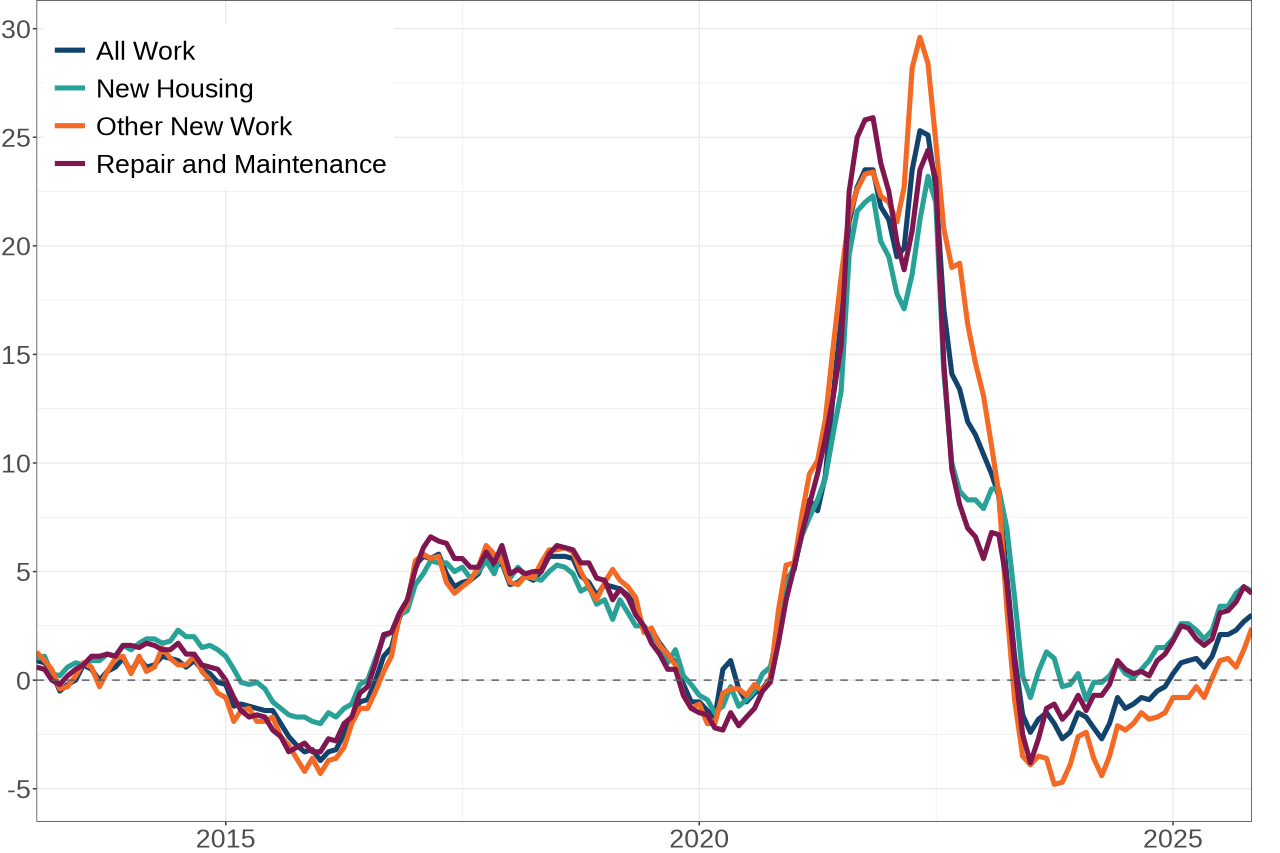
None of these seems enormous on its own, but stacked together over five years, they’ve made a tangible difference to total concrete foundation costs which bites for both domestic and commercial projects.
The hidden costs involved in building projects warrant a closer look, as they’re the ones that stack up:
The result is, naturally, a compounding effect, with the cost ultimately passed on to the end customer as everyone else’s margins diminish.
Ground screws and helical screw piles avoid a large chunk of the cost stack above.
The screws themselves are cost-effective, but they cut so much of the wraparound expense associated with construction, and that compounds in the opposite direction, resulting in some immense savings.
Laying concrete means groundworks, which is completely avoided by using the ground itself to lay the foundation, as is the case with ground screws and screw piles. There’s no trench to dig, no soil to remove, and you don’t need to park a skip outside for days.
On a larger residential garden room, avoiding excavation and disposal saves several hundred pounds directly.
For commercial projects, site clearance, spoil classification, hazardous waste disposal, and multiple skip movements can add up to thousands of pounds on a modest job. If it’s a brownfield site, it’s even higher, and the rules governing groundworks are tighter than ever, leading to longer timelines.
Concrete foundations typically require at least three separate site visits – excavation, pouring, and a post-curing return visit.
Screw foundations often need only one. The crew arrives, installs the foundation, and the follow-on trades can start work the same day. We’ve seen many garden rooms or event structures erected within hours of us installing the screws.
That saves labour on the foundation itself and saves time downstream. For more on installation for common domestic projects and average completion timelines, our complete installation guide walks through the process step by step.
Even fast-setting mixes need time before they can take significant load – or much longer for commercial builds. That’s dead time, and on a commercial build with fixed handover dates, it can mean overtime, weekend work or even contractual penalties.
Screw piles designed for larger commercial projects are immediately load-bearing, whether you’re installing event structures, modular buildings, fencing, signage, or anything else.
Sure, concrete is becoming more expensive. But that’s only the start – there’s so much more cost baggage that screw piles eliminate.
This is where helical screw piles start to look interesting on a commercial quote. To clarify, helical screw piles are the larger, heavyweight and commercially-certified cousins of ground screws.
Take a place you can’t conveniently close while you build – shops, schools, hospitals, etc.
In such scenarios, concrete is highly disruptive. Helical screw piles are quicker to install and cause considerably less on-site disruption. For a client counting lost trading days, that’s often worth more than the foundation costs in the first place.
Indeed, this applies to access too. Concrete and other traditional foundations require ongoing access for heavy machinery and trucks. Screw piles are more compact and naturally lighter per build, which cuts access requirements.
Planning constraints are more common than ever. We’re talking about Tree Preservation Order, green belt rules, conservation areas, etc. A few points worth knowing:
Helical screw piles fit well into a construction future emphasising environmental protection.
They work at separate points rather than in continuous trenches, can be positioned around roots instead of cutting through them, and leave the ground largely as it was.

As noted, excavation is often one of the priciest parts of a concrete foundation now, so avoiding the worst of it is a huge advantage.
A modest commercial base dug to a depth of two metres produces about 40–50 tonnes of spoil, which must be disposed of. On a brownfield site, you can significantly upgrade that cost.
Helical screw piles push the soil aside rather than digging it out, so very little needs to be removed. This is one of the biggest time and cost savings associated with larger-scale screw pile projects.
We can look at a few examples from our case studies. Each of these jobs presented a constraint that traditional foundations struggled with, whether that was a live site that couldn’t close, a tight window between term dates, or ground you couldn’t dig.
| Project | The challenge | What we installed | The outcome |
| McDonald’s rollout | Digital menu and height frames across 350 stores, drive-thrus staying open throughout | Dual ground screws with adjustable steel sub-rails | Each restaurant done in about an hour, up to six a day across three teams |
| Wolves training ground | Ball-stop posts across well-kept grounds that couldn’t be dug up | 55 × 114mm × 1300mm ground screws and 55 steel posts | Grounds left undisturbed, no excavation or concrete anywhere on site |
| RHS Malvern exhibition | Exhibition structures on a showground that hosts events year-round | Ground screws with custom brackets | Installed in a tight window, then removed afterwards and the site fully restored |
| Powys footbridge | A footbridge foundation on genuinely difficult terrain for the county council | Ground screws driven to stable ground | Solid footing achieved where a conventional base would have been a real struggle |
| Redrow railings | Railing foundations on a housing development at Harrow, needed fast | 11 × 2.1 metre ground screws | The whole job completed in a single day |
Every project is different, and the right foundation comes down to the loads, the ground, the access and the programme.
Screw foundations are well worth consideration for many projects that were once constrained by traditional foundations, as they are quicker to load, easier to remove, and far more predictable to plan around.
We’ve spent years helping self-builders, contractors and engineers weigh this up on jobs all over the UK. If you’re comparing concrete and screw foundations for something you’re planning, contact us with the details – we’ll help you work out the best path forward.
For domestic projects, our ground screw calculator will get you a rough idea of what you’d need.